The Modern Love column runs every week in the Sunday Styles section of the New York Times. Anyone can submit a column, and whomever chooses among the submissions does an incredible job, because it is always worth reading.
Revisionist Parenting
When I was nineteen I had a major crush on a boy I met at a summer job in Michigan. He was smart, sweet, earnest, funny and boyishly hadsome. We were inseparable for much of the summer but did not exchange so much as a kiss – it was fun; I thought it had potential. At the end of the summer we cooked up a plan to visit my family in Missouri before returning to our respective colleges. I knew my mother would like him, and she did. The feeling was mutual, I guess, because on the first evening at our house he said to me, ” When I met you I thought you were such a unique person, but now I realize that you are really just like your mother.” I should have known at that moment that the romance was doomed; he entered the seminary the following year.
Fast forward twenty-seven years. My husband sits down in front of the family computer situated at the desk that I use, and looks at me and says, “Look at the way you have all of your notes and photos up on this wall and all of your papers here – you are your Mom.” He is smiling – he loved my Mom. “I think you do it on purpose.”
Well, I didn’t; I don’t. I make rolls like she did on purpose, I speak truth to power like she did on purpose, I try to make my home welcoming like she did on purpose. But as my hair goes grayer and the questions from my children get thornier I find it maddening for it to be so hard to lift myself out of her ruts in my road – she did not overtly impose her ways on me and there are so many ways in which our paths greatly diverge. I know we have faced the challenges on our lives in fundamentally different ways. And yet, her influence is an incredibly strong default mechanism. It can make me frustrated, because in the years since her death I have begun to understand how she crafted the myth of herself by selectively sharing information with her children. But I also can empathize with why people do that – there are so many conversations that people will do anything to avoid. Parenthood doesn’t have a full disclosure clause, and the line between honesty and too much information is constantly shifting. When you share you risk two responses: “Why did you tell me this?” and “Why didn’t you tell me this sooner?” I have been through this with my own children over the most minor events already, and perhaps I do share too much. One person’s enlightenment is another’s burden, one person’s honesty is another’s pain. You never know.
I witnessed enough drama in my Mom’s life to know that, as her youngest, I missed plenty. I wasn’t very good at letting those moments I did know about fade; I have a penchant for rehashing events in hope of prying out more details, reasons, answers. I keep looking for a version of the truth that I can live with, knowing full well that my ability to live comfortably with any truth changes from day to day. What is acceptable in one moment is decidedly lacking in the next. Sixteen years ago, I spent weeks camped out in my living room with my Mom, quizzing her about her life while we waited for my overdue baby to arrive. We covered a lot of ground, but I noticed gaps in her memory that I attributed to advancing age. It doesn’t really matter what she kept to herself, it is that she made that choice – repeatedly – that caught me off guard as the details emerged in later years after her death. He legendary candor was not what I thought and some of the things and people she put faith in were, to my mind, not worthy of her devotion. She didn’t owe me full disclosure, but some examples she tried to set have not entirely stood the test of time, either, because she obfuscated.
But these things are true of all parents, all families. For when we tell a story we are telling our own version, and that, by design or not, means that anyone else who was there as there may or may not agree. We have a large family – something as simple as a Thanksgiving Dinner in 1975 can come off as Rashomon on steroids. And I know that, quite often, there are plenty of good reasons to let sleeping dogs lie. And so I struggle to calibrate what memories are rightfully mine, what traits I truly own, how I can understand what it is to write honestly knowing that truth in memory is only our own version of the facts at a particular moment in time.
I will always love and admire my mother, and there are many ways that I am glad to be like her. Still, even in the throes of middle age, it is difficult to know where she ends and I begin, and I am reminded of what she said in the weeks before her death. “You’re going to be forty,” she said as she spoke of her terminal illness, “this is a good time for me to go. It will be a liberating experience. When your parents are gone you are truly free to make your own choices. I never really felt like a grownup until both of my parents were gone. It’s a good thing.” Now, I think I know what she meant.
Sometimes, Food IS Love
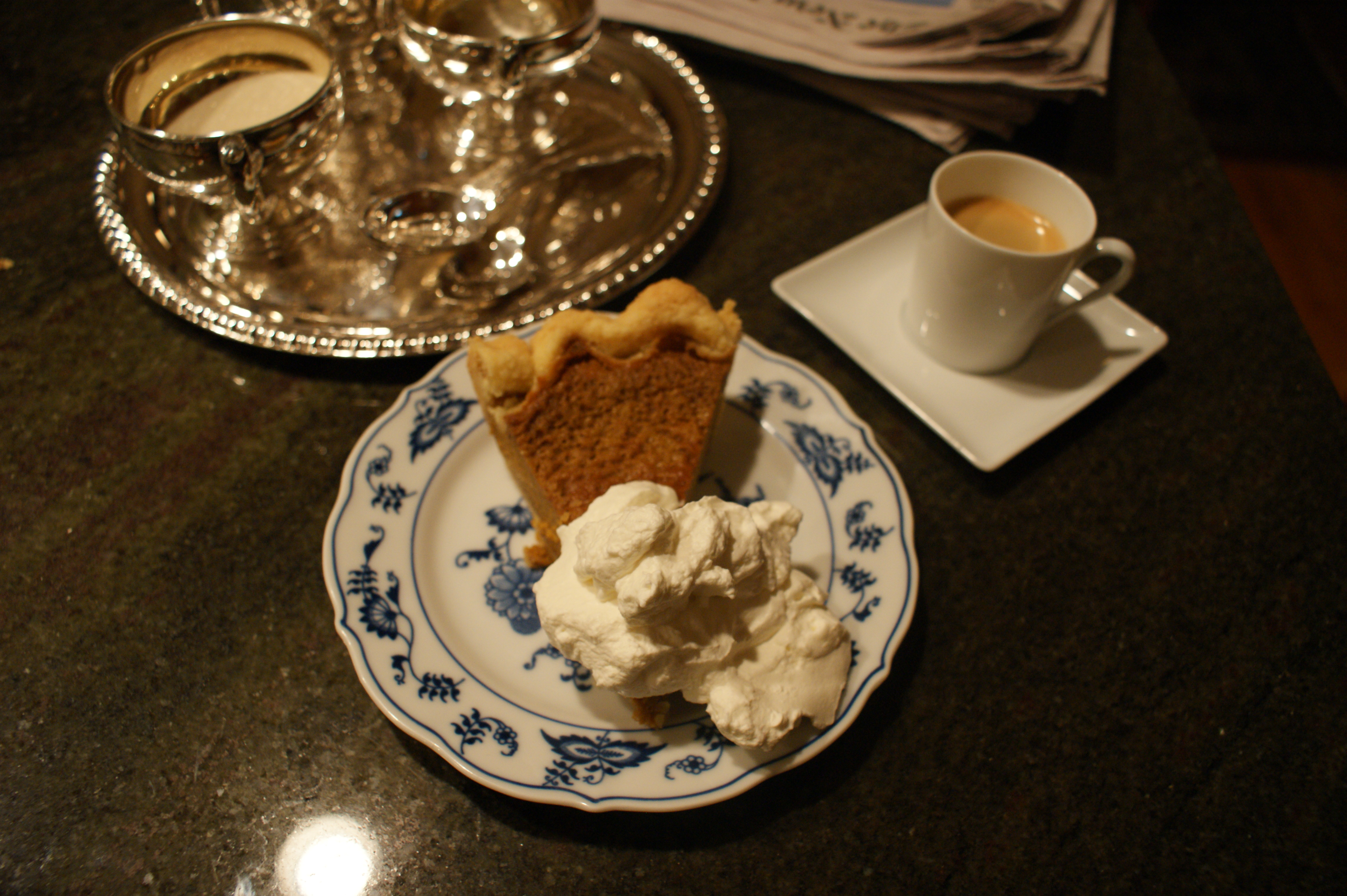
I don’t care what they say, it’s all about the whipped cream. One of my best early childhood memories is sitting in my highchair parked in front of a cut glass bowl of whipped cream. Total bliss.
The Loneliest Holiday
When I hear about loneliness on Thanksgiving, it breaks my heart, even more than Christmas. It’s kind of a Hallmark Hall of Fame sentiment, I know, but I always think of everyone as someone’s child on Thanksgiving, and that their Mom and Dad never intended for them to be alone. I know it happens, and often, but it’s still a shame. There are no presents, so the economy shouldn’t be a big factor; it’s just food, there is no excuse for being alone. Children grow up, families scatter, it’s cold and people don’t want to travel. There is something to be said for staying under the radar some years. But people can get stuck and forget how to resurface. I am most troubled by those who think the world has given up on them, and they are somehow destined to loneliness even though aloneness was all they sought.
As I was falling asleep the other night I heard a voice on TV say something like, “short of real tragedy or a felony, these holidays that we bemoan make up some of the most interesting moments, the best stories, of our lives”. There are people out there, people we know, and they, and their stories, are waiting to be found and treasured again.
Happy Thanksgiving.
Going, going. . .

Things I finally began to notice that are gone or on their way out (a sure sign of a mid life crisis in full bloom):
- Phone booths
- Drive-up bank tellers with people behind the window
- Tiny packages of Life Savers (that the drive-up tellers used to give out)
- Boom boxes
- Photo booths that develop camera film
- Full service gas stations
- Postage stamps
- Hand-written letters (I know, that’s why I’m here)
- The Reader’s Guide to Periodical Literature (paper version)
- Aprons that only cover from the waist down
- Instamatic cameras
- Flash bulbs
- Knee socks
- Rice pudding (wishful thinking)
- TV dinners with compartments for each kind of food
- Miracle Whip (more wishful thinking)
- Cassette players
- Swizzle sticks that look like swords
- Sanka
- Seven-digit phone numbers
- Jiffy Pop
- White shoes (they’ll be back)
- Ash trays
- Rotary phones
- Clip-on earrings
If You Can’t Stop, Wave

There’s nothing better than when people make a little extra effort to do the right thing. This is the sign in front of the new Police HQ in Littleton, Massachusetts, and it stands on the site of a former farm stand, Stan’s Big Acres. Owned by the late John “Stan” Paskiewicz, the stand – a small red shack with a screen porch and a hand painted white sign with red writing – had a greeting painted on it “If You Can’t Stop, Wave.” Whenever we gave people directions to our house when we moved from the city, Stan’s sign was the landmark that reassured them they were not indeed lost and were, in fact, close to their destination (the other landmark was Bob’s Bait & Tackle – alas, it is gone also). Guests often arrived with cider or apples from Stan’s (no one ever arrived with bait from Bob’s – go figure) and even when I driving past alone I found myself raising a hand to Stan. When Stan’s closed the shack stood empty for a number of years, falling into disrepair, the sign still outside. We kept waving anyway. When Littleton decided to use the site for the Police station (and a beautiful one at that) some civic-minded person or group preserved Stan’s greeting on the new sign.
So, Stan’s is a Police station and Bob’s is a yarn shop. There are still signs of the agricultural life along the way home – farm stands, horse farms, fields of sheep and produce – but nothing quite like Stan’s, save for the red house directly across the street (below) that echoes his stand in it’s waning days; the future on one side the road, the past on the other. If you can’t stop, wave. Okay, then.

Past watches Present talk on cell phone

It just occurred to me that I have a penchant of taking photos of people talking on cell phones in places where it seems a little incongruous (see Can You Hear Me Now). The Cemetery is on Main Street in Concord, MA – and the two empty parking spaces just might be the most unusual things in the picture.
Frank Lloyd Wright, as I always hoped he would be
I have always loved the graphic design, ideas and lines of Wright’s architecture but when I see his acutal work I am often disappointed by the poor workmanship, the dark corners or the clunky oakiness the detail work and furnishings. But I just found a posting of a Cincinnatti house that has the interiors and light as I always hoped they would be – it’s an old posting on another blog but the Boswell House photographs are stunning. The Hooked on Houses blog is actually a lot of fun. And the novel Loving Frank (cloying title, great novel based on real-life events) is a worthwhile read.
Early American window and door, just because
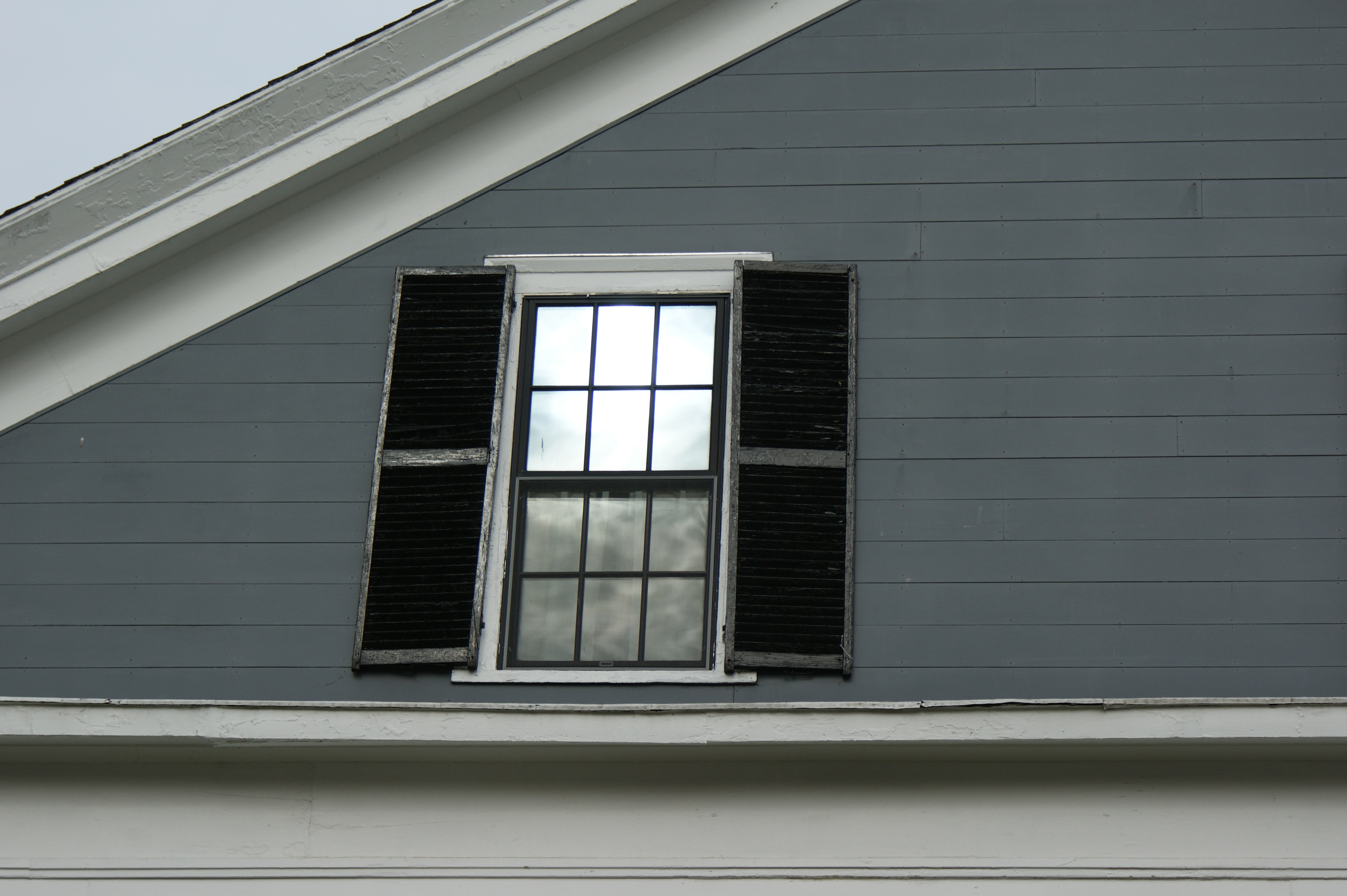
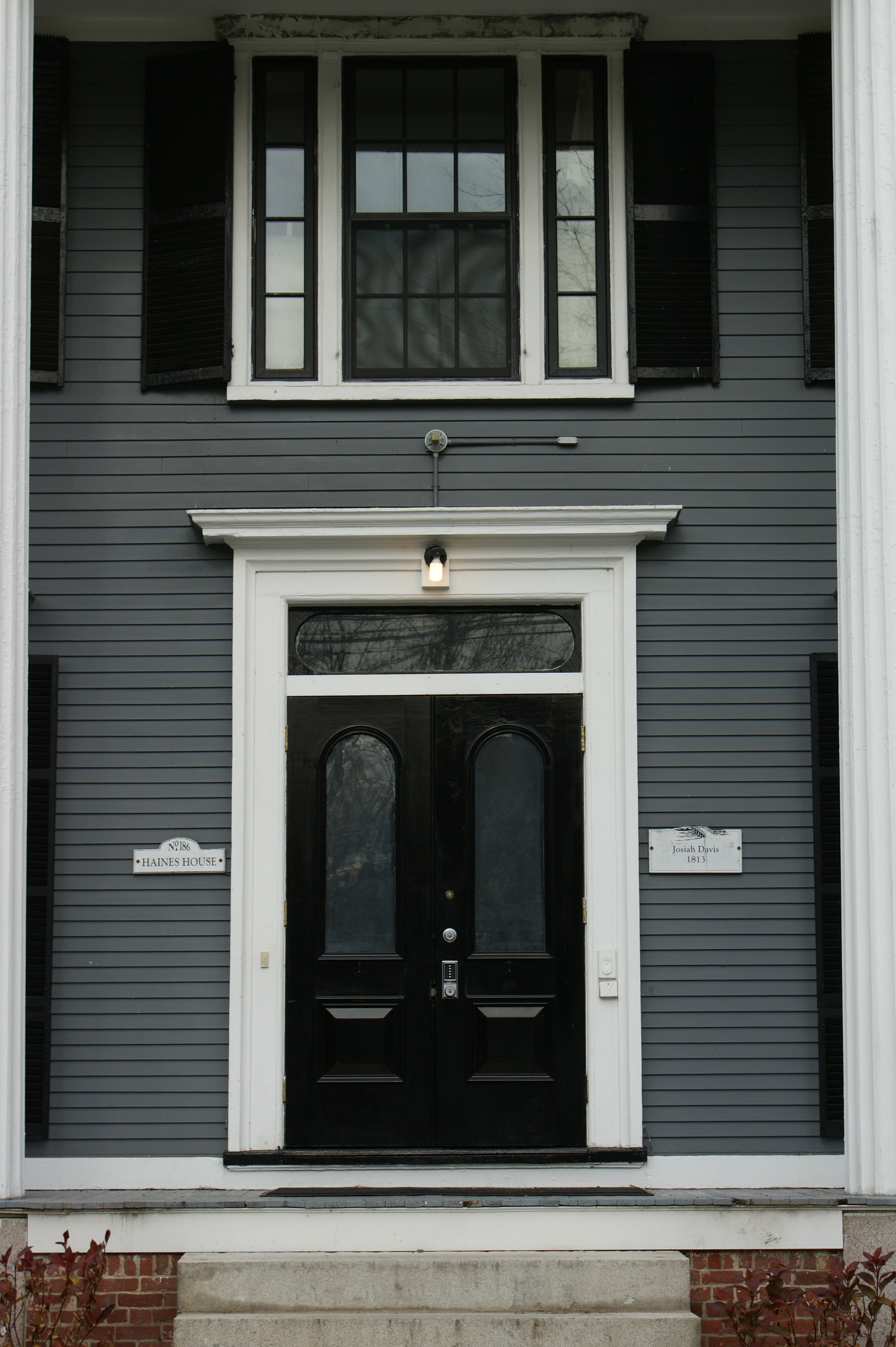
This window is at the top corner of the Haines House in Concord, Massachusetts. Built in 1813, it has shutters are made to work and most likely has layers of paint thicker than the walls of most modern houses. Below is the front door to the same house (currently an academic administration building at Concord Academy), where the wiring for the light had to be routed on the outside. The way all the exterior lines and shapes in these old structures can fit together into a coherent whole fascinates me – in modern times that approach doesn’t seem to work nearly as well, and yet here, it does. Are we more forgiving of older architecture just because it’s old or did they get something right that we don’t? I admit that I am more enamored of such places from the outside looking in – once inside, they tend to be dark and cramped and have a kind of slanted fun house quality because everything has settled unevenly over the centuries (and that funky wiring goes from quaint to dangerous).
When the cat’s away, something breaks
 I go out of my way to make it seem like my husband’s business trips are fun for the kids and me. We miss him less if we can break with the weekday school-dinner-homework routine. We get takeout, make blanket forts, build Playmobil and train setups in the living room, become worse slobs than usual, watch black and white movies and have sleepovers in our bed (I steal his jeans and his pillow and I don’t have to worry about my snoring).
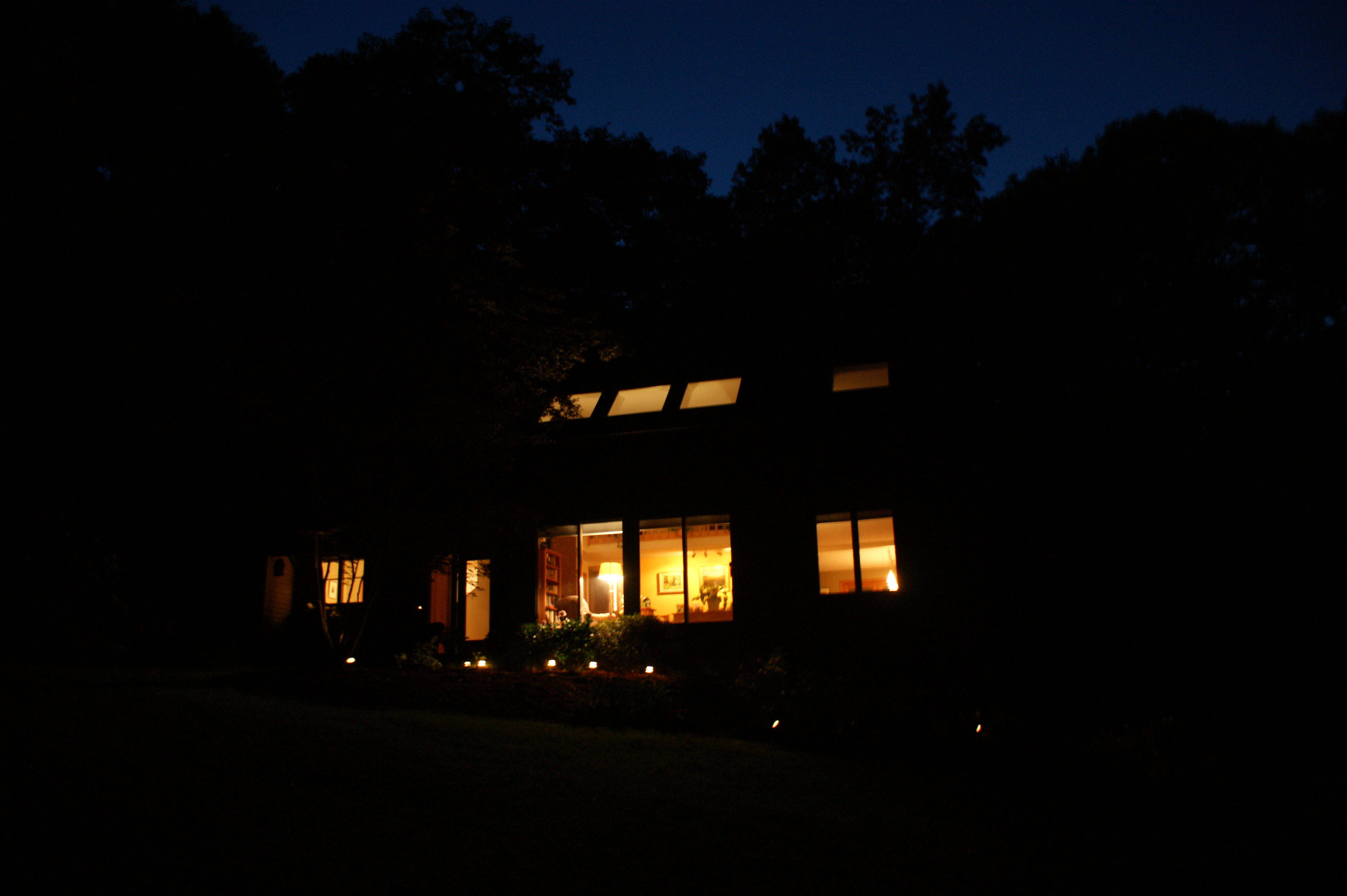
But the house takes liberties of its own, kind of like the script of an Albert Brooks movie where everything goes wrong in the most eye-rolling ways. The house lets loose all of those pranks it has been saving just for me – it allows the field mice in and sends them dancing up to the wall behind our bed, pops the lightbulbs in the most unreachable sockets, lures the woodpeckers to all four outside corners of the house, swarms the carpenters ants and termites, crashes a computer or two, breaks one major appliance, and finds never-before-seen ways to rupture the plumbing. We are now at the point that, when the neighbors learn he is away, they call to ask if anything has broken yet.
And even though part of me thinks my husband has the power to set me up by conspiring with beasts and infrastructure, there’s nothing like a little drama to make time fly. As long as I can marshall the courage and resources to make it right – so far my record is pretty good – I think it’s key for both of us to remember why we work better together than apart. I feel liberated for all of about 15 mintes when he leaves, and then I notice the scaffolding of our lives tremble ever so slightly and though I get to snore, I don’t sleep quite so well. Even so, I know that the house could come down around us, but the structure that counts is in fine shape.
 LettersHead