Dusting Off the Soapbox


I have signed up for another tour of duty advocating for special education in our school district and so am subject to ruminating and ranting about how to do this kind of work without becoming jaded.  It’s probably already too late. 

The local organizations, committees, boards and councils charged with overseeing or advising school districts are made up of people who have consciously chosen to volunteer and advocate on behalf of students and communities.  These are roles people take on outside of their chosen profession; it’s not anyone’s day job (although we could certainly make a cases that it can be a full time job).  In larger towns and cities the lines between volunteer organizations and professional and political organizations are distinct, but when it comes to schools (and churches, for that matter) in smaller communities, those lines become blurred.

My point:  while the volunteer groups are in it (mostly) for the community and the kids, the same cannot be assumed to be true of educators and staff.  Hear me out.  At the outset it seems cynical, but education is a business and the currencies are power and turf – for every fabulous, gifted educator there are a dozen for whom it is a job where they do what they need to do, benefits are good, job security is great and the summers are open.  Being a teacher or a special education provider doesn’t automatically make someone a better person or make them insightful enough to see what is best for each child; not everyone is equally good at their job.  I hasten to add that people who volunteer don’t win the altruism prize automatically, either – they are just as vulnerable to power grabs and turf wars as anyone; for years we had PTA groups who refused to sit in the same room with each other to share fundraising and or even calendar event information.

Parents should recognize that administrators and teachers are under tremendous pressure to perform in a variety of ways, and for some teachers and schools the best way to get your students’  statewide test scores up is to get the children with difficulties assigned to another class or school.  Inclusion is a wonderful idea that takes tremendous work to implement successfully; not everyone is up to the task.

I didn’t come to this view quickly or easily myself – someone in my family, a high school teacher and track coach for over 30 years – clued me in ages ago when my kids started school but it took some time for me to grasp his fuller meaning.  He advised me that, just as in the business world, educators  are (understandably) interested in establishing their place within the educational community and that parents and kids are transients in that world – parents come and go but, especially with unions, colleagues are forever.  Sticking together and resisting certain kinds of change among staff peers is key to survival.  I remembered this when I learned over the summer that teachers in our district were asking that their non-certified colleagues get the ax, regardless of how successful they were with the kids.  I also thought of it during the various search processes where people lobbied to get friends hired or took our staff with them with them to new assignments.  People have a right to pursue their professional goals, but sometimes those goals do not match up to those of the students they serve.

Thus, I think parents who advocate for their children with special needs hobble themselves when we assume that everyone at the table is in it only for the kids – we are constantly having to push people to make child-centered decisions because in many cases they really don’t know what that means and making a child-centered decision often means change – and we know that people are naturally resistant to change even when their intentions are good.  We have seen again and again that some of the people working with our children do not learn quickly or adapt well to new methodologies.  I’m not saying that such educators are not doing their best (though some aren’t); I am just pointing out that they are people who are not inherently more virtuous or altruistic than anyone else, that education is their job, and that parents and volunteer organizations would do well to remember that when they interact with district staff.

 When advocating for children who are having difficulties, parents often feel so vulnerable and exposed by the process of asking for help they fail to see clearly what other people bring to bear on the situation.  Parents are seldom at their best when their children are the topic of a meeting (duh) and this adds to the power imbalance and increases exponentially the possibility of misunderstanding.  Most of the families that come to me at the outset of their interaction with the district tend to exhibit one of two postures:  fierce and demanding, or needy and apologetic.  The demeanor I strive for – and don’t always achieve – is unrelentingly realistic and collaborative.  It requires listening when I don’t feel like it to people I don’t respect, overlooking small slights that are painful for me but that don’t affect my child, arriving with an agenda that has as many bullets praising things that do happen as things that require attention, and advocating for teachers getting what they need so that children get what they need.

 Naturally, it is not fair or realistic to assume that everyone is as invested in a child’s success as the parent, or that they are invested in the same way; indeed I have seen several cases where schools offer help and parents decline services.  In both schools and families there are so many things competing for attention and resources it’s impossible to give every issue, every child the attention they deserve.  The key is to try, and to create and maintain a climate in which that effort is rewarded.
A Temple Grandin Moment

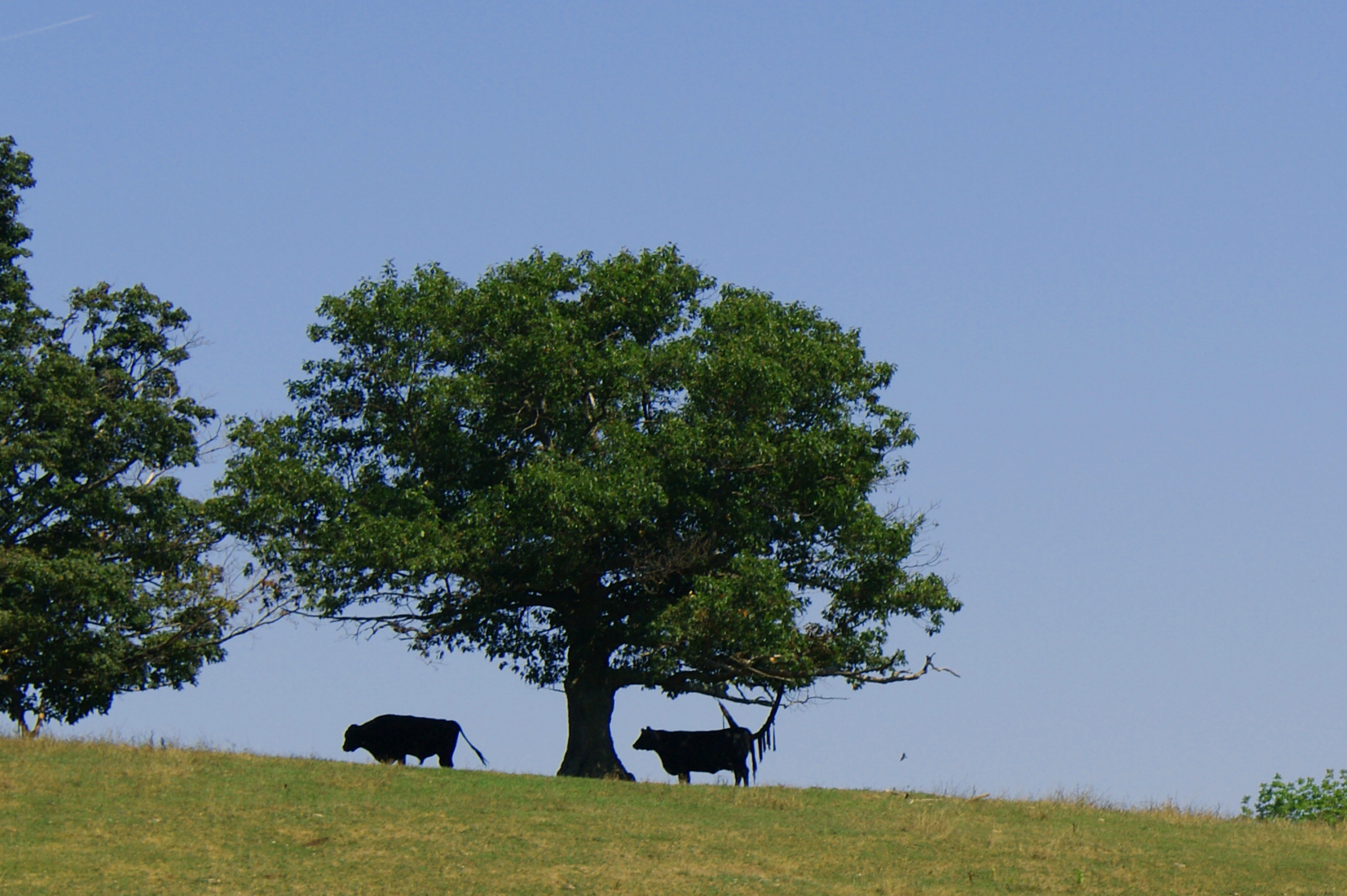
It’s the first day of school and the new ridiculously early schedule and the blazing heat make me feel like I imagine these cows feel – I just want to stand in the shade and barely move and not think at all.  I am already nostalgic for summer and the late afternoon moments when, while riding with a car full of kids (autistic and not, for the record) past the farms, all of them would spontaneously start to moo at the grazing cows.

So Long, Summer

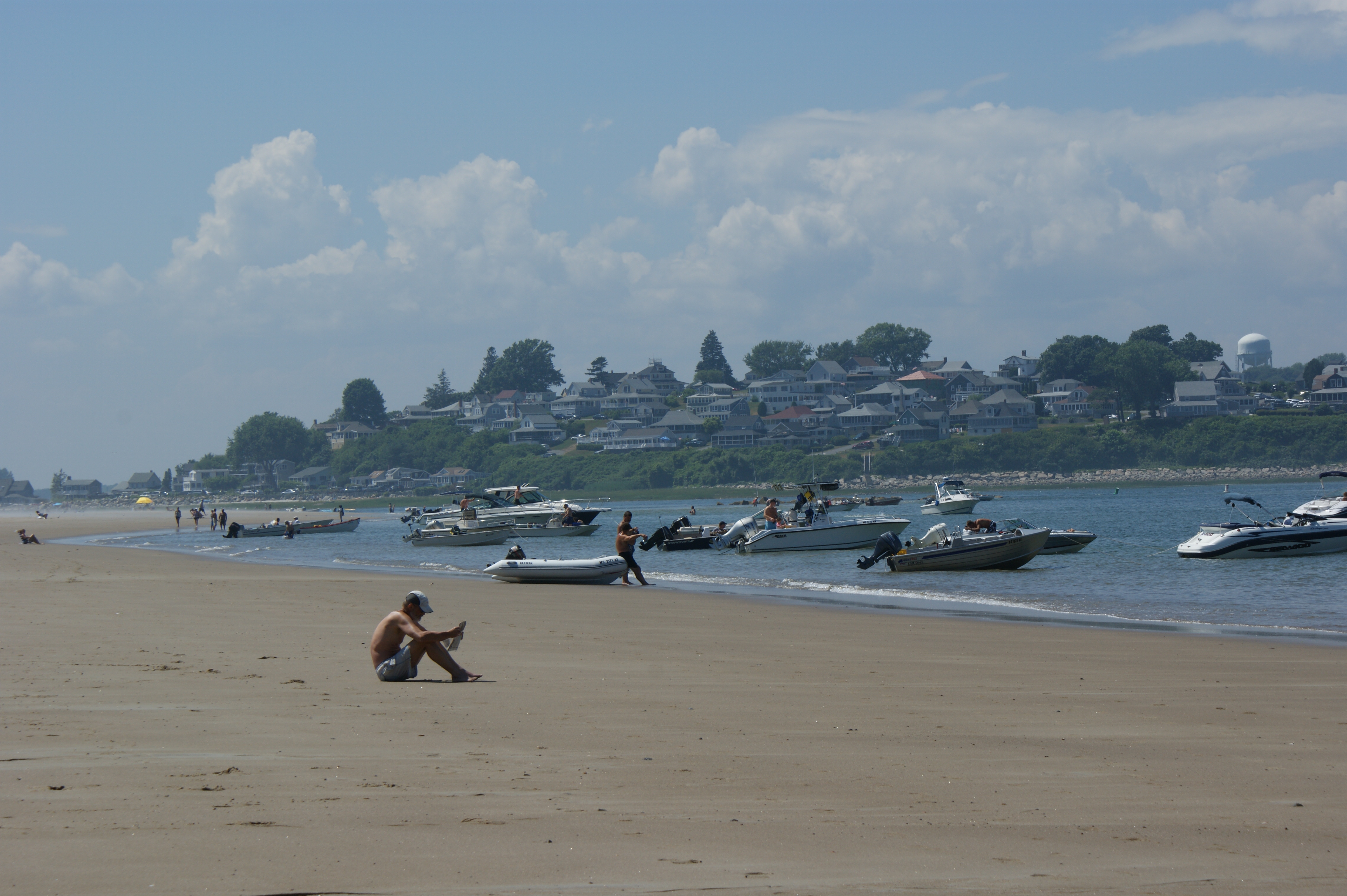
Tide moving out, sun going down, water gettting cold, leaves turning yellow, apples turning red, nights getting chilly, kids starting school.

Photo:  Cape Cod Bay, Brewster, Massachusetts, August 2010

The Autism Beat: Artism

Last week our daughter asked our son, “What do you want to be when you grow up?” and, he said, “An artist.”  Until now the answer was always, “I don’t want to grow up.”  Breakthrough.  All parents hope that their children will find a passion, something they can and want to do with their lives.  It’s not always a vocation, not always a career, but something that creates a spark that, with any luck, turns into a fire.

Our extended family is blessed with talent of all kinds, artistic in particular, that has manifested itself in many ways.  Our home is filled with art by people we love, from paintings to photographs to greeting cards to quilts to books to magazine covers.  Some it of it viewed by thousands, some only by us, and so I think about where his desire to draw will take him because it is, in part, up to us to guide him toward his goal.

The world is full of artists who do other things so that they can pursue their art on their own time.  So few are able to fill their days and their bank accounts by making art.  And our boy is what people would call an outsider artist, pursuing what is, for now, a narrow, if vibrant, aesthetic that is not uncommon in people on the autism spectrum.  It has a childlike quality joined with a certain kind of exactitude that makes it appealing but not necessarily marketable.  And as much as that would be wonderful for him, it is the satisfying process of drawing and completing that we hope to preserve throughout his life; for every artist it is as much about the act of producing a bit of art as it is about having it when it’s finished.  Whether one works for days, months or years on a piece or is compelled to finish it in one sitting, the worst thing that can happen is to stop creating altogether.

Note:  the drawings here are older (about 2008), because more recently completed work is large or oddly sized and not easily scanned or photographed.

Cape Light


My feelings about Cape Cod are complicated – it seems to be a place so very stuck between eras, never successfully occupying either present nor past – but I never fail to be charmed by the light, how it brings out colors that seem to exist nowhere else, particularly in the early morning and late afternoon.  It’s beach plum season, when the colors of both summer and autumn are exposed by the golden light in frosty skin of the pink-blue-purple fruit.

Best Coast


Best Coast is actually a new band that released their first album (on vinyl and cd) and their idea of the best coast is the West Coast.  It’s terrific retro California 1960s beach music.  Still, these photos of Steep Hill Beach in Ipswich, Massachusetts, make the case that the best coast is the one closest to home.

A Midsummer’s Garden Reflection by Verlyn Klinkenborg

I have only recently come to understand the allure of gardening and the reward of its cumulative experiences, but I have always admired Verlyn Klinkenborg’s writing (see links at right) about gardens and the parade of the seasons.  Today’s essay in the Times brightens further a Sunday morning in July.

The Autism Beat: Reflections of a Furious Cow

I asked my son to turn off the basement light and as he strode across the room to comply he retorted, “Oh all right, you furious cow!”

“Thank you!” I said, not very politely.  At which point another of my children said, “If I had called you a furious cow, you would have gotten really mad at me.”  I agreed, adding, “But he got that from somewhere else, and on top of that he loves cows – the furious part is the insult, not the cow part.”  Point taken.

Even though I shouldn’t be pleased that the autistic trait of drawing speech from movies and TV is so prevalent in our boy, I have to admit I get a kick out of it.  When he was small, people at the local pool thought he was British because he drew so many of his phrases from the exceedingly polite Kipper cartoons: he would stand next to the diving board and pipe up, “You have a go!”   Considering all the movie lines people throw around these days, it’s really not so undesirable – it’s a useful kind of shorthand.  As he has grown and developed more of his own, original speech, his reliance on scripts appears most often when he is upset and words come less easily. Knowing that the phrases come from somewhere else takes some sting out of the confrontation and allows us all to laugh (most of the time).  After the cow exchange we set about documenting the latest vocabulary of annoyance, and its sources:

  • “Exactly WHEN did you go insane?” – Ice Age
  • “I’m not interested in your excuses!”  – Sir Topham Hatt, Thomas the Tank Engine
  • “You’re a cowardly chicken, you really are.” – Porky Pig
  • “You are shrewd, rude, mean and dangerous.” – Chicken Little
  • “I hate you, rabbit.”  – Yosemite Sam
  • “Foom!!”  – This is the noise made when Sylvester the Cat’s head ignites in frustration.
  • “YOU get out!  This is MY swamp.” – Shrek
  • “Well?  Where’s the REST of me?” – Daffy Duck
  • “I’m going to go to the hospital for a NEW one.” – so old no one remembers, including him
  • “You’re just. . .different.”  Howard Bannister in What’s Up Doc?
  • Murderer” – Scar in the Lion King (complete with Jeremy Irons accent)
  • “You’re a looney duck and a cowardly cat, you really are.” – Porky Pig.
  • “Madam, you WON’T” – Merlin in The Sword and the Stone

and, my all time favorite from What’s Up Doc:  “Who is that dangerously unbalanced woman?!” 

That would be me.

1919-1992

Today is the 18th anniversary of my father’s death; my mourning has come of age.   The hot days of summer bring back all kinds of memories of him and playing them back and filling in details is a process that seems to dominate every July.  As much as I love him, most of the years we spent in the same house would never make a highlight film of his life.  And as much as he loved me, I am haunted by the bittersweet feeling and misplaced sense of responsibility that there are people and tasks that merited his attention and did not get it.

Depending on how you look at it I was in both the right place at the right time and the wrong place at the wrong time.  Appearing late enough in his life that I offered the joyous, no-strings-attached love of a little girl when such attention was in short supply, and in return I got the attention every small child craves from a parent.  My late arrival also afforded me a front row seat to a mid-life bout with alcoholism whose confusion scattered our family in untold directions.  I found myself adrift and distracted in the eye of the passive aggressive hurricane that characterized my parent’s marriage at that time, my allegiances shifting daily and instilling in me an unsettling certainty that there is no such thing as the whole truth.

His story ends well, with beloved grandchildren, an embrace of cooking, work and friends in the community, and a rekindled friendship with my mother.  She liked to say that the first 15 and the last 10 years of their marriage were worth all that happened between.  As it happens, what happened in between was my childhood. While I maintain that it was a happy one, I find myself sorting through it like a jigsaw puzzle, trying to make the brightly colored, oddly shaped pieces fit.

The inequalities of parental love – or any love at all – are tough to reconcile, and because I have witnessed in other families the carnage that can result when people attempt to settle old scores, I find myself overly focused on fairness and communication with my own children, knowing full well I have no control over how they might view their lives, and my role in them, fifty years on.  But what I carry with me is the sense that my parents, my family, have loved me the best they can, and that I should lift my head from the puzzle and work each day to return the favor.

Photo: Distortable Me


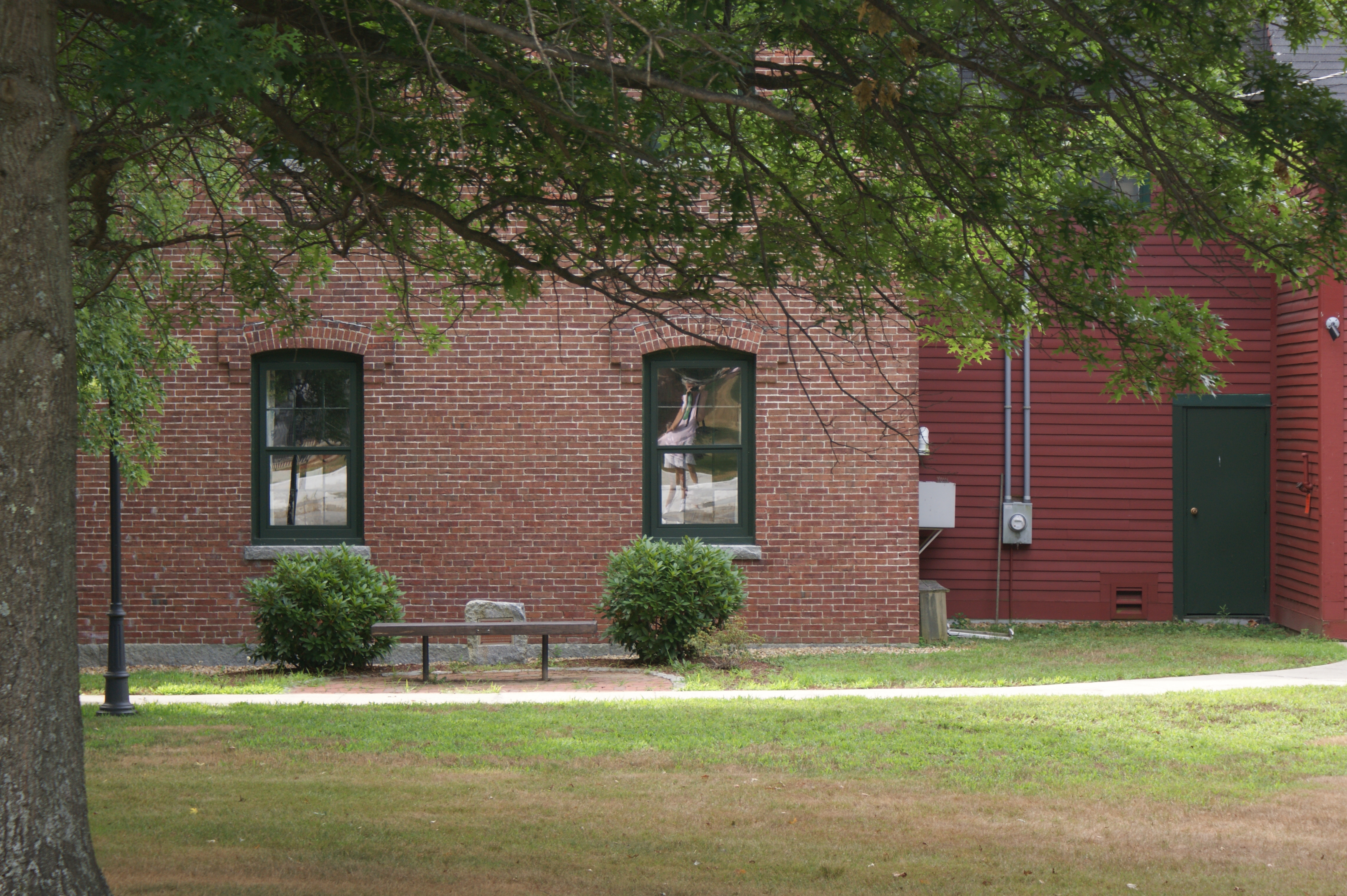
I went for a walk this morning to capture some beautiful windows I have been noticing lately and also caught this fractured image of myself in the antique panes of the local Legion Hall.

Website Powered by WordPress.com.

Up ↑