Spring Thaw, with a Vengeance

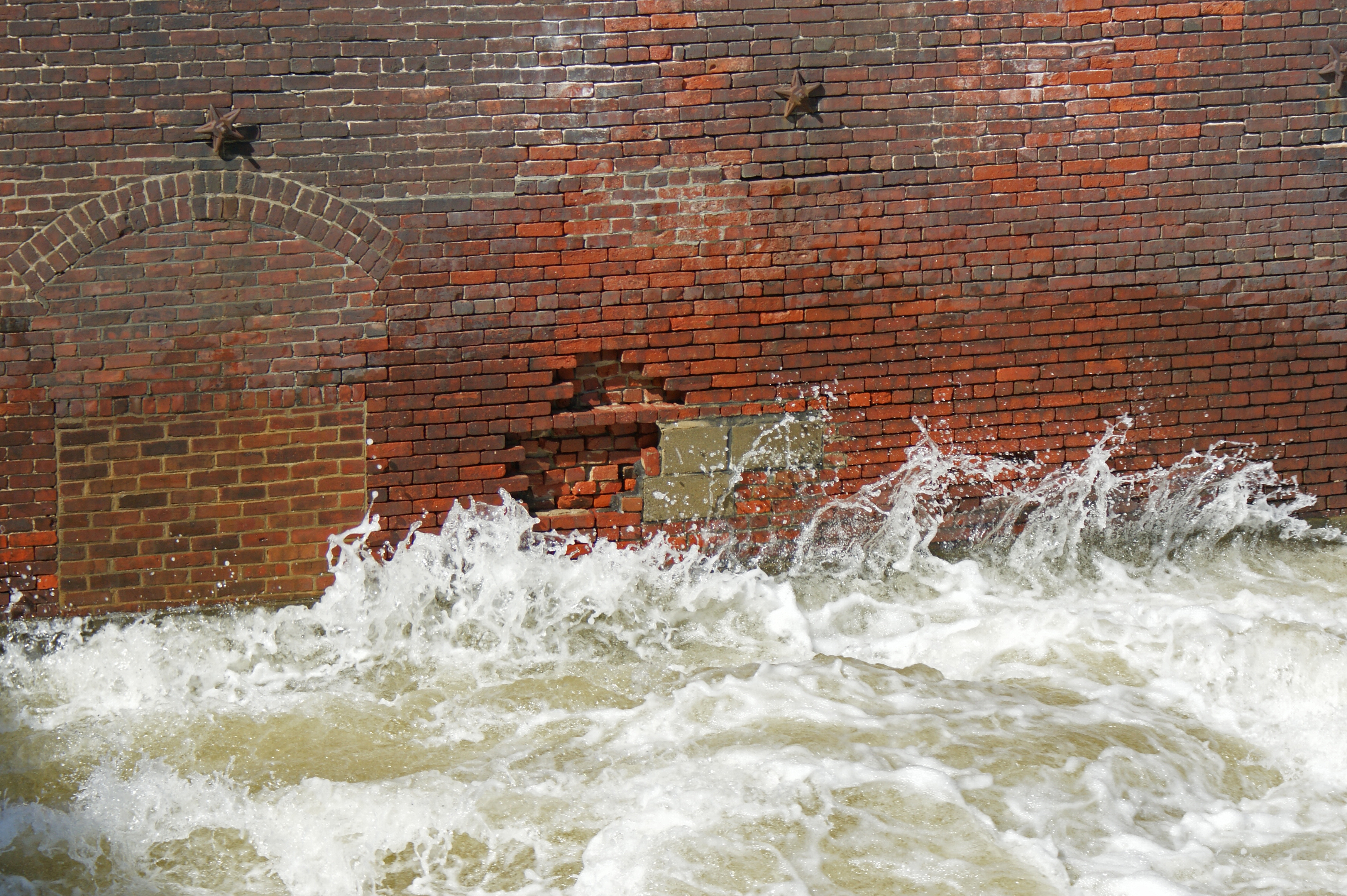
Last week the roiling Nashua River escaped its banks and pummeled the abandoned mill buildings it once powered.  Ten inches of rain fell over two days during the second powerful storm to hit New England in a month, taking all of the season’s snow and the contents of many cellars with it.  This mill wall, with it’s bricked up window and stars whose purpose elude me, says so much about how much we struggle to manage nature.  Harnessing and fighting its power at the same time; eventually giving up and letting it loosen and take the bricks with it downstream, one at a time.

Trees in the Calm Before the Storm

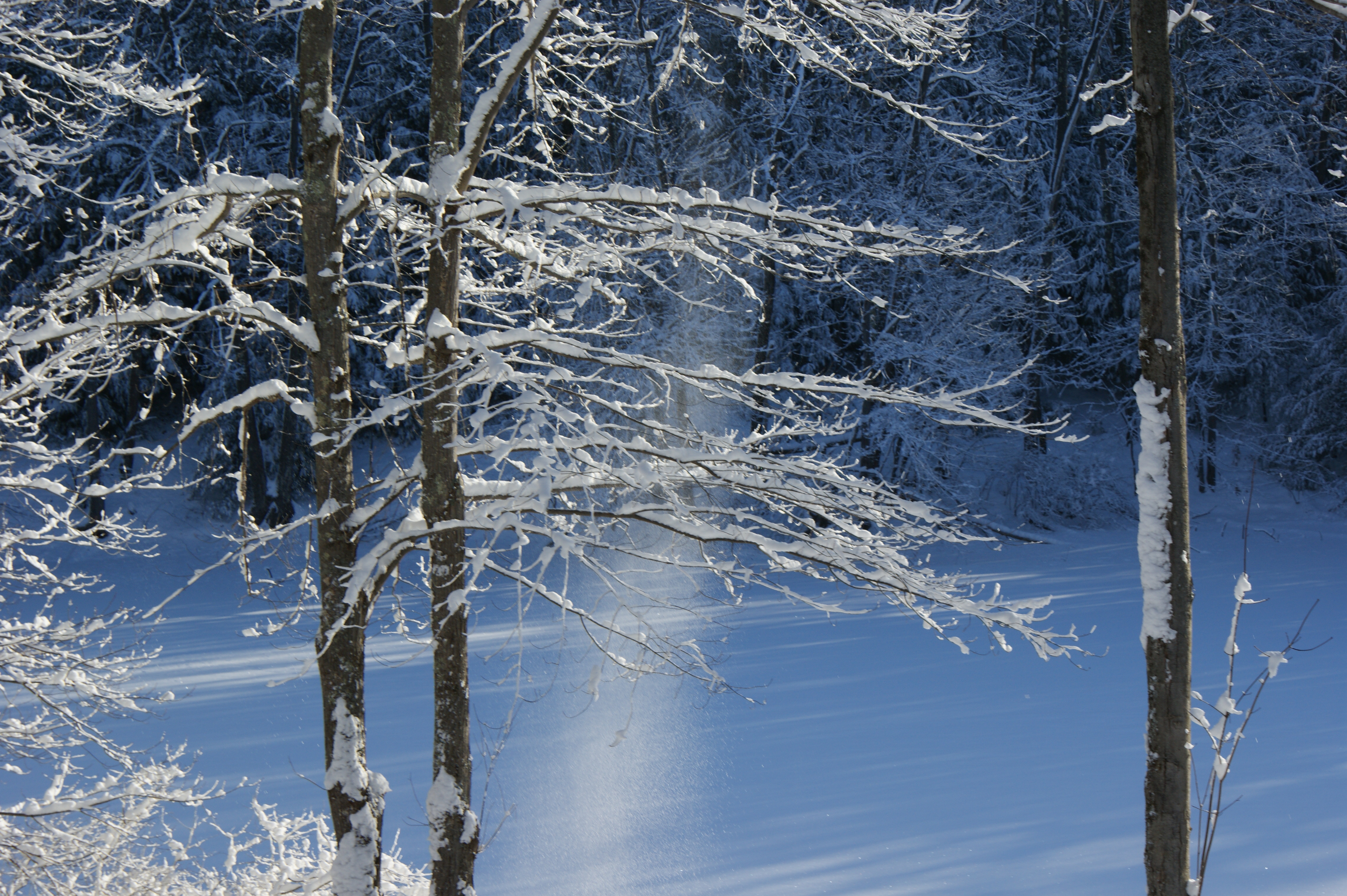
I posted a photo from the Crane Estate last weekend, and since then, like many places in the world this winter, nature chose to rearrange the landscape.  A fierce storm with high winds took down all the pines at the top of this scene – the ones near the green boxes near the mansion.  You can see here (above) that those white pines are top heavy, and torrential rain thawed the earth beneath the shallow root system and they toppled like toothpicks in hurricane-force winds.   The view below is the what you see when your back is the mansion – those trees sustained little damage, according to the news – when you are at the top of the hill closer to the house you can see the Atlantic.  Hundreds of trees were toppled on this unique property – the grand allee is the only vista of its kind in the U.S. –  that we traverse several times a year and have come to think of as part of our own family history.  We have photos here of our children at every age, and I carried each of them, summer and winter, in backpacks, on my shoulders and on my hip, miles and miles on its trails back and forth to the beach.  The land will heal, new trees will be planted (a restoration was already underway), and we will keep going back, and take more photos.  But we never know when that mighty wind will return.

Happy Hour at The Package Store

Local color:  in New England they often call the local liquor store the Package Store – the Packy, for short – where you can get your drink in a package to take with you, rather than served to you.  Ray’s, with it’ s clapboard facade and window boxes, is a favorite.

Hoarders

I once encountered a little girl, Erin, at a local bakery.  I was talking with her mother while we waited in line for coffee, and Erin, who was about five, was hovering near the wrought iron rack that held local papers and real estate flyers.  She was a little sprite with dark brown eyes and hair, pale skin, pink cheeks and a pointed little nose – a leprechaun in a pink parka.  Her mother shot her a look and she danced away from rack.  A few minutes later as I turned to leave I looked for Erin to say goodbye and saw her standing next to the rack holding her coat closed; real estate magazines were slipping out of her coat down to the floor.  She had all of them – dozens – stuffed into her coat.  Her mom looked at me and rolled her eyes nervously – she’s a hoarder, she said, she’s got every free magazine in town stuffed under her bed.  Erin looked at me and smiled proudly.  I was fascinated.  I knelt down next to her and looked at her earnestly.

“Erin,” I said, “I really need some of those magazines.  I love to look at pictures of houses, and those are just perfect for me.  Can I have some?”  She looked at me warily.

“How many?”

“Twelve, I need at least twelve.”

She counted them out and handed them to me with a sympathetic smile.

“Thanks.  Okay,” I said, “and now we need to leave some the next person who comes and needs them – can you put ten back on the rack?”

She shook her head emphatically, and her mother sighed.  “Look,” her mother said, “that leaves you with a whole bunch, and then you can get a few more the next time you visit.  Promise.”  Erin put two on the rack clutched the remaining magazines as though her life depended on them.  The mom mouthed “thank you” to me and whisked her away.

That story is one reason I have a morbid fascination with the Hoarders show on A&E.  I have seen homes like the ones on the show – bursting at the seams with all kinds of things – and sometimes I recognize the distractedness and insecurities of these people in myself.  There are people who use papers and books to remember people and times that mean a lot to them, people who get overwhelmed by the tasks of organizing the things they can’t part with, kids who hang on to stuff because they think they are responsible for the family memories, people who feel rejected by the world or their loved ones and so they bury themselves alive in things they have found or bought, and people who just love stuff and think everything is useful even when it’s not (the lady with all of the expired food was incredible).  Their minds are frenetic and paralyzed at the same time – they can’t stop thinking and they can’t start doing.  Everyone has moments like it, but these folks have decades of pain and confusion locked up with the stuff.

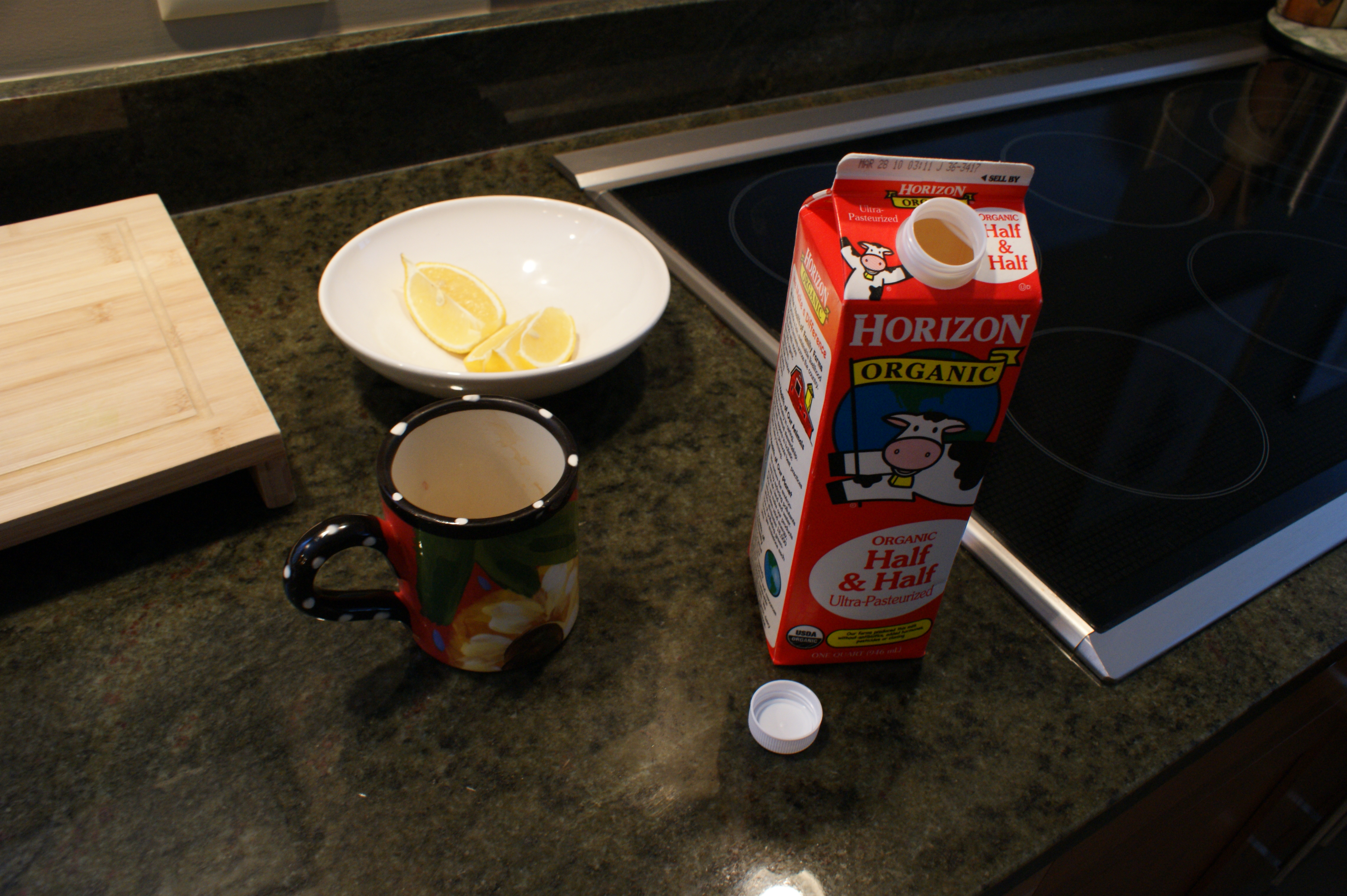
The part that resonates with me is the tendency people have to want their things where they can see them – the fear that if they put things away they will forget.  I get that way; I like things out where I can see them.  I am not good at putting things away until I am finished with them, but often they are things that really aren’t ever finished because we deal with them every day – I have my toothpaste on the counter (cap on), keep the folded laundry in the baskets for too long and I leave the half and half out until I have had my second cup of coffee.  While, thanks to Erin, I have learned to recycle the National Geographics, New Yorkers (okay, I rip off the covers and keep those) and all of the newspapers every week, I just learned that leaving out the half and half for an hour drives my family nuts (we won’t go into that version of OCD right now).  Leaving the cream out is clearly not a big deal, but it is at moments like this that I know that sometimes I live way too deep inside my own head, that I fail to notice outward things that are glaringly obvious to others.  My emotional radar is dead-on but visual cues and practical solutions can often elude me.  It spooks me.

Ironically, there is a perfectionist bent to hoarding; the sense that if you cannot accomplish something just right you need to wait for the  time when it will be convenient for you to do it the way it should be done.  The rationale that, not having hit upon the right solution allows you to put off a task until that magic solution arrives, which may or may not ever happen.  Back in the 80s, I was working at a summer camp in the midwest, and I attended an “unauthorized” party on the beach, where we cooked lobsters over a fire.  They were amazing, and so I put a smoky, delicious crustacean wrapped in foil in my backpack to take back to my friend Josh, who, on moral grounds, had declined to attend the party.  Nascent foodies that we were, I thought he would be tempted by the lobster, but I should have known better.  He refused to partake of my contraband.  It was late and so I shoved the beast back in the foil, into my backpack and went to bed.  The next morning I awoke to the now less than delicious smell of smoked shellfish and immediately took the backpack and hung it outside on a nail off the stairs behind my room – it was right on the lake and the steady breeze would take the smell away until I could dispose of it properly.  That was the rub – I couldn’t exactly put the stinky creature in the trash without being detected and thus attracting unwanted attention.  This was Michigan – lobsters are fairly hard to come by.  I decided I would need to drive it off site and dump it in town.  Except I didn’t want to put it in my car.  Ew.  So there it hung on the railing for days, haunting me and slowly ruining my new blue Wilderness Experience backpack.  Finally, Josh, disapproving – and fastidious, as it turned out – came up the back stairs to get me for dinner one night and caught wind of the rancid backpack.

“Cripes!!” He really said that. “What the heck do you have living in there??”

I was sheepish and hostile.  “It’s dead.  It’s the lobster you refused to eat.  I’m afraid to touch it.  I’m trying to get up the nerve to take the whole thing to town and throw it in the dumpster.”

“You can’t do that – that’s your new backpack!”  He was so practical.  He scowled at me, grabbed the pack and marched down the stairs.  I sat down on the steps and said nothing.  Five minutes later he was back with the empty pack and some dish soap, and he proceeded to soap up and hose the thing down for the longest ten minutes of my life.  I didn’t know whether to be grateful or annoyed, but settled on grateful because I really did love that backpack.  I was also impressed.  Why he was able to do that without so much as a moment’s hesitation?  What had prevented me from doing the same thing?   This difference in approach to problem solving is what begins me back to the poor folks on TV, hapless and helpless in facing their clutter.  Some of us have to fight to take the proverbial bull by the horns, and some people can see what needs doing and set about the task like there’s nothing to it.  In my case it was about having broken the rules, then having my lobster rejected, and then having to deal with something disgusting.  It takes a lot of energy it takes to deal with so much bad karma.  And then the guilt of watching someone else actually deal with it – no wonder I haven’t thought about it in 28 years.

There are plenty of areas in life – important ones – where I have always been able jump in and do what needs to be done, and I have since tackled many situations that make cleaning a gross lobster-filled backpack seem like fun.  But there is that all-or-nothing approach – industriousness or paralysis – and I haven’t always been able to predict which impulse will kick in. I did realize a few years back that the yo-yo approach to life was bringing me down and so sought help – spiritual and pharmacological – to deal with the impulse to do way too little or way too much.  It’s working out very well – and watching Hoarders is a not so gentle reminder that there but for the grace of God go I.
Happy Birthday, George Washington

Another great conversation with our boy. 

A voice wafts in from the living room.

“Mom, today is George Washington’s Birthday.”

“I know.  How should we celebrate?”

“I will speak to him with my heart.”

I overhear a whisper.

“Happy Birthday, George Washington.  I hope you are having a nice birthday in heaven.”

He comes in to see me.

“I told him to have a nice day with my heart.  I hope I didn’t disappoint him.”

“How could you disappoint him?”

“I don’t want him to think he is not in my heart anymore.”  He pats his chest.  “He’s still there, nice and safe.  I won’t forget him.  Or Lincoln, either.”

“I know they are both very proud of you.”

He sighs. 

“Yeah.”

Winter Window, Ipswich

This is the cottage at the entrance to The Crane Estate in Ipswich, Massachusetts.  The colors in the roof tiles, the curve of the wrought iron entwined with the ivy and the gnarled trees in the winter sky all remind me of a faded photograph from another time, even though I took this today.

First Season Beauty


Days like today remind us why we endure New England’s long winters.  There’s nothing like a morning in which the snow is so white it reflects the bluest sky.  Later on it will be warm enough for a walk, but for now, it’s time grab the coffee, pull the chair up to the window, and open the solar panels in our heads.  Recharge.

In Search of the Savant

HBO just produced an excellent biopic about Temple Grandin starring Claire Danes.  Grandin is a professor of Animal husbandry at the University of Colorado and has made name for herself for her innovative designs for humane slaughterhouses.  At first glance that might seem like an oxymoron, but her premise is that if we are going to raise animals for food, we need to treat them with respect and make their lives as pleasant as possible right up to the moment, as she says, “they become meat.”  Grandin’s designs come out of her unique empathy for animals and her ability to understand their visual and sensory perspectives, and she credits her ability to do this to her autism.  HBO’s film portrays key moments in Grandin’s life with remarkable clarity, not allowing the extraneous details of her childhood and family life infringe unnecessarily upon the heart of the story, which is the discovery and nurturing of Grandin’s gift for thinking in pictures and translating that skill into workable solutions for real-lfe problems.  Her voluminous photographic memory permits her to draw on virtually every single image she has ever encountered, and to process that information into something useful to her, and often, but not always, others.  She has documented her life well in several books, and she lectures far and wide at autism conferences, doing her best to impress upon families, teachers, doctors and researchers the importance of cutting through the sensory static and literal translations that can nag at the autistic mind.  Several years ago she was profiled in The New Yorker for her work designing the slaughterhouses, and I carried it around with me for months as an example at meetings and support groups, saying “this is what I want for our children with autism, for it to be both essential and secondary to who they are.”  Or as the movie’s tag line goes, “different but not less.”  Temple Grandin is extraordinary in so many ways, and she’s as energetic and industrious in pursuing the interests that drive her as well as the obstacles that autism throws up in front of her.  She can’t stand being touched by people so she devised a hugging machine that fulfills her sensory need for direct pressure; she has a sensitive digestive system and texture issues, so she eats lots of yogurt and Jell-O.  She is a fascinating mix of rigid and adaptive.

I hope that Grandin’s story will supplant the Rain Man imagery attached to autism even though I embrace the glamour and intrigue that comes with the concept of a savant as portrayed by Dustin Hoffman in that film.  It is impossible to say whether the person in that story would have benefitted from the kind of education that Grandin did.  There is no denying that some people are more hobbled by their autism than others, and that the gifts exhibited by some are more striking than others.

By the book, a savant is someone who is an expert, and in even today some append the term idiot savant to those who have dazzling gifts accompanied by startling deficits in other realms.  Many parents with children on the autism spectrum have had the maddening discussion with people who simply must know if their child is a math whiz, a brilliant musician or an organizational genius; I keep waiting for someone to ask about x-ray vision.  There should be a way to have that conversation without putting people in a position to justify the disability.  What the HBO version of Grandin’s story ignited in me is the realization that we all hope for an inner savant, in our children and in ourselves, and the beauty of Temple is that she has found a place where her inner world and the outer world that so confounds her can merge.

I understand that autism can manifest itself in ways that can be unsettling, disruptive and painful, but it takes only a small leap to see the universality of Temple Grandin’s journey.  Anyone trying to get a job, applying to college or thinking of a career change asks themselves the same question – what do I do well?  What is my destiny?  Why am I here?  Does anyone out there see the real me?  Some people go though their lives not knowing for sure if they found their niche.  Autism writes that problem on the wall in stark relief, and in that process presents some of us with a niche that finds us.

And, to extrapolate even further, it occurs to me that greatest moments in time are populated with people who nurtured extraordinary gifts in tandem with staggering weaknesses.  There is little room for mediocrity on the lists of Nobel, Pulitzer and in the annals of History.  And yet we strive for children who fit in, for people who meet the established standard of achievement, for uniformity and acquiescence.  To take a small but colorful sample, and because I have just finished reading the real-life potboiler Game Change, I cannot help but think of all of the politicians who are brilliant strategists and personal goofballs.  Bill Clinton is nothing if not a political savant, a Rhodes Scholar who claimed he never inhaled pot, and he joins a group of folks both brilliant and crazy in similar fashion:  Gary Hart (smart enough to change his name but not to stay off the Monkey Business?), Eliot Sptizer (pimp buster and escort service client), John Edwards (populist hero with the Armani labels ripped out of his suit), Mark Sanford (he tried to give back the stimulus money and he gave his wife half a bike for her birthday).  These people are almost autistic in reverse – social skills savants with a startling deficit in linear thinking.  I’m being flip, I know, but my point is that we take great pleasure in parsing the strengths and weaknesses of our public figures, so why aren’t we better at identifying the same things in our kids?  There are parts of autism that need to be managed, even fixed, but what we really need to do is mine the brilliance, harness the energy, bring more tools to the table that allow people with hidden gifts to find them, even if, for some of them, in the end, it just means ending some of their frustration and giving them some peace and happiness in a world that mystifies them.

Winter Moon Over Gibbet Hill

This is one of my favorite spots in Groton, Massachusetts.  Whenever the sky is unusual, there are beautiful views from every angle, and when it is windy and bitterly cold, as it was last night, you can take great photos without even getting out of the car.  This full moon is purported to be the brightest of the year, but I don’t understand how they can know that, unless it’s just because it is so cold in January that the atmosphere is extra clear.

Winter Light in Florence, 1992

A city, a camera, and a clear winter morning.  Perfect.  The crisp light of winter and the shadows of good architecture trump the graffitti on the walls.

Website Powered by WordPress.com.

Up ↑