I know this is supposed to be my writing, but I wish I had written this.
Did I say I love the Times? I love the Times.
I know this is supposed to be my writing, but I wish I had written this.
Twenty First Century Writing
I know this is supposed to be my writing, but I wish I had written this.
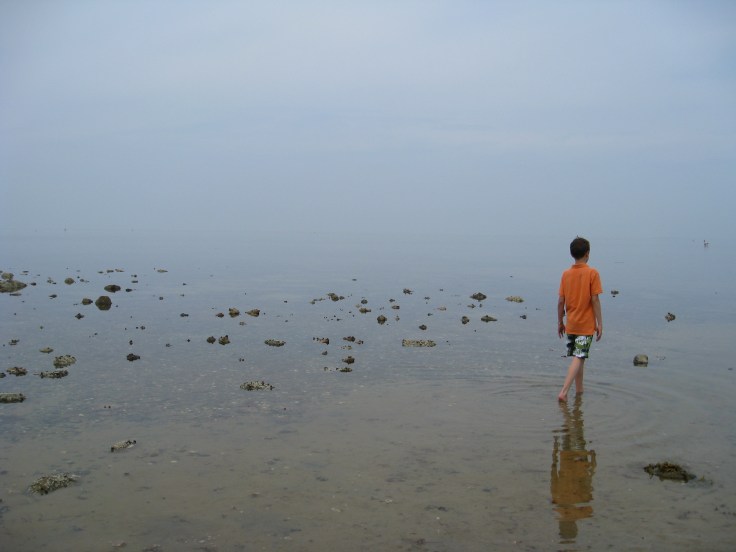
What does it matter where people go? Anywhere, anywhere, I don’t know.
– A. A. Milne.
Once or twice a month we would be dismissed from school at 1:30 so that there could be a teacher’s meeting. We were savvy 7th graders, done with the playground flirtations of 6th grade – we wanted to spend the day downtown. Only a few blocks from our school, our Main Street was like every other in the Midwest, with lines of brick turn-of-the-century buildings, numbered cross Streets and mom and pop stores increasingly aware that they were a dying breed. Still, the seventies were taking their toll on Main Street, holding disappointments and surprises along the way. Already losing ground to the new mall on the other side of town, the city planners had torn up the straight main street and made it curvy and added modern multi-globe street lights and more stop lights in hope of drumming up business for the merchants who remained.
It was perfect for us. We could walk from home and school and spend a whole afternoon making our way from the Library at 5th and Main to the Regent Theatre at 2nd street. The Regent didn’t show matinees on weekdays but we would always check the coming attractions (anything from Annie Hall to Gone With the Wind) and come back on the weekend.
Pockets loaded with allowance money and whatever we could scrounge from our mothers’ change drawers, my best friend and I would recruit any of our other friends who wanted to go and hurry to our first stop, the Public Library. We bounced down the street in those days before 60 pound backpacks, iPods and cell phones, elated to know that we were free of nuns, coaches, and parents until suppertime. That was true every day, of course, but going downtown on our own was a special freedom, one that allowed us to peek through windows and doors and make a short foray beyond the neighborhood.
The library was an old blond brick building with a modern addition that had large widows and thick carpet on which you could run through the stacks without being heard. I loved the books with their gold embossed spines or jackets covered in cellophane, so much so that I often hated parting with them – much of my allowance went to library fines. It was understood that, even though we were old enough, there were certain books in the adult section we weren’t supposed to check out, and so we would snatch the romance novels off of the rack near the front desk and sneak them to the back stacks so we could read the steamy parts. No elegant binding here – they were well-worn paperbacks with titles like The Wolf and the Dove and The Flame and the Flower (which, incidentally, are still in print and have dozens of reviews on Amazon). Occasionally one of my friends would actually smuggle one out the library in her jacket, but I never dared. It would not have been worth getting caught. My mother had already given me permission to check out my beloved Hollywood biographies (over the objections of the nuns at school) and there was no way I would give up access to Marilyn Monroe, David Niven and Judy Garland for a cheap thrill.
On to the soda fountain at Hieber Drug. Located in one of the older storefronts, it had high stamped tin ceilings with black fans twisting lazily overhead. There was no more empowering experience than to hoist ourselves up on the black leather swivel stools, rest our elbows on the cold marble countertop and order a green river or a root beer float. With enough green dye to make you glow in the dark, green rivers were all fizz and no flavor but they looked spectacular in the curvy soda classes. The root beer floats had a thirties moonshine look in the thick mugs; I still love silky vanilla ice cream against sharp, foamy root beer. Dog ‘n Suds, the yellow neon drive-in restaurant across town, couldn’t hold a candle, neon or otherwise, to a countertop float at Hieber’s.
Beyond the delights of the soda fountain there was a certain mystery to Hieber’s. I never saw my father there, but I knew he bought greeting cards and stale Whitman’s chocolates from Hieber’s for my mother on holidays, and as the years progressed she was less charmed and more annoyed by these offerings (I, of course, was charmed – Whitmans had a map on the top of the box so you knew what each chocolate had inside). Reading the cards, with their cellophane overlays and cursive poetry, I could not quite connect the sentiments found in them to my parents. The inscription didn’t match the tone of their banter when they got along nor the smoldering resentment when they didn’t. My mother would remark pointedly on Mother’s Day, “I am NOT your Mother.” He would just chuckle and I would giggle, too. It wasn’t really the cards; he would call her Mom all the time, just like us, using pretty much the same tone. He called his own mother Gramma, too. Once we were grown and moved to the city to be near the grandchildren, he never skipped a beat – he called her Grandma, which also drove her crazy. I can count on one hand the number of times I heard him call her by her given name.
Anyway, I always thought about my Dad stopping in at Hieber’s and wondered what he did there, whether the knew the man behind the counter or the one who was always smoking in back. Hieber’s smelled like hair tonic and alcohol and newspapers and reminded me of our town as I imagined it was in the 20s or 30s, as if Bonnie and Clyde might walk in the door any minute. Dad loved to tell stories about those times. After 25 years of marriage to a native Iowan, my mother, a transplant from Philadelphia, had clearly had her fill of Old Iowa stories and whenever he began to wax nostalgic we all rolled our eyes and groaned as if we would die of boredom if we ever heard any of them again. But truth be told we all loved the stories (like the one about the Indians who were allowed to come into the Mains Street stores and take whatever they wanted), Mom included; it was the way he told them in this phase that wearied us – it was like we weren’t even there, he would just drone on, as if nothing in the current day – including us – interested him much. We were young; our lives were too exciting to be drawn to sepia tones. Many years later, the fog of middle age long lifted, he would tell all of the stories again on a single afternoon, the colors and joy refreshed as he spun them, his voice animated and his audience rapt.
Time to cross the street and blow some money at Ben Franklin. Straddling that odd place between childhood and adolescence, we debated among Play Doh Fun Factories, Barbie Dolls, Rona’s Barrett’s Hollywood, Billboard and Rolling Stone magazines. Usually we got magazines because they were cheaper and easier to share, but I did buy my only Barbie (Malibu) on one of those afternoons, more as an act of rebellion since my mother refused to buy them. Plus, my friend had scores of them with a house and everything, too, so I wanted to show up at sleepovers with, at the very least, my own perfectly tanned Barbie.
Hungry again. On to lawn City Bakery for fresh long johns from Mr. Lang. Long johns were puffy, rectangular shaped fried dough with a long perfect smudge of white icing on the top. With our big family, we had long since abandoned homemade birthday cake, but no matter. Mr. Lang’s cakes were Crisco and white sugar heaven with red icing roses. The roof of my mouth still hurts when I think of the all-frosting bites that I saved for last. Say what you want about the dangers of fluoridated water – it’s the only reason I still have my teeth. Mr. Lang had developed an allergy to flour over the years and had to keep his arms and hands completely covered when he baked. It looked a little odd in the days before everyone wore gloves when handling food, and I wondered if the allergy kept him from eating all of those wonderful sugar-filled deep fried confections.
Before we entered the bakery, I would glance across the street at the open door to Vic’s Tap and wonder who would want to be in such a dark place in the middle of the day. The sounds of deep voices and clinking glass spilled out onto the street, along with the odor of beer and cigar smoke. Even as the warm sweet smell of the bakery pulled me in, I parsed the familiar and unfamiliar smells from Nick’s. Cigarette smoke, bourbon, whisky and gin were good smells: beer and pipe smells were musky, strange and unwelcome. The former conjured up images holiday gatherings and of parents just home from a party. A hug wrapped in chilly winter mink, Kent cigarettes, Old Crow, and Chanel No. 5; a smiling smooth cheek damp with scotch and Old Spice. Later, my husband would imbue romance into beer and cigarettes but then it seemed that beer smelled old and stale even when it was fresh; spirits never lose their luster.
Sometimes we would stop by the Hotel Black Hawk to poke around in the lobby. What the mall was doing to the merchants, the Holiday Inn and the Howard Johnson’s out on highway 218 had done to the Hotel. It was mostly residential now, a kind of stepping stone to the local nursing home, called the Western Home (I always imagined that it had swinging saloon doors and looked like the set of Gunsmoke, only with wheelchairs). With its black and white tiled lobby and cloudy front windows, the Hotel still had a lot of folks coming and going. My Mom rented one of the offices off the lobby for the local Birthright organization. She met with girls and women who were pregnant and needed support, money and a place to have their babies. It served her purposes perfectly – anonymous but still easy to find. It was very simply furnished with a desk, two chairs and a black rotary dial phone that looked just like the one in the Birthright logo. She was seldom there at this time of day, though, and usually we moved fairly quickly out of the Black Hawk lobby and back onto the street to check out the movie theatre and then head home before dark.
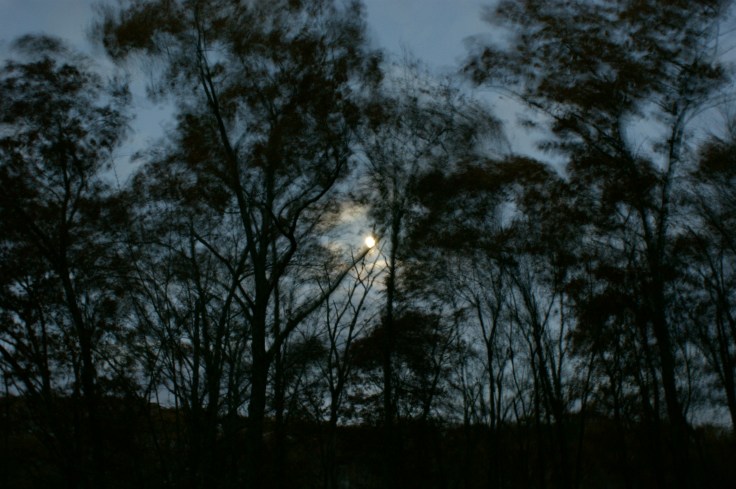
It was a warm, windy, crazy Halloween night and somehow the camera caught the movement in the trees.
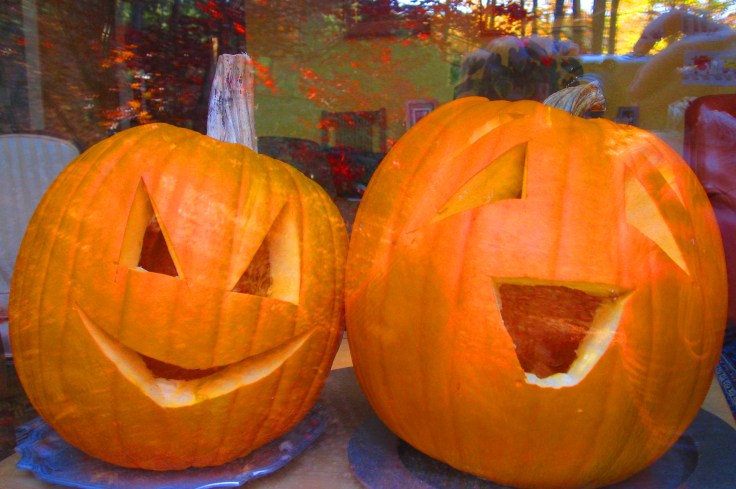
Smiling Jack O’ Lanterns – the best part of Halloween.

Election night 2006. That’s Deval Patrick on the jumbo screen at right, emerging triumphant in his victory as the first person of color to be elected governor of Massachusetts. The campaign slogan was Together We Can. The headline in today’s Boston Globe was that he will cut 1,000 state jobs to avoid a budget deficit of $600 million. He didn’t create the recession, but there is still something terribly disheartening about this news. Families of people with disabilties will lose the people who support them, more teachers will lose their jobs, more schools will be overcrowded, and politicians – the Governor included – may use this as an excuse to build casinos in Massachusetts. He is sinking in a quagmire not of his own making, and signs point that he is looking to all the wrong people to pull him out. I don’t blame him for not getting along with his own legislature – even though his party holds the majority – but, just as with Obama, I wonder if he has been able to surround himself with people who are truly like-minded.
That election night was an interesting moment in time. Ted Kennedy spoke (boring boilerplate), as did John Kerry (deadly boring boilerplate – leftover from 2004 Presidential campaign) and Martha Coakley (most boring of all attorney general-speak that she still uses in her current campaign to fill Kennedy’s Senate seat). Patrick was the beaming exception. Like Obama – he literally lit up the room.
Still, my favorite moment from that night did not take place on the floor, but in the empty corridor outside as my daughter and I were going out to find something to eat before the speeches began. It was one of those enormous convention center hallways that could accomodate a truck if it was required, and walking toward us was a man in a red pullover sweater. He looked familiar and I squinted to get a better look. He smiled at me and, not breaking his easy stride, smiled and said “Hi there, how are you?”
“Fine, thanks.” I nodded and returned the smile as we passed each other.
My daughter looked at me, and said “Who was that? It seemed like he knew you.”
“That, my dear, was Mike Dukakis. And he was once the Democratic nominee for President of the United States. I’ve never met him before, but that’s what good politicians do – they make everybody feel like them know them.”
“That guy in the red sweater walking all by himself?”
That guy in the red sweater walking all by himself.

I’m not quite ready to give up on Summer yet, and this moment captured from the Island Queen ferry as it pulled into Oak Bluffs captures the essence of the 2009 Obama-rama on the island of Martha’s Vineyard. Taken just a few days before the Obamas vacationed on the Vineyard last August, the woman with hat and cellphone among boats large and small pretty much said it all.
 I heard a voice on the radio last week that sounded like a folk singer who used to work for me when I was at MIT. It was an odd match – she was this tremendously talented woman in her 30s trying to pay the bills so she could pursue her art and music and I was an ambitious twenty something newly ensconced in a senior position in the President’s Office. I was advised by one of my superiors that I was expected to prove myself with the subtle warning “not to let my slip show.” So I hired Suzanne because she was bright and funny and seemed to understand teamwork, and I needed all the help I could get.
We both had a lot to learn, it turns out, and in the years since we parted ways I often think of her as I pursue organic gardening and alternative therapies because she was on the leading edge of these things way back in the 90s. Me, I was on the leading edge of a nervous breakdown, and loving every minute of it. I loved the meetings (it’s true, I love meetings), the policy discussions, the intellectual give and take of some of the most interesting and fascinating minds of our time – Lester Thurow, Paul Krugman, Bob Solow, John Deutch (pre-CIA), Francis Low, Philip Sharp – I only took notes on the discussions but I relished the immersion in ideas, and I gloried in taking it all down and getting it just right.
Suzanne was helpful in her wry way but clearly less enamored of the process than I. Part of our job was to prepare for meetings, sending out agendas and prep materials and copies of the meetings notes. To keep all of our groups straight (for us and for the members, who often sat on several committees), we coded the notes and agendas, assigning each committee their own color – yellow, green, blue, pink, goldenrod. There were long hours in the windowless copy closet down the hall, and we had to lug our own colored paper with us each time we traversed the infinite corridor between our office and that room. It was a pain.
Late one winter afternoon I dispatched Suzanne down the hall with a ream of pink paper to copy agenda and notes. She returned with the notes, and each set had the first two pages in pink paper and the subsequent three in white. There it was, my slip showing, a bit of white peeking from under the pink. I didn’t handle it well.
“What’s with the white paper?”
“I ran out of pink and so I just finished them in white.”
“Are we out of pink?”
“No, I just didn’t want to walk all the way back to get more.”
“Well, we have to redo them so they are all pink.”
“You can’t be serious.”
“No, we really have to. We cannot send out two-tone notes. It’s sloppy work. We just can’t.”
“You’re just going to throw away all this paper because it’s the wrong color.”
“No, we’ll recycle it. The notes absolutely must be all in pink.”
“You’re going to WASTE all of that paper and time and work just so they can be all pink?”
“If you were worried about wasting paper and time you should have come back down the hall for more pink paper.”
We were both furious. I made her stay late and redo it herself. I didn’t even help. It was then that I realized that I did not like being a supervisor and that I was not very good at it, either. Eventually, Suzanne went on to work for a brilliant music professor and we parted on good terms. After hearing what I thought was her voice last week (it wasn’t) I learned that she left New England to pursue her art and music and, from what I can see on her website, she looks well and happy, and I am glad. She taught me a lot, and I drove her crazy. Okay, maybe we drove each other crazy.
I still have pink paper moments all the time. Moments where I would rather do things myself instead of harangue my kids, where I insist on things being done a certain way, and I still find myself wondering if my slip is showing. I reconsider that exchange where I demanded the recopying often, at those moments in which attention to detail may seem over the top but that the urge to do something – anything – precisely right is overwhelming. On some days, doing the little things right is all I am able to get done at all.
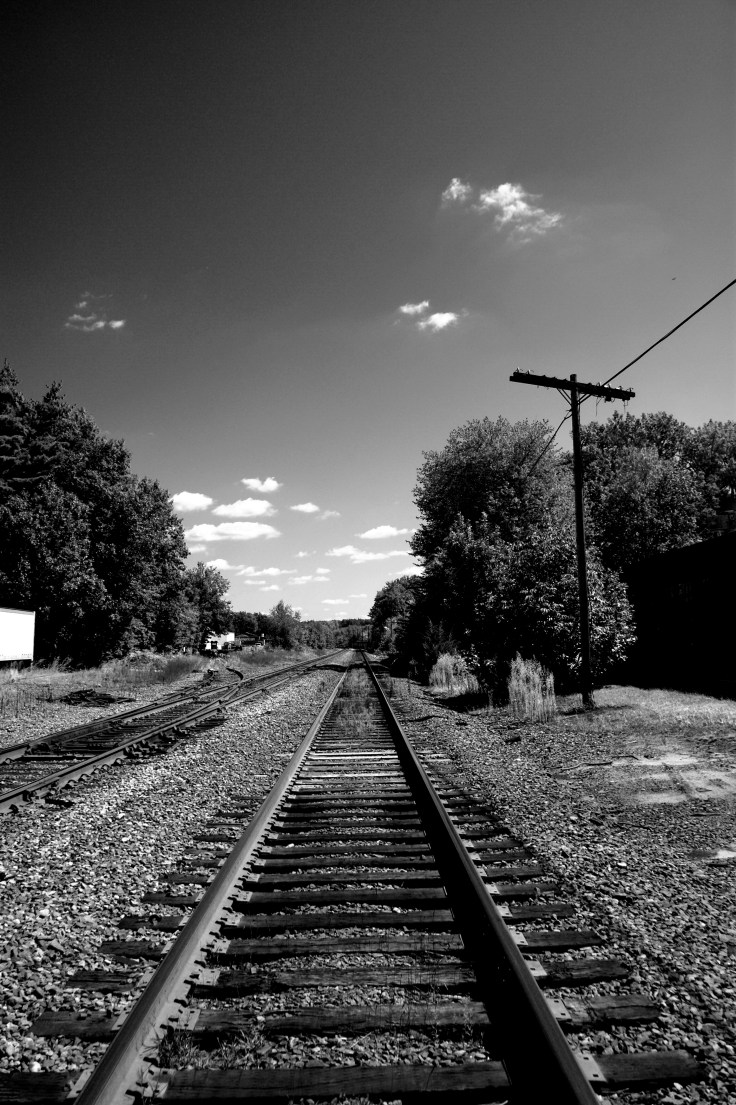
Commuter Rail tracks at Groton-Harvard Road, Summer 2009.
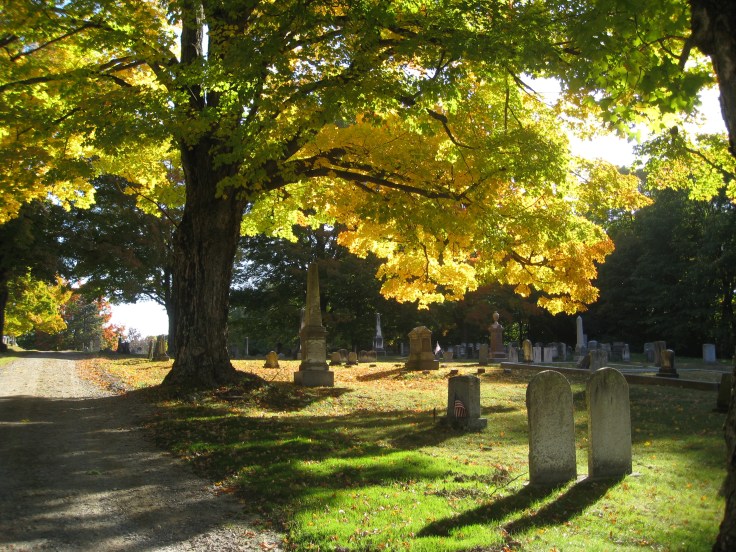
Each season I visit this cemetery to record the quiet majesty of old stones and ancient trees. Today I was there with friends to bury someone so stalwart it is impossible to imagine she has left us. Next week we will have a new cemetery to visit and a beautiful young woman to comfort. She lost her father in the space of a moment. Maybe we all do. It’s just a matter of which moment we realize it.
 LettersHead