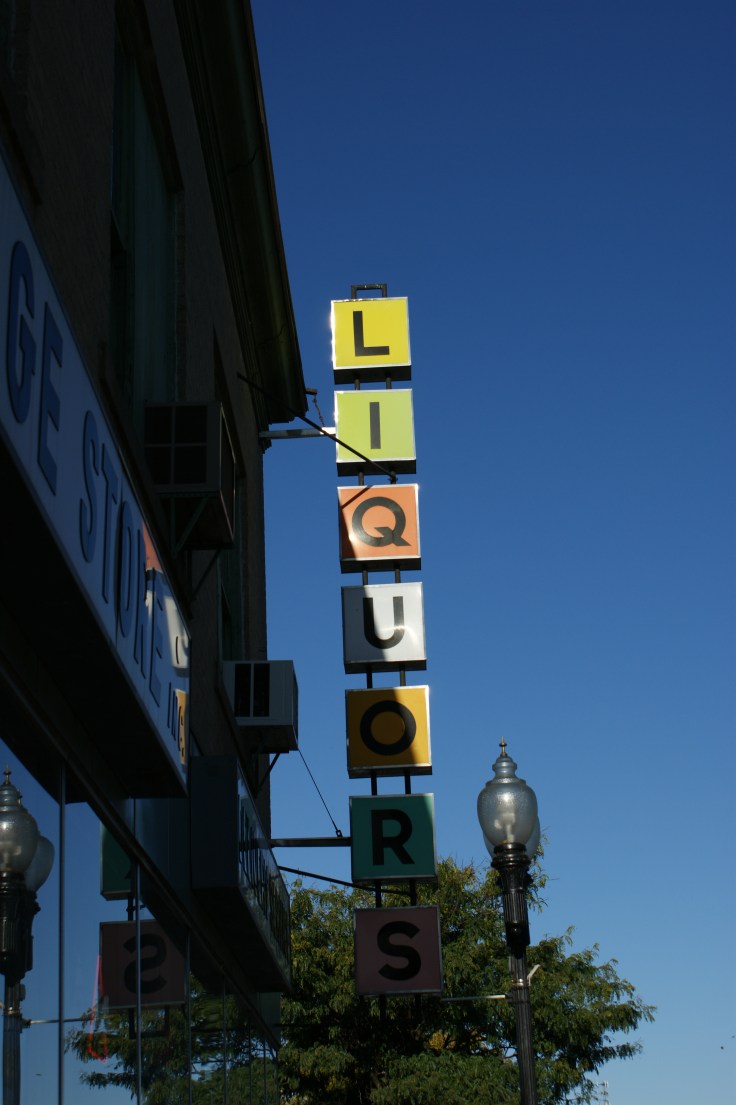
What Time Do You Open?
Twenty First Century Writing
As we drove home from dinner last night in the autumn darkness I noticed something on the windshield through the sleet – little circles that caught the light from the oncoming traffic. This morning I glanced over and confirmed it – five prints on the windshield, large to small, a perfect print of W.’s right toes. On Mondays while we wait for A. to come out of guitar lessons, he often slips his feet out of his shoes and socks and puts his feet up on the dash, wiggling his toes and grinning up at me mischievously.
There is something terribly pleasing about putting your feet up in front of you when you ride in a car or train; I used to do it every morning and evening on the Commuter Rail from Cambridge to Concord, tucking my long skirt underneath me and wedging myself between the seats, my knees up on the one in front of me. I now know that this designates me as “sensory seeking,” a person who seeks direct pressure from physical contact – heavy blankets, warm sweaters, snug turtle necks, bear hugs. But is has to be just right and it has to be my idea or I become instantly claustrophobic. This is where I find W. truly astounding, because even at fourteen he can climb on my lap and it is no more burdensome than holding a baby. Even though I cannot let him stay there (for a multitude of reasons) it amazes me that he can totally get away with invading personal space and can position his body in a way that minimizes the impact of his weight. Maybe we are sensory seeking in just the same way; we attract like magnets, quickly closing the space between us.
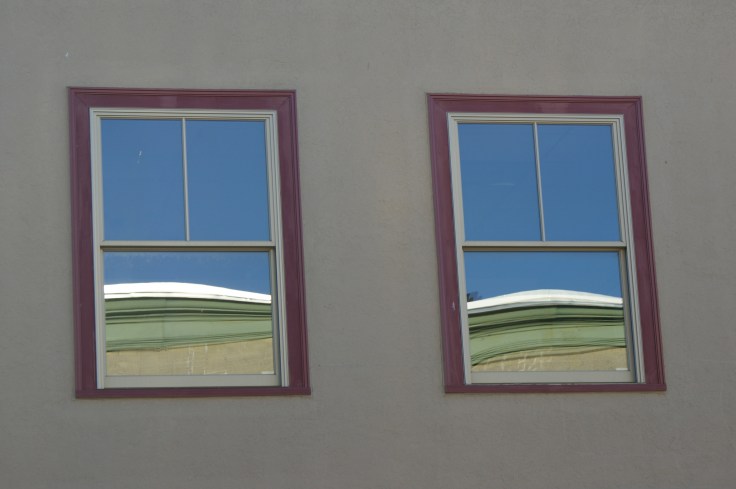
No story here. Just colors and shapes and light that make me unreasonably happy.
Something stirs in the dead zones; cool water on the hot coals of confusion. The steam sears, but it feels good to know emotional complexities again. The spots and crackled skin on my hands comes from over exposure to the sun, but the warmth that is brings is something good. For the first time in a vey long time, I am comfortable in my own middle aged skin.
The stirrings were fleeting at first and are still vulnerable to the snapping jaws of panic, but I can still recall when fear was the only reliable emotion I could access for weeks or months at a time – I had two modes: panic and exhaustion from being panicked all the time. I was able to identify the places where joy and peace would fit, but there was no feeling to put there, and so I filled them with tears that may have looked like happiness but were actually despair at the joy I was incapable of feeling. The numbness is not entirely gone, and sometimes I still fill the slots with the wrong emotions, but in the past year I have felt a broadening, an expansion, like blood flowing into long empty veins. It can be painful, but those pipes that flowed primarily with fear and confusion, now course with hope.
Where all energy went into the suppression of fear, there are stories, words descriptions, curiosities that no longer torment but intrigue. I read and write and the atrophied muscles ache and respond. Slowly.
Recovery has required withdrawal from things and people I know are important. I will have to find a way to keep those connections without allowing such pursuits to short circuit this delicate thread of creative electricity. I worry that it will snap but I know that I will only happen if I allow it.
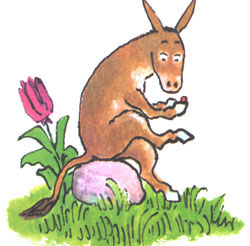 We used to read William Steig’s Sylvester and the Magic Pebble every night. It’s the story of Sylvester Duncan, a young donkey that finds a magic red pebble, and, faced with a fierce lion on his way home, Sylvester panics and turns himself into a rock. His frantic parents look all over for him, but give up in despair after a month of searching. They are reunited a year later when his parents lay out a picnic on the rock that is Sylvester, and happen to find the red pebble and put it on the rock. Sylvester wishes successfully to be himself again and they all go on happily with their lives, saving the pebble for a time when they may need something more than to be together as a family.
Whenever I read this story to our children, I find myself identifying with various characters in the story. On some days, I am the mother and W. is Sylvester, hidden in the stone of autism, wanting to get out but locked in the by the spell of the pebble. We are Mr. and Mrs. Duncan, haplessly eating lunch on the rock, wondering how we can possibly go on with our lives when the fate of our son is such a complete mystery to us. On some nights, the story in my head ended there, with W. still trapped inside the rock.
There are more dramatic versions. There’s the Harry Potter version where Sylvester the Dobby rock starts hurling itself around, crashing into people and things, a possessed bludger that no petrifying spell can stop. The wayward rock eventually wears itself out, but only after leaving most of the Duncans’ town of Oatsdale beaten and bewildered. Mr. and Mrs. Duncan split a bottle of dandelion wine and dream of summer on the beach.
Occasionally, I am Sylvester, trapped inside the rock, wondering how I got there and wanting only to sleep to forget how I got myself into such a spot. The world moves around me, the people and seasons come and go but because I am a rock and I don’t look like myself no one knows I am there. I am inches from the magic pebble that will set me free, but I am helpless to touch it or even be sure that it is there. My parents are gone. I cannot be rescued the way Sylvester was; there is no one to rejoice over my return so perhaps it doesn’t matter whether I am a rock or not. But just as I warm to my mid-life crisis, I am touched by my magic pebble – it is W., reaching with two fingers to push up the sides of my mouth to make me smile. And it is M., with a smooch that could bring the hardest granite to life. And A., too, working her own magic just by reading her own book on the floor next to us.
And there are magic pebble days, days in which someone or something brings our beloved W. back to us. On these days the story ends just as it should; the boy I see and the person he is inside are one and the same and we inhabit the same world. The magic is the love we share, in his friends, in the water and sand of the beach, and in the people who work so hard to make the world understandable to him and to make him understandable to us. These are the best days of all, and as the years go by there are more and more of them, and that is a miracle I don’t need a book to help me understand.
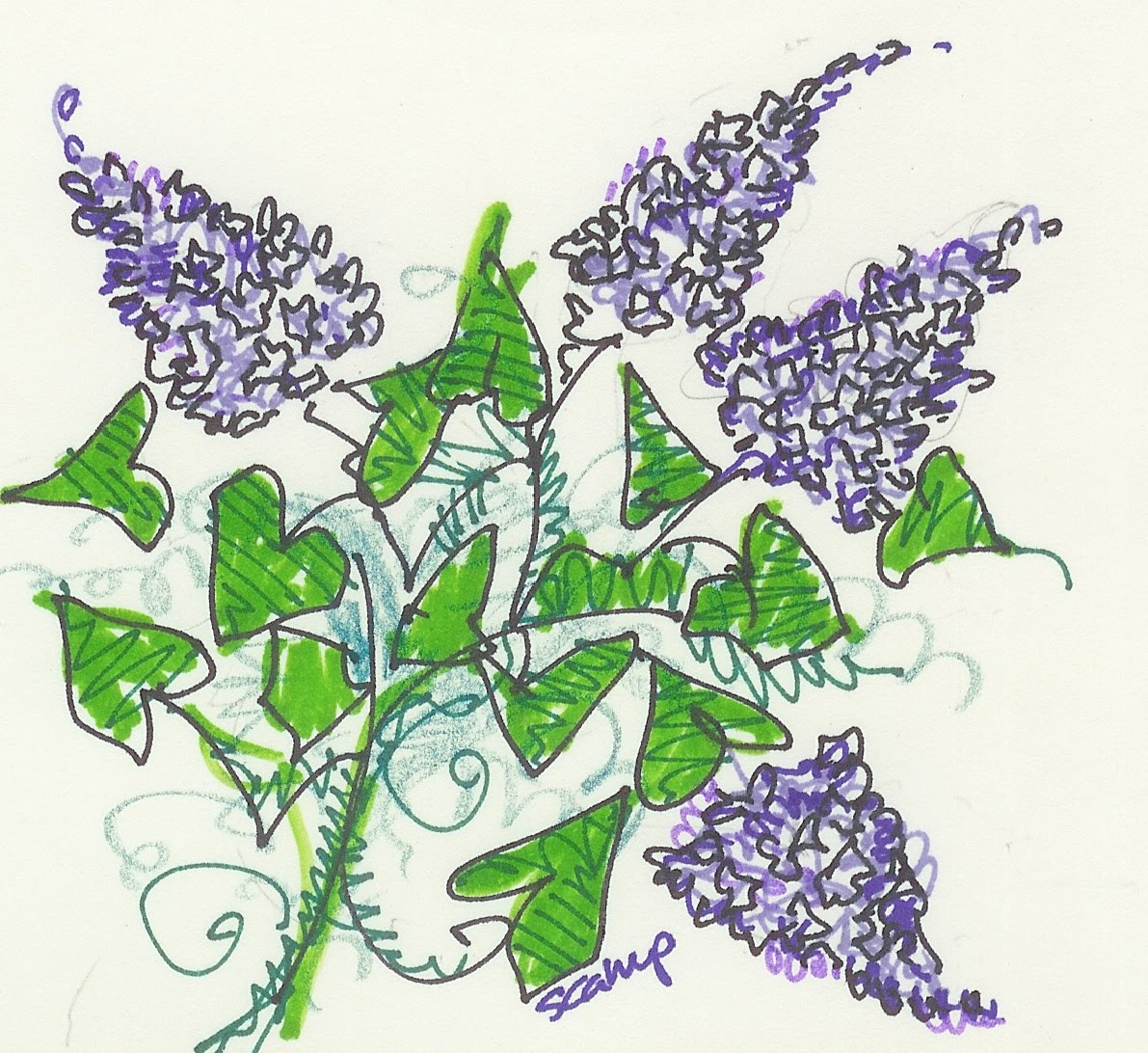
What is it that gives people the gift of presentation? The dainty little packages of sweets that arrive from family – the way the cookies are wrapped and arranged in paper cups and tissue, full of fruit and crumbling butter and sugar, the way the bread and muffins hold together just right, topped with sugar that does not melt or become sticky and berries that hold together, saving their juice for the bite rather than leaking it out into the dough. It is more than flouring and sugaring, it is as though the ingredients know who is forming them and understands their responsibility to perform just so.
The birthday card constructed out of leftover mailbox letters and a paper bag, with a tiny line drawing that makes it suddenly, unexpectedly art. It is another kind of composition where mind and hand have instructed the materials perfectly.
Some of us can learn and copy the tricks, but imitation as flattery can only take us so far. Eventually we will be found out. When do we learn what we have inside ourselves that is organic, when do we know what we can do that is truly ours to give?
If your phone ever rings at 5 a.m. in October, answer it. That’s when they award the Nobel Prize and as this morning’s news proves, you just never know, it might be you. Many Octobers ago my phone rang before dawn with Nobel news about two professors who won the prize in Physics. The call came from the Director of the MIT News Office, and as the Interim Assistant to the President of MIT, it was my job to know help him prepare to recognize and celebrate the awards such.
At a place like MIT, where 63 people have won the prize, people talk about Nobels like the rest of the world talks about a really great promotion – to people accustomed to extraordinary accomplishment, a Nobel is a distinct possibility, and some get to the point where they plan their careers around it. One gentleman declined the presidency of the Institute based on his expectation that he was a contender for the prize and that accepting an administrative position would hurt his chances. (He did win the Prize, eventually.)
So, given that this event was oddly commonplace and extraordinary, we set about honoring the winners while tip toeing among the winners (there are over 60 as of this writing) and losers that roam the Infinite Corridor. The President, intent on doing the right thing, asked me to visit the Dean of Science to invite him to the press conference honoring the winners. He specifically instructed me to walk down to the office and extend the invitation in person, rather than via phone or e-mail. I knew that the Dean of Science, an imposing and square jawed man with a laugh that reminded me of Beavis and Butthead, was still smarting from being passed over for the Presidency and then the Provost’s position. It became quite clear to me how much he was smarting when I asked to see him personally on behalf of the president and he did not only not rise from his desk, but only glanced briefly over his half glasses at me and inquired what I wanted. I felt more like a child in a principal’s office than a presidential envoy, and was both terrified and furious. I extended the invitation as best I could and backed out of the office. When I told the President what happened he realized his mistake in sending a staff memer and, ever gracious, apologized for his colleague’s behavior. The winners themselves were wonderful, one charming and affable, the other more quiet and dignified, but both humbled and delighted by the acclaim. I generally found this to be true; that those with the greatest accolades were the most gracious and rewarding to work with.
All of this came back to me this morning when I learned of the Barack Obama’s own Nobel phone call and his daughter’s reactions that this was a great way to start a long weekend. So many laureates in so many disciplines toil in quiet libraries and busy labs, driven by the pursuit of a single idea or narrative, trying to explain something that has never been seen or told before in quite the same way. The award may or may not come, but they work on, devoted to an ideal often only known to them. Those prizes are awarded for moving us forward in a way we might not have expected; they shine light into corners we did not even know were there, and the prize turns up the wattage for the world to see. But Obama has been awarded the beacon itself, and is asked to make good on his promise to further illuminate the world, to take his message of hope and make it a reality. Whether history with judge this as and enlightened choice or a colossal act of hubris we will soon see for ourselves.

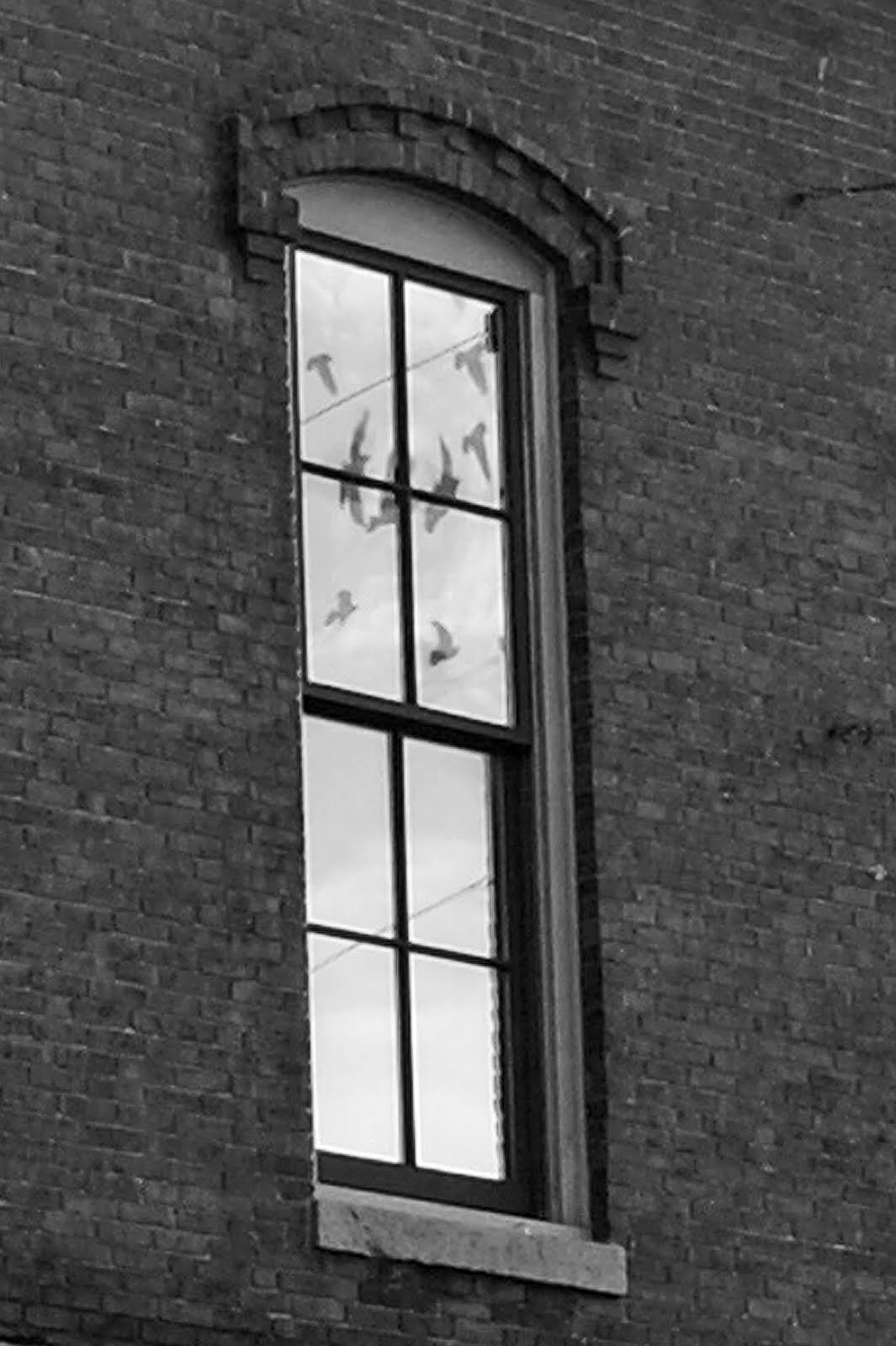 Over the years I’ve taken hundreds – thousands, probably – of photographs of windows. I used to take days off from work in Boston and photograph all of the windows of the older buildings in Back Bay, the Financial District and at MIT. They give me a sense of place, I think, because once I have them I never know what to do with them, but they each have a story, real or imagined, and I suppose my intention was that sooner or later I would get around to writing it.

 LettersHead