A child with autism, almost by definition, requires that parents enlist help from multiple professionals inside and outside their homes in order to give their child the greatest chance of success against this baffling disorder. Our private struggle, where it comes from and how we address it, is now a matter of public debate, and our gratitude for the attention and services that our children are getting is tempered by the knowledge that they signify a dangerous and mysterious trend that leaves us constantly searching and hoping for more information, better interventions and research that will discover a cause if not a cure. The price of that help, for those of us lucky enough to get it, is the very public exposure of our private pain.
Most of us take for granted that we can raise our families in the privacy of our own homes, getting our parenting advice from family friends, books and Oprah as we see fit, but once you have a child with special needs, your child becomes a line item on the school budget, the state budget and becomes part of the debate surrounding no child left behind. If you advocate for disability awareness, the newspaper calls and wants to put a picture of you and your child in the newspaper. In the name of forwarding the debate and getting funding for services and research you want to say yes, but for the sake of the rest of your family you want to say no. Your quest for something resembling a normal life takes on a whole new meaning as that pursuit becomes a media event; it is at once energizing and demoralizing because you are shouting to the now attentive world that you need help when what every parent wants is to be everything their child needs.
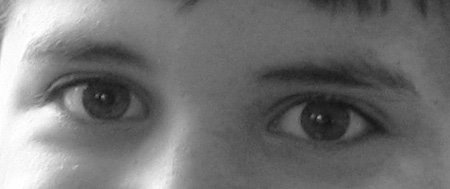
Every time some brave family allows their story to be told, a piece of yours is out there, too. You recognize the daily schedules, the alternative therapies, the trips to McDonald’s. The articles show up in your mail and your e-mail, and there is always a photo, and there are those dreamy eyes looking at or just beyond you. You read it sometimes warily, sometimes hungrily, wondering if that family is doing something you have done or should try doing, to bring your child into focus a little more.
And once you do speak out as a parent the quest feeds on itself. As the years go by you go to parties or functions and realize that you are almost incapable of talking about anything else, and you wonder if you are losing yourself to something different than the disability, and so you turn away from the public realm only to be met by those mesmerizing eyes and know that you have to fight for the child behind them.
There is a long history of crackpot theories about autism. Back in 1999 when I was learning about it, I read many articles that said that some parents are deluded into thinking that there is a working mind trapped inside of the autistic child, but actually the autistic brain really is empty. We all know now that they were wrong. Bruno Bettleheim said that uncaring mothers cause autism. He was wrong, too. Think of it this way: Those who look askance at vaccines are only following through on something many people do every day when they read a label on a food or medicine package. The labeling laws are there because we all agree that what is good – or at least not harmful – for one person may be deadly to another. Tree nuts, acetaminophen, lactose, and gluten all make some people healthier and other people sick, so why should it surprise anyone that there are some people who cannot tolerate certain vaccines or the preservative in them? Of course parents are at the forefront of the debate because we are also the ones riding the crest of the wave of the autism epidemic. Our futures as families with autistic children are already cemented – discovery of a cause or an environmental trigger will not soon reveal a cure – but there is something compelling in the hope that by asking the right questions we can reverse the trend.
And so we expose our turbulent lives to the extent that we can to the teachers, therapists, physicians, reporters, lawyers and politicians who can help us maximize our children’s education in the present as we try to build a future. We don’t have the luxury to entertain the parental conceit that we can make a life for our children that is somehow better than ours, for we are building a new world from scratch, one that will celebrate, welcome and soothe the vagaries of the autistic mind. The eyes have it.
 LettersHead
