Do We Get It Now? The Joker is Real and Batman is Not.

Begin rant.

I have had it up to my eyeballs with superheroes. They were invented for 12 year olds to ease them into and out of adolesence, not to keep society perpetually in adolescence. We have the technology to do the harm that the villains do – and we use it. We don’t possess the super powers the heroes have and we largely ignore our own capacity to do good in favor of sitting, mouths agape in service to the glorified high provided by gratuitous violence and rampant disrespect for human life and dignity. Batman, as I recall, does not have super powers – he is mortal. He, nor anyone like him, came to the rescue when the Joker came to call in Colorado.

Are we learning anything yet?

I understand parables and fables and the constructs of fiction and I like special effects. I love movies, have always loved movies, have found tremendous solace and wisdom in movies. Movies are not an escape, though, if they don’t feed all the parts of your mind, and if you don’t do anything beyond the screen that comes from thoughtfulness. I realize the need for escapism borne of a poor economy and a real world punctuated by war and senseless violence. Back during the Great Depression the folks we now call The Greatest Generation turned to movies that shared their pain and lifted their spirits (The Grapes of Wrath, It Happened One Night, Public Enemy, 42nd Street, Top HatRed Dust, Rebecca), not sociopaths and explosions that stoked their anger and underscored their impotence. We have some lovely movies out now (Moonrise Kingdom) but they are not the ones that have PR budgets in tens of millions, midnight showings and top grosses (pun intended). We set Hollywood’s priorities with our ticket money and our internet hits – what are we telling them?

Yes, our leaders in government, politics and religion are failing us (and some of them are stoking our anger, too, with their politics of divisiveness, class warfare and hate), but maybe if we gave them the same level of attention we do these overwrought, overviolent and oversexed films they might have some incentive to get some work done. It’s not enough to weigh in about the latest cable news brouhaha – we need to  understand what is actually happening. It’s work. It’s important. It’s the kind of thinking that makes you mad in a good way. We desperately need heroes in real life, and we will not find them at the movies. We will find them in the mirror.

End rant.

Addendum: Ross Douthat from The Times weighs in.

Restless in the Heat

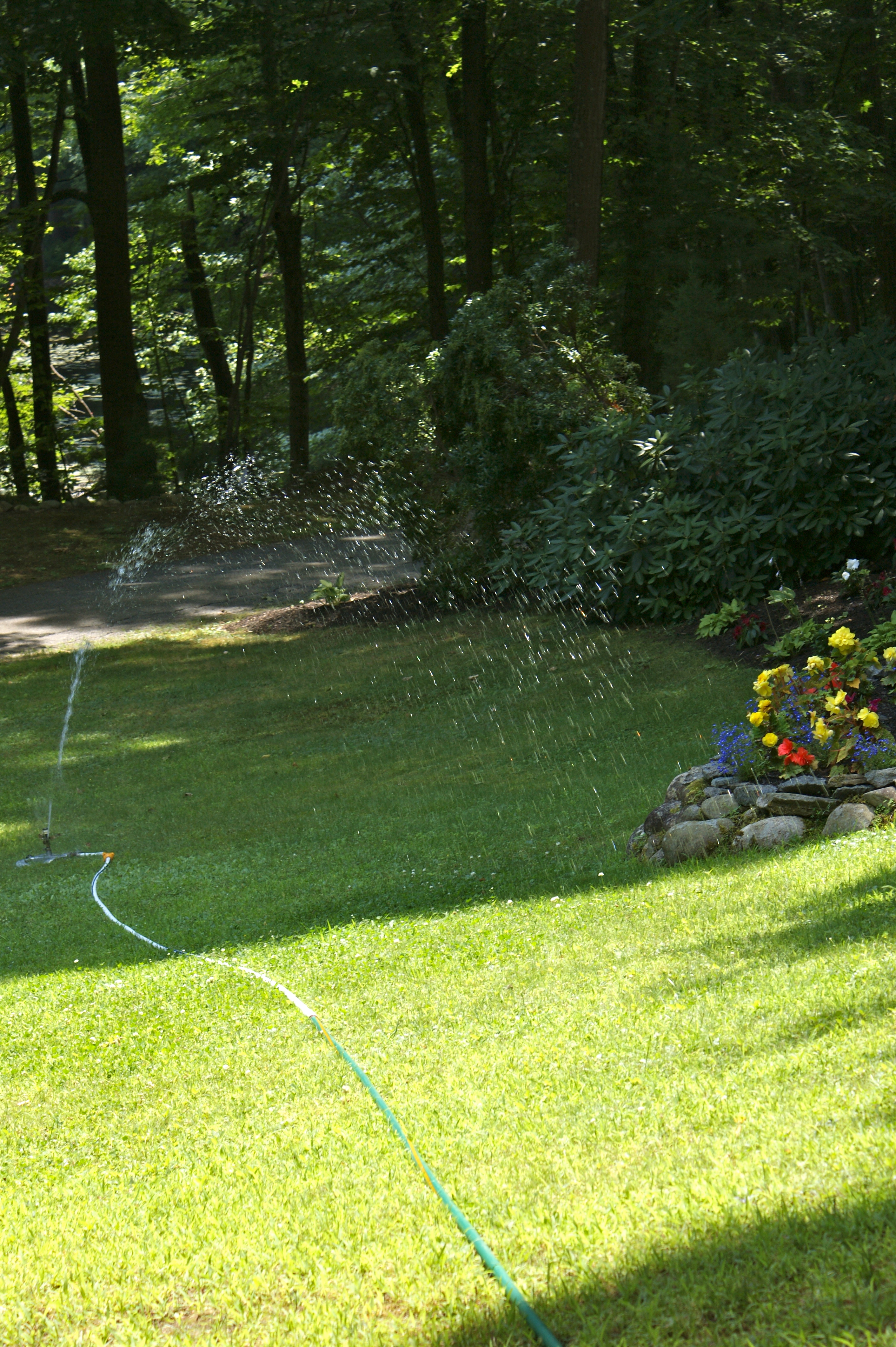
Our heat wave is nothing compared to what they are suffering in the Midwest, but it’s been a few weeks since a good rain and this is the first time I have seen birds fly directly through the sprinkler’s spray. The early spring brought the bears out of hibernation ahead of schedule and they are showing up all over the place – the most recent within walking distance of our house. Local naturists say that the bears’ feeding schedule has been disrupted and this has somehow sent them in search of alternative sources of food. It is hard to say whether the foxes roaming the neighborhood every evening are part of the trend or the usual order of things. All I know is that I find fur and tails (squirrel, rabbit) and feathers (chicken, hawk, and mourning dove, I think) in the yard almost every day. And last weekend when I went out to see what the kids were doing down the street and it was dark, I heard such a commotion in the woods from all sides when I opened the door that I turned and went back in the house, grabbed my car keys and drove to find them. Our neighbor told me that when he takes his dog out he shines a flashlight in the woods and counts the pairs of eyes that look back.

I don’t know what it means – the drought, the snowy fall and snowless winter, the collapsing glaciers – but part of me wonders if while we are inside on our screens trying to make sense of it we can find a way to save the world crumbling outside. And so I move the sprinkler around systematically to sate each corner of the yard, standing each time for a few minutes, mezmerized by its tick tick tick, and hope that it is enough.

Edith Wharton Windows

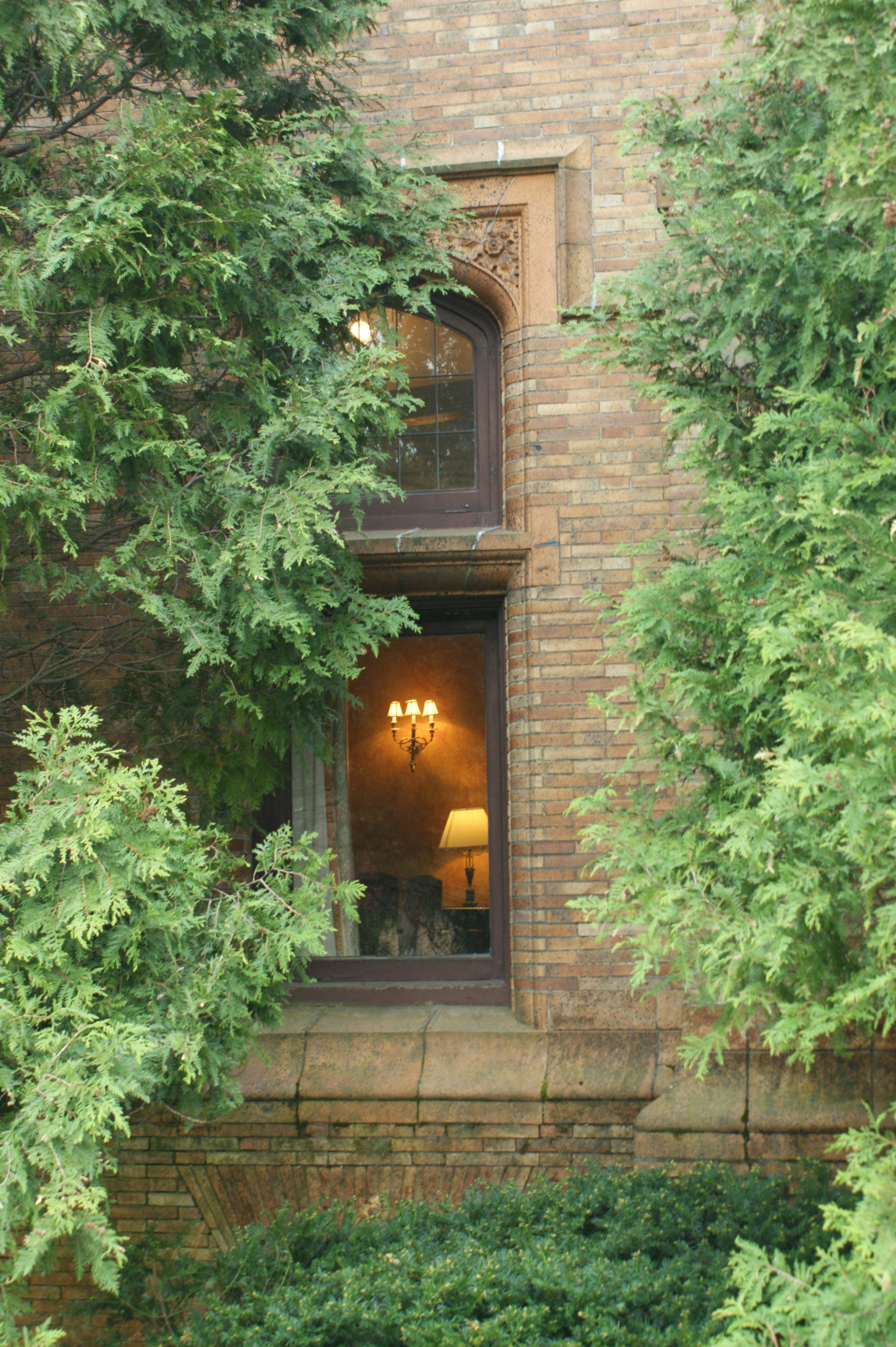
Yesterday was a spectacular day in Lenox, MA, and we made an unscheduled stop at Edith Wharton’s home there, The Mount. A thunderhead had popped up out of nowhere and we were looking for a vista from which we could view the storm. While the storm passed south of us it provided some wonderful light for garden and interior photos, and I came away with so many beautiful windows. Wharton’s first book was about interior and garden design, and her love of light and appreciation for a good cross breeze is evident in the design of this house, which she built in 1902.

The window above is from the recently restored bedroom suite that included a sitting room. According to the literature, even though the sitting room has a writing desk, Wharton wrote in bed and let the finished pages fall to the floor, where her secretary would retrieve them and type them up. I find this detail enviable and impractical – oh, to be able to write as beautifully as she did and from the comfort of bed, but it makes my back hurt to imagine it. But it makes perfect sense to be writing while looking out a window with a view like the one below.

Visiting historic sites always seems to involve, at some point, a note that areas have been restored to reflect their original beauty based on photographs or narrative descriptions because the authentic buildings, furnishings, paintings, fixtures, frescoes and floors have been sold, lost or destroyed. I get annoyed that people didn’t think to preserve these details all along, particularly when they achieved fame in their own time. Then I think about modern times (our place in history somewhat less secure than Edith Wharton’s in 1912), and I imagine the docent saying, “The original Home Depot oak and laminate cabinets and linoleum floors are recreated here to the best of our ability using photographs and written descriptions of the home from that period.” Never mind.

Long walk.

It has been a raucous month. Graduation, orientation, parties, beach walks, visits from family, packing for camp, berry picking and even a Supreme Court decision that will go down in history. Now we venture into a July that will bring new things we can’t even begin to imagine and so I offer something comfortingly familiar – June 2012’s edition of a photo I have taken dozens of times in in every season. Few spots are more lovely than Steep Hill Beach at low tide.

On that day a few weeks ago when things were particularly crazy, we were walking up the wooded hill from the beach and as usual I was bringing up the rear, the rest of the family out of sight. Lost in thoughts of all that is to come, I rounded the corner and encountered an older gentleman making his way down the path. Long-sleeved open-collared white shirt with cuffs rolled up, khaki pants, glasses, panama hat. He smiled at me and said in a voice all too familiar,

“Long walk, isn’t it?” His voice had a bit of a midwestern accent, so “isn’t” came out like “idn’t.”

My voice caught a little as I replied,

“Yes, but a good one.”

He nodded.

I wasn’t sure if I was making it up by the time I reached my husband at the top of the path. He raised his eyebrows and said,

“Did you see him? It was your Dad.”

Yes, I think it was.

College: They pay for laundry nowadays but are we still being taken to the cleaners?

A friend called me to consult about a high school graduation gift for my daughter and said one her ideas was to give my girl rolls of quarters to use in the laundry machines in the dorm. We often joked about how we never did break the habit of hoarding quarters for laundry and still cashing them in at the supermarket every couple of years. Being a thorough person, she called my daughter’s college to find out if the machines still take quarters and discovered that students no longer have to pay to do laundry at school – it’s covered under the exorbitant tuition (they do offer to send it out for a fee – I wonder who does that?). My theory is that as soon as the college went from women only to co-ed in the late 80s they figured that if the machines were free the guys would be more likely to do laundry. But even as late as 2005 students were paying, so I have to wonder if it became a selling point with parents – “Look! If you go into debt up to your eyeballs your kid will still have clean clothes.” Or something like that.

But with the recent flap at the University of Virginia and others like it (they basically fired their President for not being prescient about the economic downturn and a patsy for big donors), I am beginning to wonder if the education we are about to pay for will become obsolete. College is important, yes, but has the one we have chosen to give our daughter the kind of education she needs? Any number of families we know have seen their freshmen turn on their heels and return home, saying the schools are not providing the kind of teaching they expected or want. Kids have always come back home, of course, for any number of good reasons – I took a year off myself to regroup emotionally and financially – but part of it seems to be that students are not satisfied to learn in a lecture hall what they can easily look up on the Internet. Somebody, somewhere is probably designing a degree program based entirely on TED talks. MIT and Harvard have seriously upped the ante on online learning – for free, for now – and now all universities are scrambling to figure out what that means, whether they should copy the Edex, as it is called, model and whether they can afford to. But I don’t want my child to learn online or at home. She learned how to use the internet for research in high school, and lucky for us her the actual teaching environment at her high school is low tech – it’s an essential school, which means it values dialogue and critical thinking more than anything else. If she finds herself in a lecture hall she may roll her eyes but she’ll stick around and listen.

What’s even more worrisome is the message that all the college and high school graduates are hearing this year: that it doesn’t matter how educated they are, come graduation day they will not be able to find a job. Just this evening I heard my girl tell her younger brother that when he ventures off to college in several years she will probably be back living at home – not a terrible fate but not the one most young adults (or their parents) have in mind. These days it seems easier to instill values than it is to instill optimism. I keep trying to think of my parents, growing up during the Depression and then World War II and how they never could have foreseen the prosperity that came after those times. They said that during the 1950s, it was like the sun coming out for the first time after a long winter. While we have not endured the same kinds of darkness they did, we are nonetheless steeped in a fog of misinformation and cynicism that gives us no clear path back into the light. Even the foundations of faith and democracy feel less solid than they once did – why should academia be immune?

Hope springs eternal, though – and I cling to the cliché. I recall the moment last fall when our girl was perched on the edge of her seat in one of those lecture halls at the school she will attend, listening to a professor reveal the threads of evolution in a Victorian poem. I see the books pile up in her room that are summer reading for fun (Nabokov? Seriously?), I hear her name the movies she wants to see this summer and note not a single zombie or vampire walks among them. And I remind myself – again – that the way we acquire knowledge is less important that the way we prioritize, sift and synthesize it, and the way we apply it is most important of all. Whether colleges and universities are funding that process – and putting salaries and teaching fellowships ahead of laundry services and coffee bars – is what we are about to find out.

Facebook, circa 1977

Many years ago this is where I spent an embarrassing amount of time, talking to my friends on the phone. I pulled the mod white trimline phone out of my sister’s room just out of sight on the right and sat on these stairs my back to the wall and my foot on the door trim at the left – that door led to our third floor where there were more bedrooms and the eaves where we hid and concocted secret clubs with arcane rules that lasted a week, if that. Through that door and up the stairs I was a little girl, and in 1974 I moved downstairs and around the corner from this spot and became first a teeny bopper and then a teenager, talking on that phone pretty much the entire time.  I talked to the same three or four people over and over – to my best friend who lived a block away, my first boyfriend who lived three blocks down the street, or a few friends across town. I’d be hard pressed to recount anything we talked about, but I remember laughing until I cried, learning to interpret or impose stony silence, and what it meant to hang up on someone. I remember willing that phone to ring, its cord stretched out into the hall, and the receiver cord so distended it hardly curled anymore. They boy friendishness consisted of one kiss, maybe two, but then hours and hours of time on that phone long after we broke up. He remains one of the best friends who is a boy I have ever had; he set a standard for good and witty conversation by which all who followed have been measured. So none of those moments are captured on the web like the hilarious banter I see between my kids and their friends on Facebook; I am glad they allow me to eavesdrop on their exchanges and see them delight in their own cleverness. Since I don’t have a history archived on the web, this photo will just have to do.

When your birthday and Mother’s Day are always in the same week, it messes with your head a little

Yesterday one of my sisters sent me an early birthday e-mail that said “enjoy your last year of being the only sibling under 50.” Let’s just let that one sink in for a minute on this Mother’s Day. I have a lot of siblings (think Stephen Colbert) and my life has been punctuated by the rewards and trials of being the youngest in a large family (mostly rewards). Because I am the end of the line and my mother worried a  lot about being an older parent with a young child (every time she left town she would say, “Now, if I die…”), I do measure annually  how old I was when my mother was the age I am turning this year. If I were my mother, I would have an 8 year old right now. How lovely to have a sweet little second grader right now. How exhausting. I have three children and this is the first year I do not have to attend a spring concert and I am overcome with joy.  Mom, thank you for the science fairs and Christmas concerts and Girl Scout flying up ceremonies. And I want you to know that I totally forgive you for not coming to my junior high volleyball and softball games.  Most of the time I didn’t even want to be there myself so I didn’t exactly stew about this for 30 years but really, thank you for all of the stuff you actually made it to because no parent could possibly be prepared for the purgatory that is some school events – and then multiply the times you have to sit through it it by 10. You never know when one is going to count and give you that incredible moment, though, so I will be there for every one that I can get to that’s left for me. So thanks to my siblings for breaking Mom in on some fronts and making her paranoid on others and for reminding me that being the youngest is just as much of a mixed bag as it ever was. I love you all.

Look! Here is the hill I am almost over!

Cranwell Window

Like the rest of the world, I fell in love with Downton Abbey.  And after 30 years in Massachusetts I finally had a chance to drive through and make an overnight stay in the Berkshires.  Now is see what all of the fuss is about.  I expected the spring beauty of the rolling hills but I was not prepared for the diverse and breathtaking architecture of Western Massachusetts and Eastern New York.  This window is the Downton Abbey moment of my first – but not last – journey to Western Massachusetts.  It was taken at Cranwell, a gilded age property with a provenance that includes Harriet Beecher Stowe.  The pastoral and architectural beauty of the property was matched only by the graciousness of the people who worked there.  A real gem.

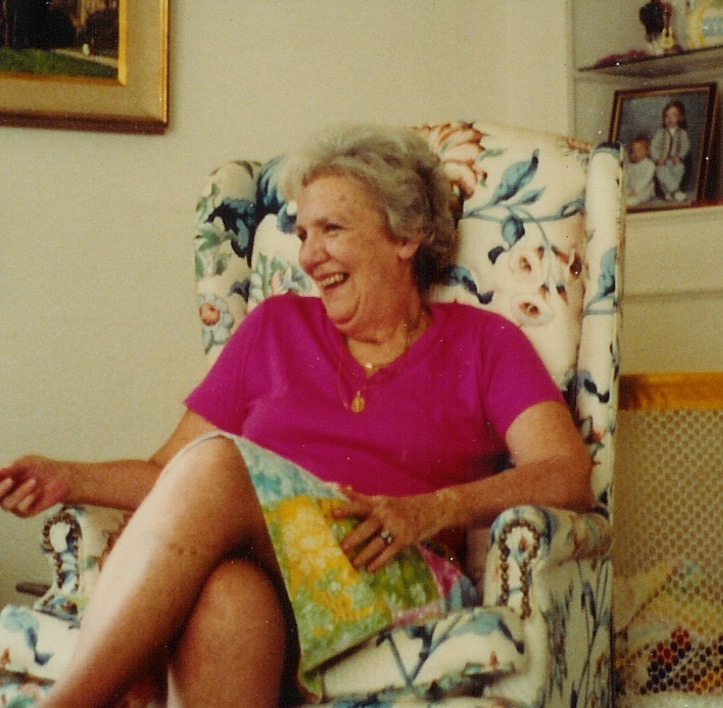
For Mom.

When Lilacs Last in the Door-yard Bloom’d

by Walt Whitman

1
WHEN lilacs last in the door-yard bloom’d,
And the great star early droop’d in the western sky in the night,
I mourn’d—and yet shall mourn with ever-returning spring.
O ever-returning spring! trinity sure to me you bring;
Lilac blooming perennial, and drooping star in the west,          5
And thought of him I love.
2
O powerful, western, fallen star!
O shades of night! O moody, tearful night!
O great star disappear’d! O the black murk that hides the star!
O cruel hands that hold me powerless! O helpless soul of me!   10
O harsh surrounding cloud, that will not free my soul!
3
In the door-yard fronting an old farm-house, near the white-wash’d palings,
Stands the lilac bush, tall-growing, with heart-shaped leaves of rich green,
With many a pointed blossom, rising, delicate, with the perfume strong I love,
With every leaf a miracle……and from this bush in the door-yard,   15
With delicate-color’d blossoms, and heart-shaped leaves of rich green,
A sprig, with its flower, I break.
4
In the swamp, in secluded recesses,
A shy and hidden bird is warbling a song.
Solitary, the thrush,   20
The hermit, withdrawn to himself, avoiding the settlements,
Sings by himself a song.
Song of the bleeding throat!
Death’s outlet song of life—(for well, dear brother, I know
If thou wast not gifted to sing, thou would’st surely die.)   25
5
Over the breast of the spring, the land, amid cities,
Amid lanes, and through old woods, (where lately the violets peep’d from the ground, spotting the gray debris;)
Amid the grass in the fields each side of the lanes—passing the endless grass;
Passing the yellow-spear’d wheat, every grain from its shroud in the dark-brown fields uprising;
Passing the apple-tree blows of white and pink in the orchards;   30
Carrying a corpse to where it shall rest in the grave,
Night and day journeys a coffin.
6
Coffin that passes through lanes and streets,
Through day and night, with the great cloud darkening the land,
With the pomp of the inloop’d flags, with the cities draped in black,   35
With the show of the States themselves, as of crape-veil’d women, standing,
With processions long and winding, and the flambeaus of the night,
With the countless torches lit—with the silent sea of faces, and the unbared heads,
With the waiting depot, the arriving coffin, and the sombre faces,
With dirges through the night, with the thousand voices rising strong and solemn;   40
With all the mournful voices of the dirges, pour’d around the coffin,
The dim-lit churches and the shuddering organs—Where amid these you journey,
With the tolling, tolling bells’ perpetual clang;
Here! coffin that slowly passes,
I give you my sprig of lilac.   45
7
(Nor for you, for one, alone;
Blossoms and branches green to coffins all I bring:
For fresh as the morning—thus would I carol a song for you, O sane and sacred death.
All over bouquets of roses,
O death! I cover you over with roses and early lilies;   50
But mostly and now the lilac that blooms the first,
Copious, I break, I break the sprigs from the bushes;
With loaded arms I come, pouring for you,
For you, and the coffins all of you, O death.)
8
O western orb, sailing the heaven!
  55
Now I know what you must have meant, as a month since we walk’d,
As we walk’d up and down in the dark blue so mystic,
As we walk’d in silence the transparent shadowy night,
As I saw you had something to tell, as you bent to me night after night,
As you droop’d from the sky low down, as if to my side, (while the other stars all look’d on;)   60
As we wander’d together the solemn night, (for something, I know not what, kept me from sleep;)
As the night advanced, and I saw on the rim of the west, ere you went, how full you were of woe;
As I stood on the rising ground in the breeze, in the cold transparent night,
As I watch’d where you pass’d and was lost in the netherward black of the night,
As my soul, in its trouble, dissatisfied, sank, as where you, sad orb,   65
Concluded, dropt in the night, and was gone.
9
Sing on, there in the swamp!
O singer bashful and tender! I hear your notes—I hear your call;
I hear—I come presently—I understand you;
But a moment I linger—for the lustrous star has detain’d me;   70
The star, my departing comrade, holds and detains me.
10
O how shall I warble myself for the dead one there I loved?
And how shall I deck my song for the large sweet soul that has gone?
And what shall my perfume be, for the grave of him I love?
Sea-winds, blown from east and west,   75
Blown from the eastern sea, and blown from the western sea, till there on the prairies meeting:
These, and with these, and the breath of my chant,
I perfume the grave of him I love.
11
O what shall I hang on the chamber walls?
And what shall the pictures be that I hang on the walls,   80
To adorn the burial-house of him I love?
Pictures of growing spring, and farms, and homes,
With the Fourth-month eve at sundown, and the gray smoke lucid and bright,
With floods of the yellow gold of the gorgeous, indolent, sinking sun, burning, expanding the air;
With the fresh sweet herbage under foot, and the pale green leaves of the trees prolific;   85
In the distance the flowing glaze, the breast of the river, with a wind-dapple here and there;
With ranging hills on the banks, with many a line against the sky, and shadows;
And the city at hand, with dwellings so dense, and stacks of chimneys,
And all the scenes of life, and the workshops, and the workmen homeward returning.
12
Lo! body and soul! this land!
  90
Mighty Manhattan, with spires, and the sparkling and hurrying tides, and the ships;
The varied and ample land—the South and the North in the light—Ohio’s shores, and flashing Missouri,
And ever the far-spreading prairies, cover’d with grass and corn.
Lo! the most excellent sun, so calm and haughty;
The violet and purple morn, with just-felt breezes;   95
The gentle, soft-born, measureless light;
The miracle, spreading, bathing all—the fulfill’d noon;
The coming eve, delicious—the welcome night, and the stars,
Over my cities shining all, enveloping man and land.
13
Sing on! sing on, you gray-brown bird!
 100
Sing from the swamps, the recesses—pour your chant from the bushes;
Limitless out of the dusk, out of the cedars and pines.
Sing on, dearest brother—warble your reedy song;
Loud human song, with voice of uttermost woe.
O liquid, and free, and tender!  105
O wild and loose to my soul! O wondrous singer!
You only I hear……yet the star holds me, (but will soon depart;)
Yet the lilac, with mastering odor, holds me.
14
Now while I sat in the day, and look’d forth,
In the close of the day, with its light, and the fields of spring, and the farmer preparing his crops,  110
In the large unconscious scenery of my land, with its lakes and forests,
In the heavenly aerial beauty, (after the perturb’d winds, and the storms;)
Under the arching heavens of the afternoon swift passing, and the voices of children and women,
The many-moving sea-tides,—and I saw the ships how they sail’d,
And the summer approaching with richness, and the fields all busy with labor,  115
And the infinite separate houses, how they all went on, each with its meals and minutia of daily usages;
And the streets, how their throbbings throbb’d, and the cities pent—lo! then and there,
Falling upon them all, and among them all, enveloping me with the rest,
Appear’d the cloud, appear’d the long black trail;
And I knew Death, its thought, and the sacred knowledge of death.  120
15
Then with the knowledge of death as walking one side of me,
And the thought of death close-walking the other side of me,
And I in the middle, as with companions, and as holding the hands of companions,
I fled forth to the hiding receiving night, that talks not,
Down to the shores of the water, the path by the swamp in the dimness,  125
To the solemn shadowy cedars, and ghostly pines so still.
And the singer so shy to the rest receiv’d me;
The gray-brown bird I know, receiv’d us comrades three;
And he sang what seem’d the carol of death, and a verse for him I love.
From deep secluded recesses,  130
From the fragrant cedars, and the ghostly pines so still,
Came the carol of the bird.
And the charm of the carol rapt me,
As I held, as if by their hands, my comrades in the night;
And the voice of my spirit tallied the song of the bird.  135
DEATH CAROL.16
Come, lovely and soothing Death,
Undulate round the world, serenely arriving, arriving,
In the day, in the night, to all, to each,
Sooner or later, delicate Death.
Prais’d be the fathomless universe,  140
For life and joy, and for objects and knowledge curious;
And for love, sweet love—But praise! praise! praise!
For the sure-enwinding arms of cool-enfolding Death.
Dark Mother, always gliding near, with soft feet,
Have none chanted for thee a chant of fullest welcome?  145
Then I chant it for thee—I glorify thee above all;
I bring thee a song that when thou must indeed come, come unfalteringly.
Approach, strong Deliveress!
When it is so—when thou hast taken them, I joyously sing the dead,
Lost in the loving, floating ocean of thee,  150
Laved in the flood of thy bliss, O Death.
From me to thee glad serenades,
Dances for thee I propose, saluting thee—adornments and feastings for thee;
And the sights of the open landscape, and the high-spread sky, are fitting,
And life and the fields, and the huge and thoughtful night.  155
The night, in silence, under many a star;
The ocean shore, and the husky whispering wave, whose voice I know;
And the soul turning to thee, O vast and well-veil’d Death,
And the body gratefully nestling close to thee.
Over the tree-tops I float thee a song!  160
Over the rising and sinking waves—over the myriad fields, and the prairies wide;
Over the dense-pack’d cities all, and the teeming wharves and ways,
I float this carol with joy, with joy to thee, O Death!
17
To the tally of my soul,
Loud and strong kept up the gray-brown bird,  165
With pure, deliberate notes, spreading, filling the night.
Loud in the pines and cedars dim,
Clear in the freshness moist, and the swamp-perfume;
And I with my comrades there in the night.
While my sight that was bound in my eyes unclosed,  170
As to long panoramas of visions.
18
I saw askant the armies;
And I saw, as in noiseless dreams, hundreds of battle-flags;
Borne through the smoke of the battles, and pierc’d with missiles, I saw them,
And carried hither and yon through the smoke, and torn and bloody;  175
And at last but a few shreds left on the staffs, (and all in silence,)
And the staffs all splinter’d and broken.
I saw battle-corpses, myriads of them,
And the white skeletons of young men—I saw them;
I saw the debris and debris of all the dead soldiers of the war;  180
But I saw they were not as was thought;
They themselves were fully at rest—they suffer’d not;
The living remain’d and suffer’d—the mother suffer’d,
And the wife and the child, and the musing comrade suffer’d,
And the armies that remain’d suffer’d.  185
19
Passing the visions, passing the night;
Passing, unloosing the hold of my comrades’ hands;
Passing the song of the hermit bird, and the tallying song of my soul,
(Victorious song, death’s outlet song, yet varying, ever-altering song,
As low and wailing, yet clear the notes, rising and falling, flooding the night,  190
Sadly sinking and fainting, as warning and warning, and yet again bursting with joy,
Covering the earth, and filling the spread of the heaven,
As that powerful psalm in the night I heard from recesses,)
Passing, I leave thee, lilac with heart-shaped leaves;
I leave thee there in the door-yard, blooming, returning with spring,  195
I cease from my song for thee;
From my gaze on thee in the west, fronting the west, communing with thee,
O comrade lustrous, with silver face in the night.
20
Yet each I keep, and all, retrievements out of the night;
The song, the wondrous chant of the gray-brown bird,  200
And the tallying chant, the echo arous’d in my soul,
With the lustrous and drooping star, with the countenance full of woe,
With the lilac tall, and its blossoms of mastering odor;
With the holders holding my hand, nearing the call of the bird,
Comrades mine, and I in the midst, and their memory ever I keep—for the dead I loved so well;  205
For the sweetest, wisest soul of all my days and lands…and this for his dear sake;
Lilac and star and bird, twined with the chant of my soul,
There in the fragrant pines, and the cedars dusk and dim.
Roots & Bulbs

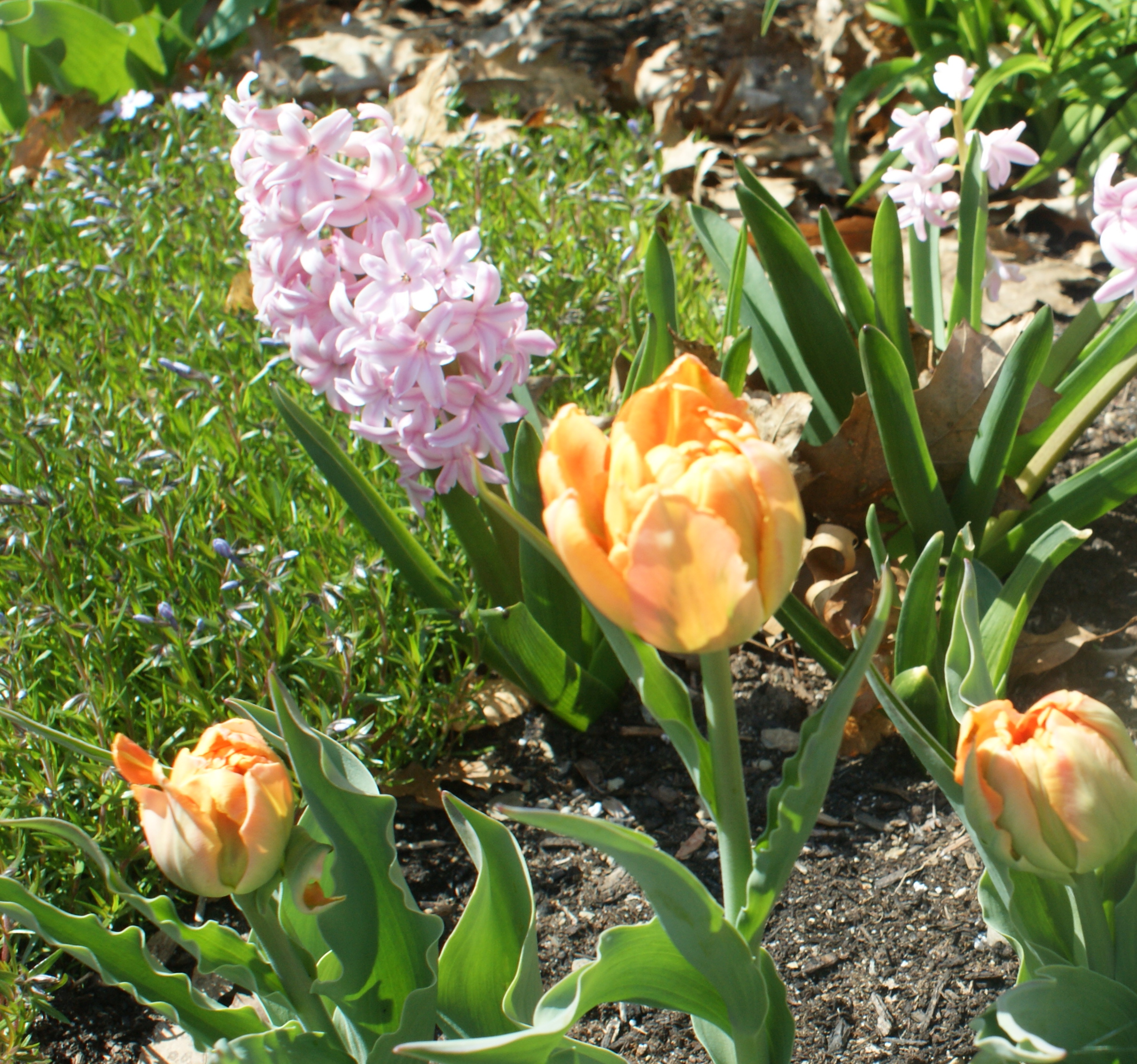
Spring is a month early and I am not complaining even though we have had precious little rain.  Having come late to the gardening party I have noticed only in recent years that each spring things sprout and bloom in a slightly different order.  This year the change is more dramatic:  the peonies are well on their way, even as the forsythia is in full bloom.  The tulips seem visibly annoyed to being pushed aside by the busy peonies; they are used to having the front garden all to themselves. The azalea, battered by autumn storms and with no snow cover to protect it from the winter wind, seems to have given up in exhaustion and pushed out only a handful of blooms from nearly bare branches.

I am always particularly glad to see the tulips. The red ones are the first to appear and the first I ever planted.  I put the bulbs in shortly after September 11, 2001.  Before then, my attempts at gardening were halfhearted and largely unsuccessful; our yard is so shady and the soil so sandy and acidic that no perennial I planted ever came back the following spring. But the previous owner clearly knew what to plant and so the garden she built always filled in nicely.  But there were a few spots near the driveway that got a little sun and seemed a little bare, and the events of that fall got me to thinking that I’d been living in our house like a renter – doing precious little to show any kind of long term commitment to a family home now buzzing with three young children. The crazy world (remember Graydon Carter announcing the end of irony?) and the empty skies of that September made me look up from storybooks and changing tables and brought me outside, and made me want to plant something beautiful, something hopeful, for the spring.

So I did.  And they bloomed, and have bloomed every year ever since (provided I remember to put out soap to keep the deer from nibbling the bulbs).  When the trees at the front of the house grew too big we had to take two of them down and that gave me more sun and soil to work with, and my perennial track record improved:  sedum, cone flowers, delphiniums, daffodils, iris, bachelor buttons, phlox, creeping thyme. A few years ago hyacinths appeared out of nowhere and they seem to be proliferating.  The original daylilies are stalwart and dependable as ever.  The hydrangea and the poppies are dubious and bloom sporadically.  The hollyhocks are a total failure. The shady areas still baffle me; the ivies are anemic and I am the only person I know who can’t grow hostas.

Last spring I took an inventory and ordered more tulips and daffodils to supplement my reds – I wanted orange.  The box showed up in late August for fall planting, at which time I promptly broke my foot and was relegated to the couch for 4-6 weeks.  My plan was to get them in just after Halloween, but when I went to plant them the box was in the recycling, empty.  My husband had come upon them and handed the box to my daughter and told her to plant them, which she did, grudgingly, with little attention to where.  So all winter long I waited to see if and where they would come up.

This week, they emerged – a few here a few there, some in groups, some in rows, some in places where the deer dined on them so I don’t even know for sure which ones they are.  It isn’t the way I would have done it – it is better, creating a haphazard path of blooms up the front walk, starting with my 2001 tulips.  Nothing at all about this whole operation went according to plan but it all seems so right – this is her senior year, and these are her tulips that she planted at the only home she has ever known. Next spring I will cry when they come up and send photos of them to her at college which will delight and exasperate her.

It is only now, as I type, that I recall my own mother hovering over her tulips in our back yard in Saint Louis, and how the entire city seemed to be swimming in them the last time I went to see her in hospice. Saint Louis sees spring much sooner than New England so that visit was, for us, like Dorothy emerging from the back and white of winter to full technicolor spring. It was an intensely sad and joyful time, punctuated by tulips. Every time the deer snack on them I swear I will not plant any more, but I don’t think I can stop. Not now.

Website Powered by WordPress.com.

Up ↑