Predicting the Unpredictable

Last week my youngest told me that if he could go back in time, he would find the terrorist headquarters and blow it up – he actually said he would sacrifice himself – so that 9/11 would never have happened.  That’s the lesson he brought to this day.  When I told him that we can never quite know what might have prevented that day ten years ago, he found that answer wholly unsatisfactory and I don’t blame him.  I didn’t like it either, but I also know that my childhood was laced with an understanding that we weren’t expected to control our futures, only to prepare ourselves to lead the best life we could with the blessings we have.  Among the many disillusionments of the 21st century, this responsibility to control everything in life that we are imposing on our children, and its attendant assignment of blame for every mishap, is the biggest one.  What was once the ebb and flow of daily life has turned into a lady or the tiger conundrum every single day.

Now more than ever, it seems we are trying to predict the future and we are still surprised when we are wrong.  With the 24 hour news cycle, smartphones and iPad apps, the media devotes so much time and space to people saying they know what the future holds interspersed with other people trying to say they saw the most recent disaster coming followed by a systematic and relentless assignment of blame.  What is wrong with this picture?  How do we calculate our success rate in preventing catastrophe?  Most of the time the people who saw it coming – if there are any – cannot be found on CNN, Fox or the Huffington Post, that’s for sure.

There was a time when the most we could expect to warn us of disaster was the tornado siren.  What we have now that earlier generations did not is a bombardment of information that gives us the illusion that whatever happens, we should see it coming.   We spent days preparing and watching hurricane Irene blast up the coast only to have her ravage inland rivers – apparently, no one warned Vermont.  All of the tsunami sensors in the Pacific did not dissuade Japan from placing a nuclear power plant on the coast.  And all of those big banks got hoodwinked by the ratings agencies and never noticed all of those bad loans they were underwriting.  It’s no wonder we scratch our heads and wonder how we missed it because as time goes by our mistakes seem ever more stupid and obvious.

Pick a topic – our health, the economy, or the weather – there are any number of solutions to it that are just a click away.  And yet, the flow of disasters almost seem to speed up rather than abating with all of this new knowledge and the ability to communicate it.  If we leave the TV and the internet on, we are fed, ever so smoothly, the myth that we can prevent bad things from happening when in some respects the bad things are perpetuated by us sitting in front of the screen.  And the more preposterous and untenable the theory, the better – we reward the wing nuts:  I watched the movie Network last spring and it could have been a documentary. 

The moment of revelation in youth that people do terrible things for reasons we cannot understand is one we never forget, and a certain part of our lives is indeed devoted to trying to avert the personal disasters we have known in the forms of death, illness, poverty and pain.  Those moments stand juxtaposed with the more collective events for which we don’t feel any personal culpability but then feel compelled to do something about:   My parents had Pearl Harbor as a defining moment (and that came on the heels of the Great Depression), the following generation had the death of President Kennedy (followed by the Viet Nam war and Watergate), and we have this day (followed by two wars and a financial meltdown).  What one generation does in response to its challenges defines the generation that follows, and I don’t pretend to know that that means for my children – I’m not getting into the prediction business.

Many years ago my cousin was dying of cancer, and she removed every newspaper, magazine and television from her home so that she could focus on her art and on helping others (she offered free financial advice to retirees).  I admired her focus but recall thinking that I would never shut myself off from the world the way that she did, even in those circumstances.  Now, as I watch the towers fall yet again, I understand, and yet I watch, hoping to think of something good we can do with my son’s time machine.

Me again.

I think it was the purported demise of the Postal Service that did it. When I said when I started LettersHead because people aren’t writing letters anymore I never thought it would come to this.  It could also be that, after 10+ months of benign neglect I checked in on LettersHead and found out it went on without me, collecting hits and links and daring me to start writing again or pull the plug for real.  Or maybe it’s because my kids are in school and I broke my foot and I can’t drive and I tend to drink too much coffee.  In any case, Lettershead is back and I am going to try again at an epistolary narrative.  Cabin fever aside, some things have happened over the past few months that seem to removed some of the roadblocks to writing; I need to test those barriers to see if they are indeed ready to tumble.  As my friends would say, “good luck with that.”

But I didn’t really give up on the random slice-of-life observations that appeared in this space before.  Autism drops too many choice moments into my life for that, so those can be found at the blog I started in my endless quest for useful places to put things that are cluttering my mind.  It’s called I Wouldn’t Have Missed It and you can find it here.

Finally, I have to give credit to my dear friend M. over at Life in A Skillet.  She sent me As Always, Julia and she proves time and again that blogs are both worth reading and writing if you put equal parts heart and mind into it.

Out of Focus

This isn’t exactly working out the way I hoped.  I don’t think that Lettershead is living up to its name.  It turns out that firing off missives into cyberspace really doesn’t take the place of writing letters at all – in fact, it has only made me miss the act of writing to a single person all the more.  Tiny vignettes and photos that open a window to daily life in our times – especially the more unique moments lit by autism – are what seems to fit in this format, but not under this moniker.  And so, after 18 months of quasi -immersion in blogging and Facebook, Lettershead is taking a break to figure out what comes next.  I’ll keep you posted, so to speak.

City Mouse

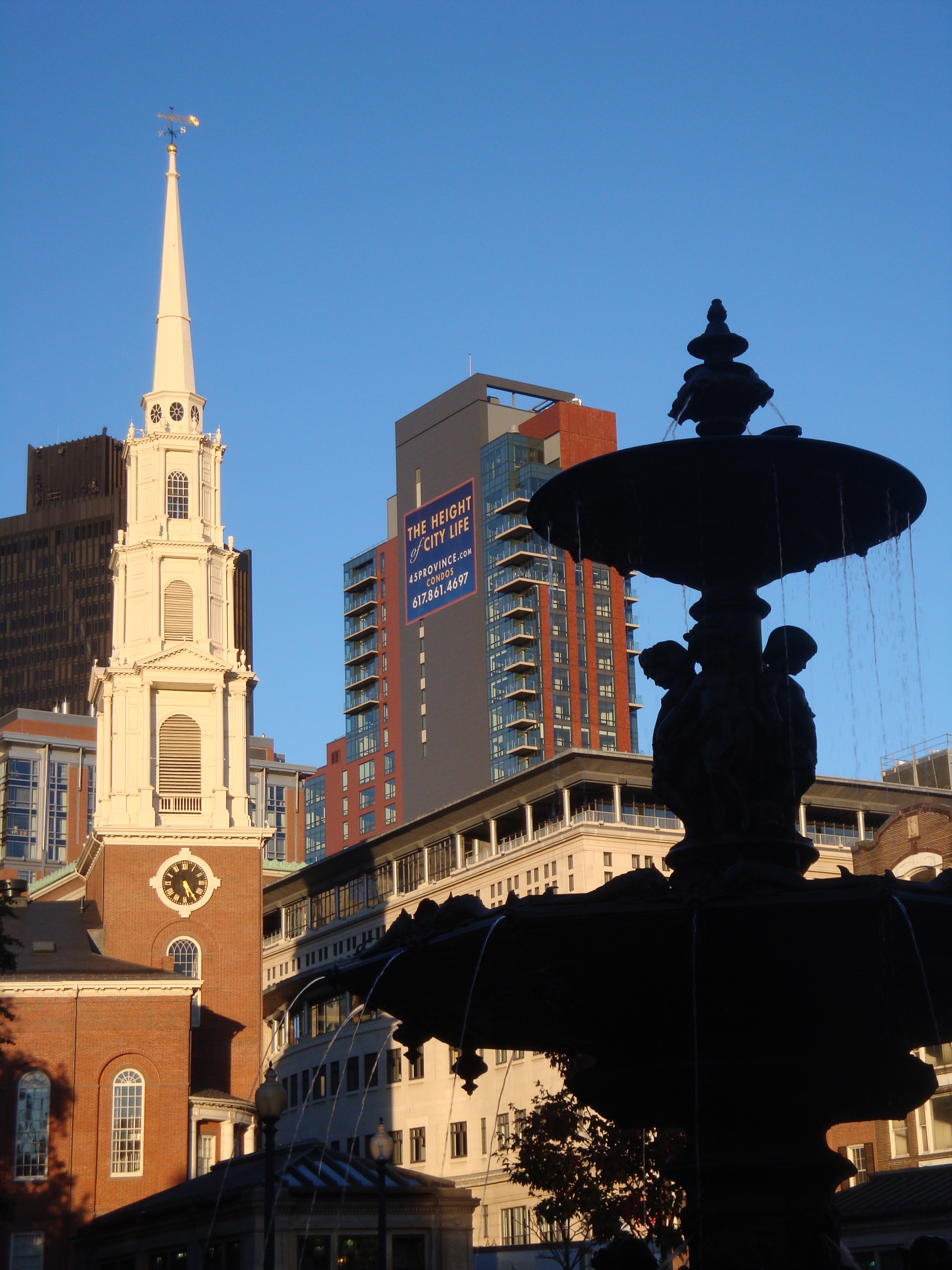
It’s still hard for me to grasp that I have lived more than half of my life in the Boston area; I suppose it’s part of my local identity to be from somewhere else.  And within this realm I still identify more with the city than the country where I have lived for many years.  But so often I feel my heart is in the city.  Stopping to take this photograph last weekend gave me a sense of exhilaration and belonging that, hard as I try, I never feel in the woods.  In the city my step is surer and quicker, with more bounce and energy.  In nature I have to work to see the details, I am so overwhelmed by the vast landscape – but in the city everything pops in the most pleasant way, just as these buildings seem to spring from the earth, each from a separate time, percolating up like the water in the fountain.  The city speaks to me, it lets me be alone in a crowd, it asks me to participate on my own terms and dares me to thrive.  The very act of driving in is a thrill – coming over the rise on Route 2 in Belmont it’s like Dorothy’s first view of the Emerald City.

Boston in October is an effortless romance – the  light and the colors along the sparkling Charles set off the bricks and ivy in ways that are easy to love.  And the courtship continues though snowy Christmas with red bows and balsam in the snow on the Public Garden.  And then in January the holiday hangover turns eveything gray and bleak and the pall extends all the way out to the county and we hide under our down comforters, look at one another and plead:  “please tell me why I live here.”  By Saint Patrick’s Day retirement in Arizona seems a viable option.  The city sees spring first (though long past that cruel date in March when it is supposed to arrive) and I find myself driving in to see the blooms three weeks ahead of my still snowy garden.  When the green mist appears in the branches on Commonwealth Avenue, all winter betrayals are forgotten.

I’ve grown to love the space and quiet of the country and, when the opportunity presents itself, will have a hard time giving up the spring peepers, evening owls and ample parking.  I am grateful now, though, for the luxury to tap into my inner city mouse just as I did as a girl back in Iowa, listening to the morning chickadees and blue jays and feeling reassured that my beloved urban landscape is just over the hill.

Cats vs. Dogs


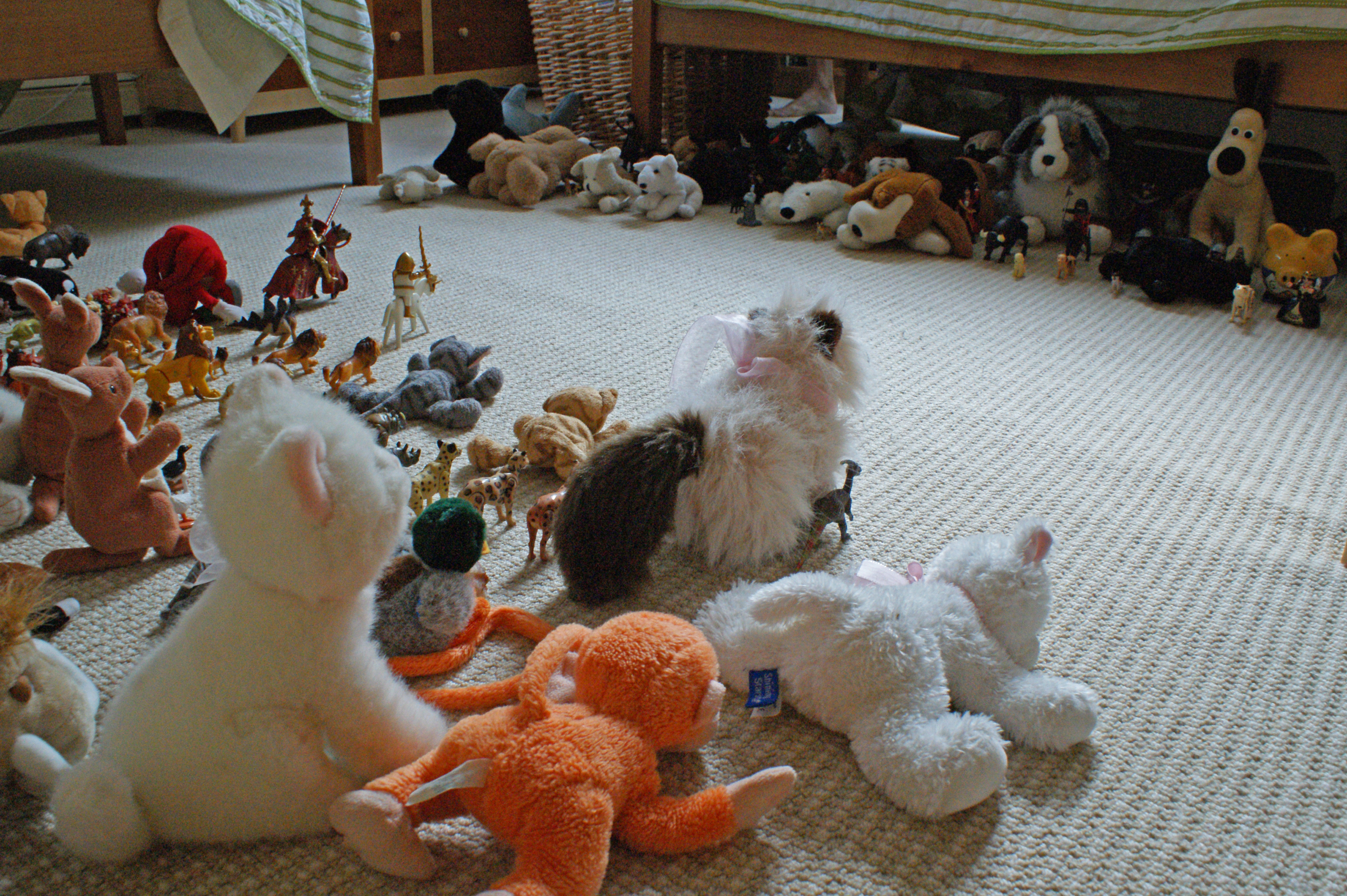
Our boys play a game called cats versus dogs, and as you can see, one side of the room is mostly cats and the other dogs.  The game involves a fight modeled on the battle scene in The first Chronicle of Narnia movie, The Lion the Witch and the Wardrobe.  Devised by my older son with ASD, it involves charging horses and airborne animals colliding all over the place, accompanied by epic music and battle cries.  If you look very closely, the animals and toys that are neither cats nor dogs are divided up (roughly) by good guys and bad guys – Captain Hook with the dogs, Peter Pan with the cats, etc.  After the battles, we notice that cats and their friends always win, and the ensuing conversation goes something like this:

“When you play cats versus dogs, who wins?”

“The cats.”

“Always?”

“Yep.”

“Why?”

“They’re the heroes; dogs are villains.”

“How come?”

“Because dogs chase cats.  Dogs are villains because they are too jumpy.”

“So the cats are good because they get chased by the dogs?”

“Yes.”

“You’re a good kid, you always root for the underdog.”

“No – the undercat.”

Last Tomato

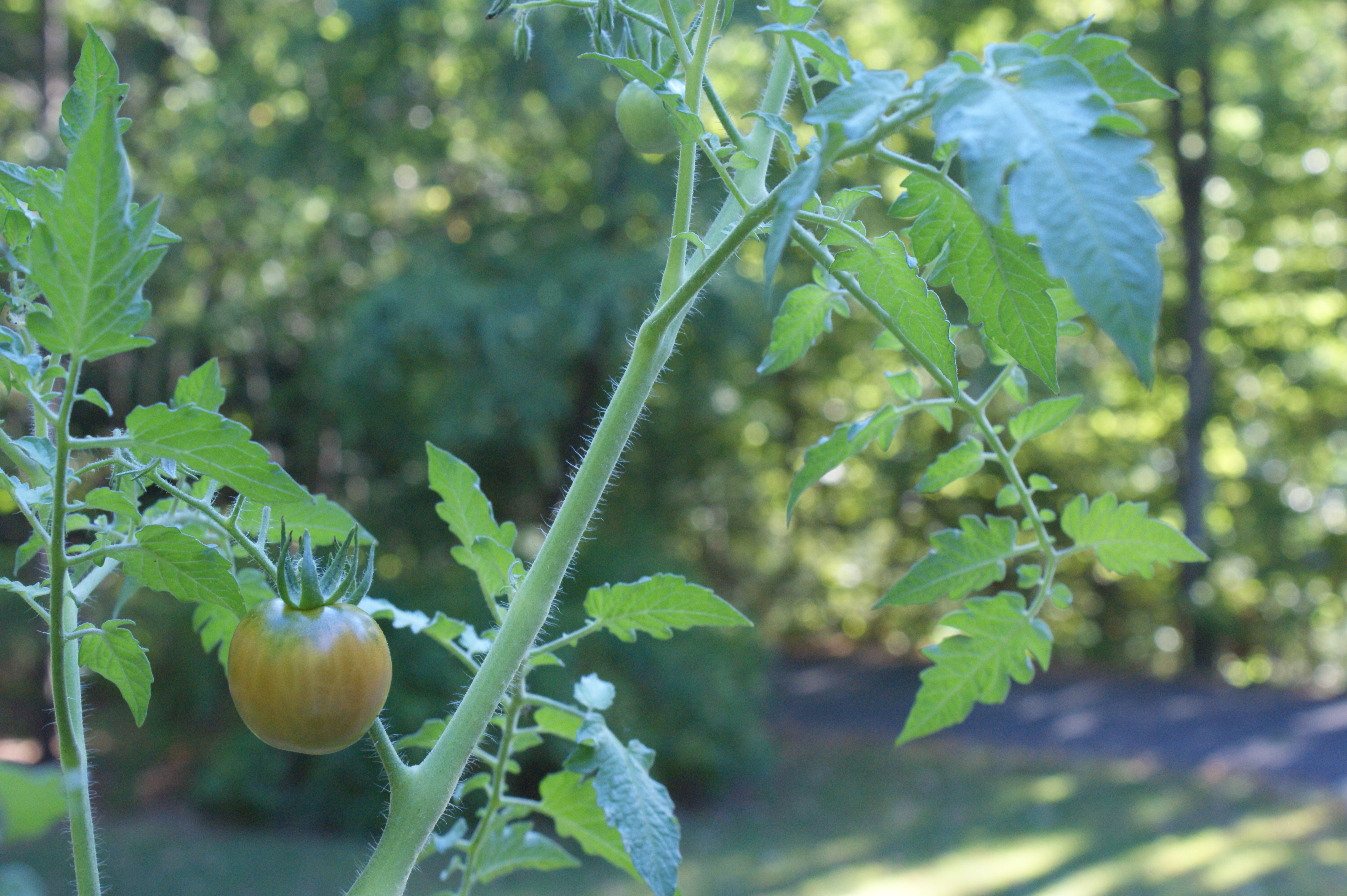
We have a sweet children’s book called First Tomato, in which a young bunny picks the first ripe tomato and her mother makes her fresh tomato soup.  Only after downloading this photo did I notice that the morning light reveals tiny spiderwebs on the tomato plants, a harbinger of Halloween.  Taken just a few days ago, it already harkens back to seemingly distant, definitely brighter summer days, and I am hoping that the remaining tomatoes will ripen before the frost arrives.  We wait all through June and July and into August for that first tomato, but we never can be sure when we will eat the last, finding sometimes that the days have gotten too short and we have waited too long.

It’s the Little Things


Living with a person who has autism brings surprises every day, some pleasant and some decidedly less so, but they always catch at your heart, one way or the other.  Take this box of peaches.  I left it in the back of the car for the night, knowing that if I brought it into the house that my son would eat them all before dinner and then I would have no fruit to put in his lunch the next morning.  He is, after all, a teenage boy.  This morning when I went to fetch the box, I found it like this, with four peaches eaten and the remaining pits carefully placed in each compartment (the two empty ones are the ones I put in his lunch).  When I asked if he “sneaked the peaches,” he said, “Yes!  And I left you the seeds!”

Empty Skies

The days that followed September 11, 2001, were uniformly sunny and warm as if even the weather stood stock still in the wake of that morning.  And when we walked each morning down to get the paper in those first days following the attacks, the skies were noticeably empty and quiet as every commercial plane in America sat idle somewhere on the tarmac, waiting to hear that the coast was clear.

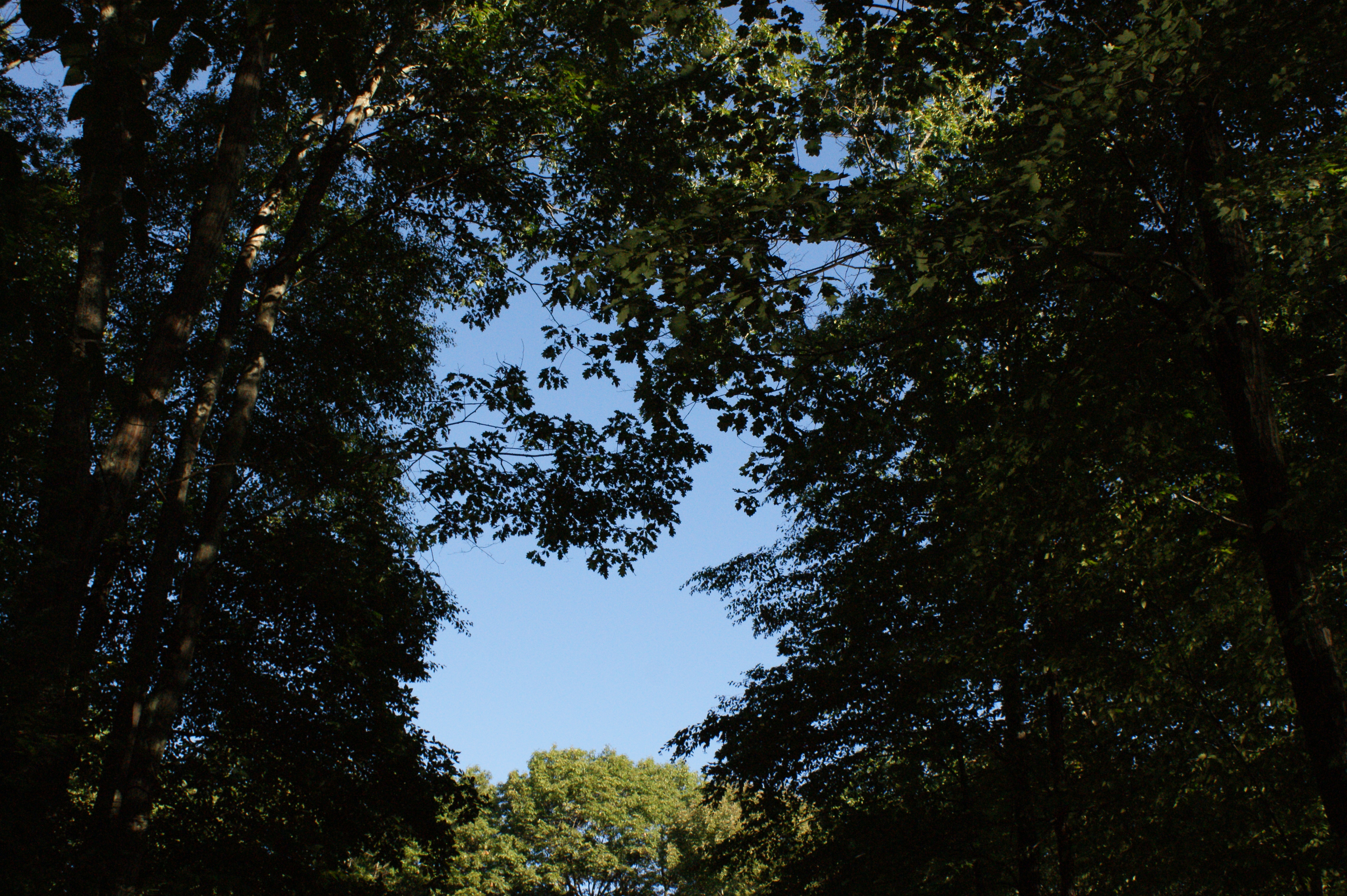
The skies are quiet now again, I noticed this bright morning as I walked out from under the canopy of trees into the open field at the end of the drive, but now it is the economy that emptied them.  Airplane fares are high and far fewer planes are in the air.  A friend who travels extensively and who finds himself stranded in airports time and again, noted, “Now, very often, you really can’t get there from here.”  The idea of catching the next flight is no longer a matter of hours but sometimes days, even to major destinations.  Luggage that must be scanned and checked requires more time to clear, extending the time required between flights – last spring we ended up renting a car and driving home from New York because 90 minutes would not allow us enough time to make our connection – the next flight home would have been 24 hours later.  It was a three-hour drive – this is why people carry overstuffed carry-on bags and heave them into the overhead compartment.

Fewer planes in the air is not necessarily such a bad thing, but I have to wonder if I will ever stop assessing the collateral damage of that day – whether it distracted our institutions from proper stewardship of our economy, whether it fostered more hate than unity among us, and if my love of a clear September day has been  hijacked permanently.

Fries for Kids & Tiny Dancers

We spent September 11 raising money for special education and being a family all at the same time.  It’s not as easy as it sounds.  As a family we made and sold french fires at a local festival with other families to help special education in our school district.  We know some truly amazing people who made this possible, and we all come from diverse backgrounds – what draws us together is what we dream of for our children.  There aren’t a lot of things we can do together to help out, but we found something in this activity today, and I am as proud as I have ever been of us and those we know for making it all come together and allow each of us to contribute.  And in the background, First Responders from New York came here to tell us their story and their wish for peace.

And me, I began and ended the day in tears, wanting something lovely for me and my family and finding it as we ended the day and wended our way home singing aloud to Elton John’s Tiny Dancer, knowing somehow that the child in me, miraculously, has been given all she needed over the years.  Who can ask more for that, when so much changed and so much is needed for us on September 11?

Website Powered by WordPress.com.

Up ↑