Tornadoes – and hiding from them – were a pivotal part of my childhood. It doesn’t really make any sense that once I saw one I was less afraid of them, but it’s true. And the green sky is real – you never forget seeing that.
Last week, a tornado struck the town of Moore, Oklahoma, killing 24 people and destroying hundreds of homes. This is not the first time that Moore has been hit by a tornado, as the town was also struck in 1999 and in other years. The loss of life in these events are tragedies, but events like this can also cause us to reflect on our relationship with the weather. People around the world depend on the weather for water, warmth, agriculture, and, in the case of solar and wind farms, even electricity, as well as much else. As for severe weather like tornadoes, we should be wary of the dangers they present, but also knowledgeable about how they work.
Tornadoes are challenging to study, due both to their relative unpredictability…
Right now that hope is a little dim, given that the wars we have now are coming to a close (if we can call it that) with more of a whimper than a VE Day/VJ Day bang.
NPR ran a touching story on Honor Flight New England, an organization that offers free trips to DC for WW II vets so they can visit the monuments to their service. One surviving vet said, though long-held tears, that in all the years since he came home he thought of his service as a waste – he buried those memories and never spoke about it. On this trip, however, he said he finally understood that his service meant something and, knowing how grateful people are for his service, he would do it again ten times over. A number of people said that the veterans in their family never spoke of the war or showed any interest in war movies or documentaries. That came as somewhat of a relief to me because my father only spoke of his service in the Pacific the war in small details, although he watched every episode of The World at War and read every book it though the years. He was so pleased when his war buddy came to town – a towering man named Jim who, in uniform as I recall, would delight us with his strength by tearing a phone book in half.
Dad would pull out the atlas and show me the places with exotic names in the Philipines where he was a harbor pilot. I was very young when we did this together – we made a game out of my mispronunciation of Catbalogan – and it seemed to me then that he felt kind of lucky to be an Iowa boy navigating the ocean on big ships. I once asked him why he didn’t drink coffee and he said “I had a lifetime’s worth of coffee in the war.” That’s as much as I ever recall hearing about life on a Navy ship. After he died in 1992, I read his letters home to his mother and they seemed to chronicle the times in ways that were unremarkable. In the few photos I have of him, he is smiling. Some people interpret this as him blocking out the mean experiences of war – that there were stories too terrible to be told. I really don’t know.
What strikes me now is that in the age of instant global communication, we are not under any illusion about what our soldiers are facing overseas. They do not have the luxury, if you can a call it that, of burying the atrocities of war when they come home. It’s on TV, the internet and at the movies. The Greatest Generation had On the Town, South Pacific and From Here to Eternity – our guys have Platoon, The Hurt Locker, and Jarhead. I suspect there won’t be a musical about Afghanistan any time soon.
We are losing more soldiers to suicide at home than we are on deployment. It’s hard to know what to do to help, although we should make sure vets get the mental health services they need and their benefits on time, neither of which is happening now. In the meantime, I hope that, unlike some of the men in the NPR story, today’s servicemen and women don’t have to wait 60 years to hear their fellow citizens say “thank you.”
We are in the midst of a year of milestones, most of which I would like to ignore. One welcome distraction is chronicling the progress of the garden. I am not an expert gardener (but am lucky to have friends that are) but found a few years back that once I planted a perennial that actually bloomed for a second season, I was hooked. What I love even more than the plants, sun and earth is the few minutes spent each morning with my husband as we look to see what has changed over the past day – new blooms, spots that need something more, what will bloom next.
As I sift through the photos of the last six weeks, I cannot help but think about the days on which I took them and the times during which I planted some things.
Nature bursts through the winter gloom, seeing red.
We were greeted by brash red tulips when we return from a trip over April vacation. It was a trip that alternated between doing fun things, seeing old friends, eating great food and being glued to screens as we watched in morbid fascination the events after the Boston Marathon Bombings. Looking at the red tulips at home, I remembered that it was after September 11, 2001, that I began gardening in earnest. It was a hot, dry, fall that year, as if the clouds had been chased away by the smoke from New York. I realized that I had spent those first years in our home inside with babies and toddlers and that now they were old enough that I could spent a few of our outdoor minutes – very few – away from the swing set and sandbox. As I planted bulbs that October – hoping against hope that the right end of them was pointing up – a neighbor strolled up and asked what I was doing. My answer surprised even me. I told him that everything I had done to make that house a home was on the inside. After renting for so many years, I felt I had been holding back on the idea of putting down roots in this place. But September 11 had told me to embrace the life we have and the place we have chosen, however temporary. Planting bulbs was a way of taking ownership of this life and my role in it. The bulbs I planted that day? Red tulips.
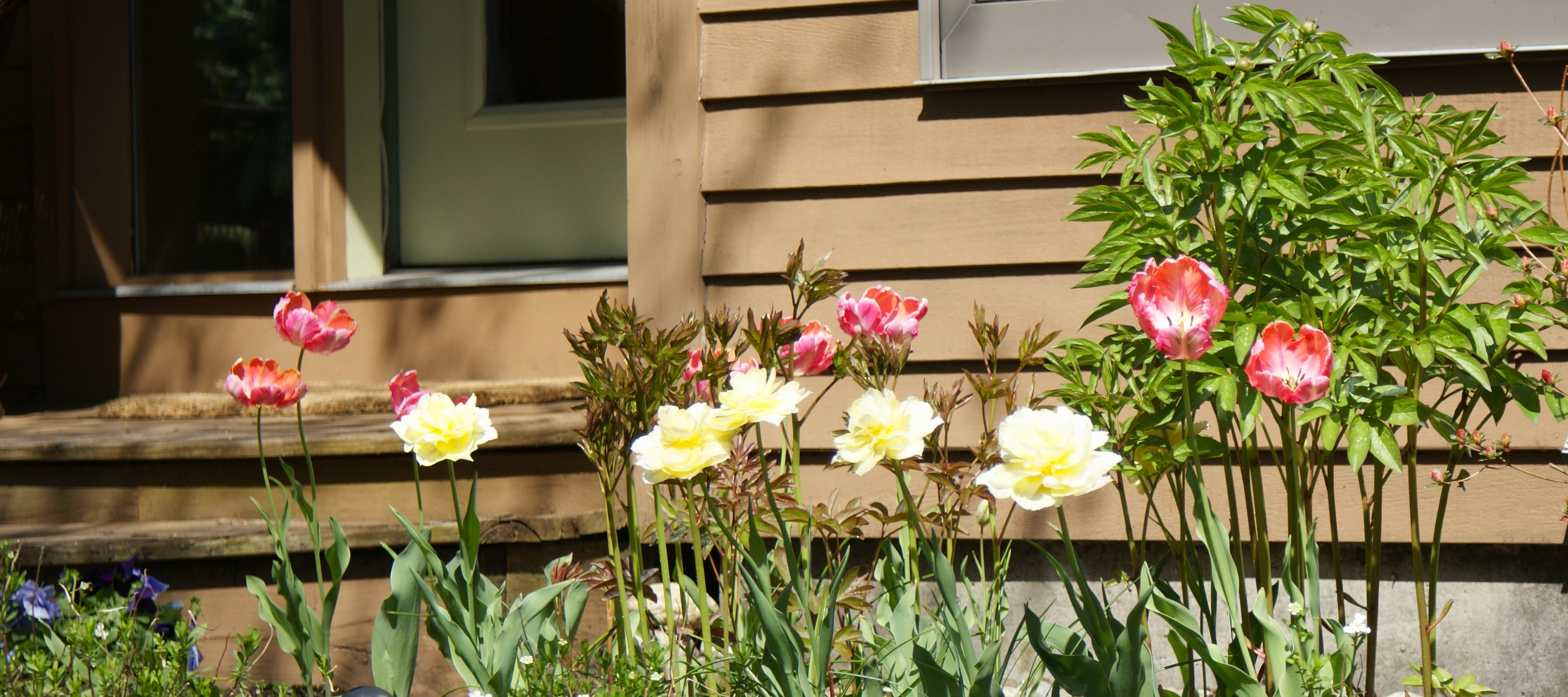
Tulips are daring. They poke through when nothing else is willing to go first, and sometimes they betray us and don’t come back. All of the tulips planted by the previous owner are gone now, and the numbers of my own tulips (except the red ones) are already dwindling.
They remind me of Mr. Krabbs on Spongebob at this stage.
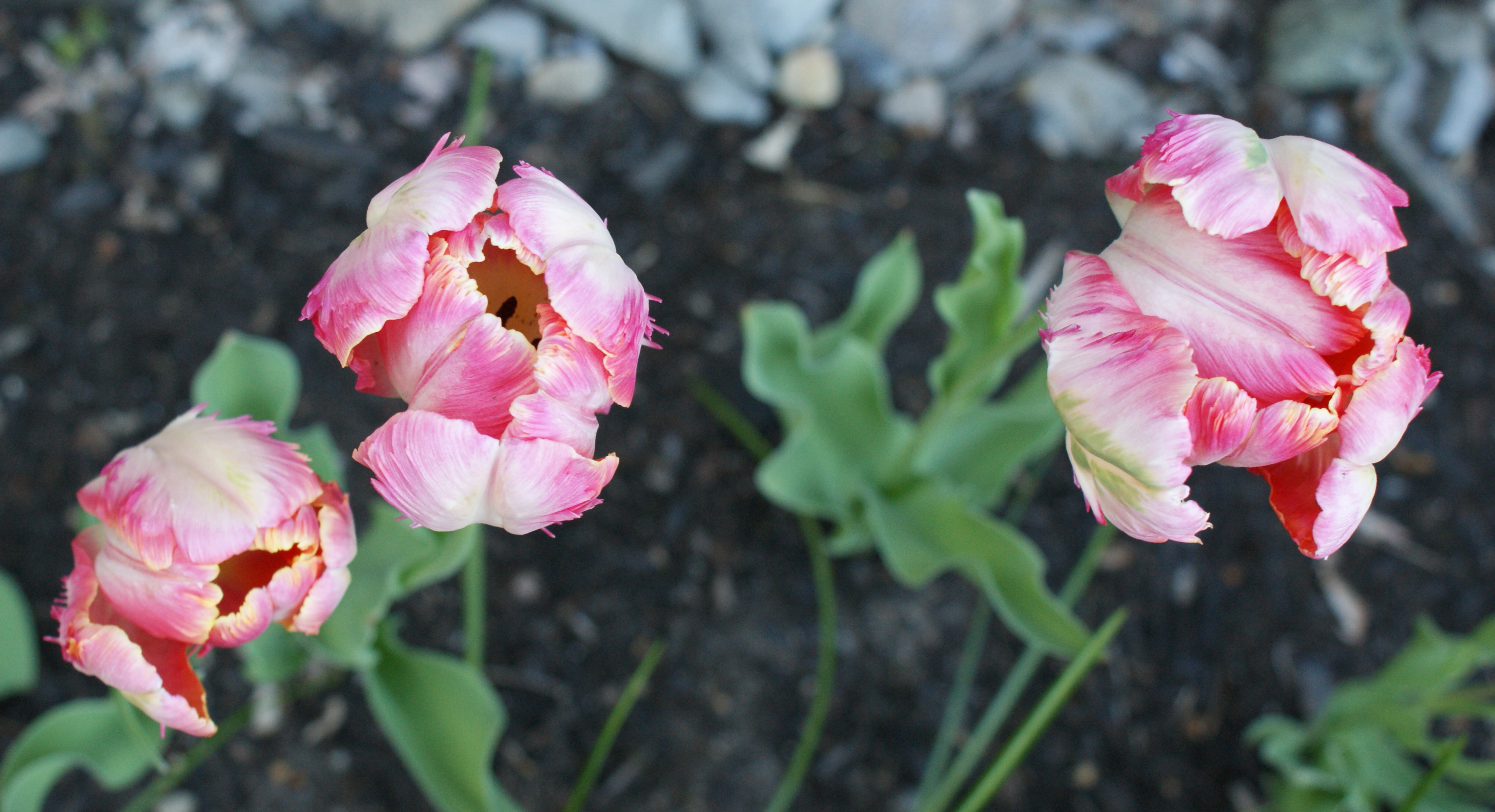
These pink ones go through phases when they bloom – they start out kind of hairy and menacing, the colors pale and cool like the light, and then suddenly they warm up and open joyously. Early spring is such an interesting combination of cold and barely warm, as if nature hasn’t quite adjusted the controls on the colors yet.
Then a sneak peek at summer color.
Crazy forsythia yellow and tulip red are set against barely discernible pink and blue hyacinths. These tulips, which take a long time to open, seem to follow the progress of color with the seasonal light, drawing the warm pigments up from the soil. I think of this image every year when we wake up one gray November morning to find that the bright autumn colors have been completely drained from the landscape. It’s like all of the pigments get sucked down into the earth until spring, when the color faucets slowly creak open and the colors bubble back up to the surface. It’s a story that might make a good picture book someday.
The creeping phlox (first lavender, then pink) and candy tuft are next, and I am glad to see they are making their way around the garden lamps and the tulips because I much prefer them to mulch as a backdrop. My goal is for the perennials and ground covers to fill in so completely that someday we will only need to mulch around the maple. Now that I think about that, it might spell an earlier demise for the tulips. I will have to look it up.
The peonies, astilbe, day lilies and irises start to fill in while the lazy hostas decide whether they are going to disappoint me again. Everyone in the world can grow so many hostas they have to dig the extras up and give them away, but not me. The hostas that do bother to return unfurl a leaf or two and then run out of steam. They are in league with the Pachysandra, I think, which continues to make pathetic showing. But this year the hostas look better than usual, and if they come through then I will post a photo. I won’t jinx it yet.
A good thing about daffodils, my friend T. pointed out, is that the leaves stay beautifully green long after the blooms are gone. No so for tulips, and one reason they don’t last is that we probably trim the droopy yellow leaves earlier than we should.
Then the Japanese maple shows its leaves and we know spring is truly here to stay. The garden sits where once there were two more trees lining the stone walk – a flowering pear and a paper birch. But even as they provided welcome shade in the summer, there wasn’t enough water or earth in this former gravel pit to sustain all three trees so we cut the other two down in favor of the maple, and it has thrived ever since, becoming a beloved tree that would make Joyce Kilmer proud. During winter storms we go out to shake any heavy snow or ice off its branches, sometimes in the middle of the night, we are so worried about losing it.
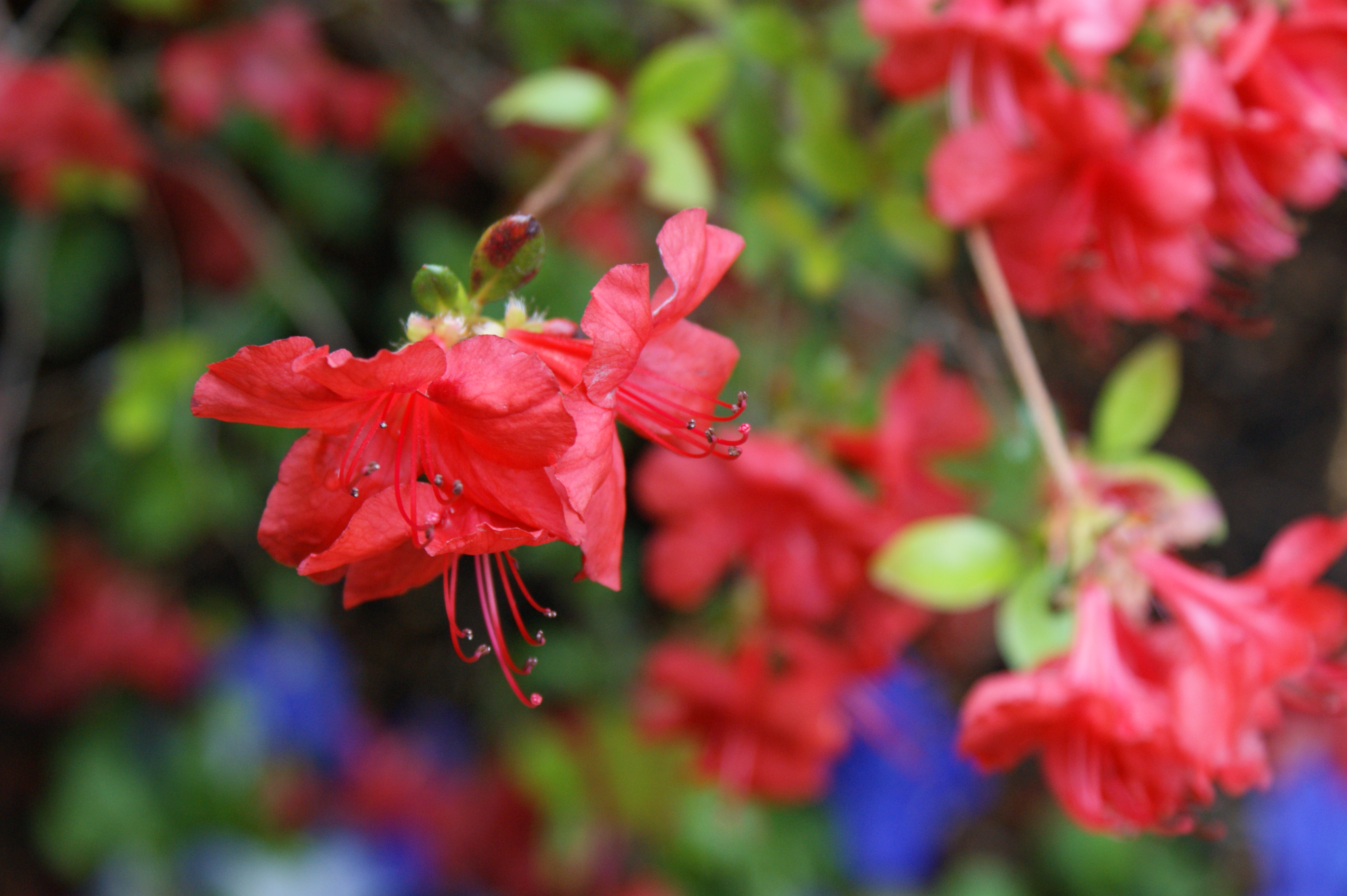
As the phlox peak and the tulips and daffodils fade, the azalea lights up such a bright orangey red that I think of it as a burning bush. Springtime seems to often bring big moments (births, deaths, graduations) and I have many memories of sitting by the window, looking at the bush and trying to cull some kind of wisdom from the flowers. Now and then, a hummingbird pays a lighting quick visit, and that is always a good day.
Seriously, unless you are in a hospital or a politician shaking hands all day long, you don’t need antibacterial soap or hand sanitizer. It’s doing more harm than good.
Bacteria isn’t all bad, and some doctors and scientists worry that America’s penchant for hand sanitizers and antibacterial cleaners might be killing off too many of the bacteria we need to keep our bodies functioning at their best. A recent study indicated that children whose parents “cleaned” their dropped pacifiers by putting it in their own mouths were less likely to develop allergies than those whose parents used tap water to clean it. Researchers concluded that parents strengthen their children’s immune systems when they share their bacteria with their young children.
In a recent New York Times Magazinecover story, Michael Pollan explored research that reveals the value of the microbes that live on our skin and in our digestive system. The life cycle of a bacterium is so much shorter that they can quickly adapt and mutate and reproduce in response to what we do – or do…
Earlier this week Tumblehome Talks went on a service project trip with a group of middle schoolers in a local city. The mission: plant a garden at a homeless shelter for families with young children.
The school requires that each advisory of 12-14 students plan at least one service project during the academic year, and that the students help decide on and plan for the project. The teacher (who asked for ideas from parents at the start of the year) brought a list of ideas to the kids, which included this one. I asked he how she found the connection to this particular shelter. She smiled and twiddle her fingers in the air as if typing on a keyboard. “Quick Google search!” We tried it when we got home. I typed in “homeless shelter” and the name of the city. It took .35 seconds to come up with 41,900 results…
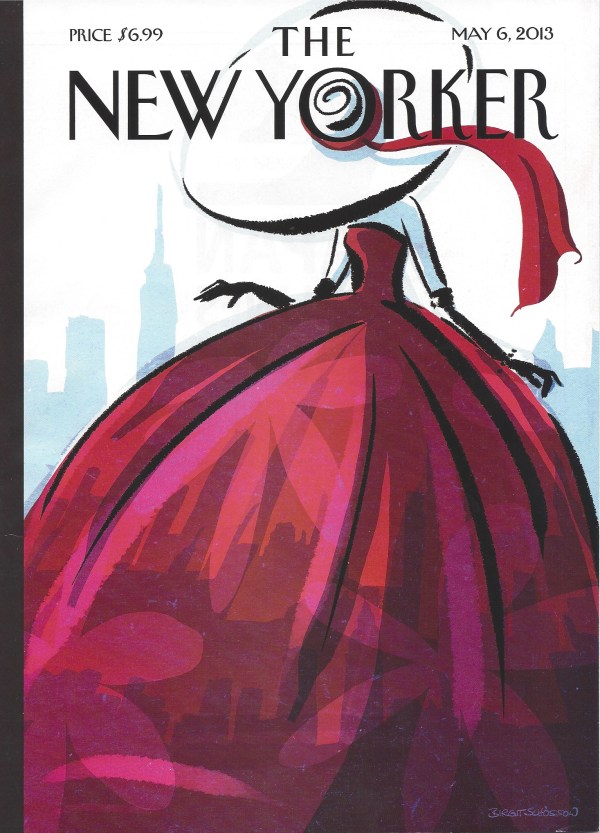
I save every paper cover and recycle the rest. That is the deal I struck a few years ago when my beloved carted boxes of full issues down from attic and informed me that there is something called the internet now and people don’t save New Yorkers and National Geographics like they used to. I’m still happy I get the paper version and I’m even happier that people actually fight over it when it comes in the mail.
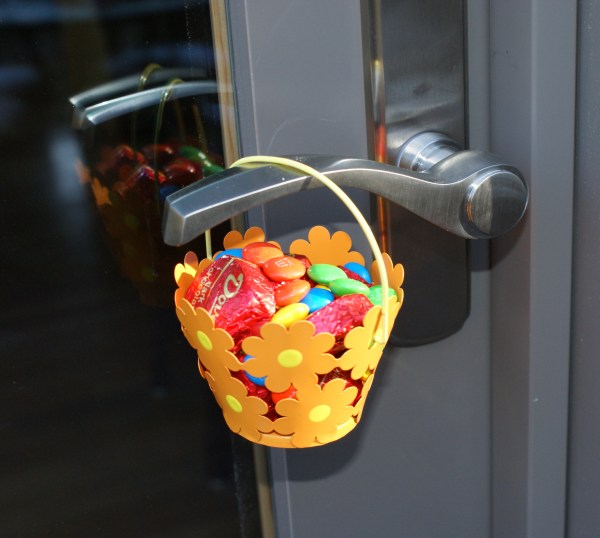
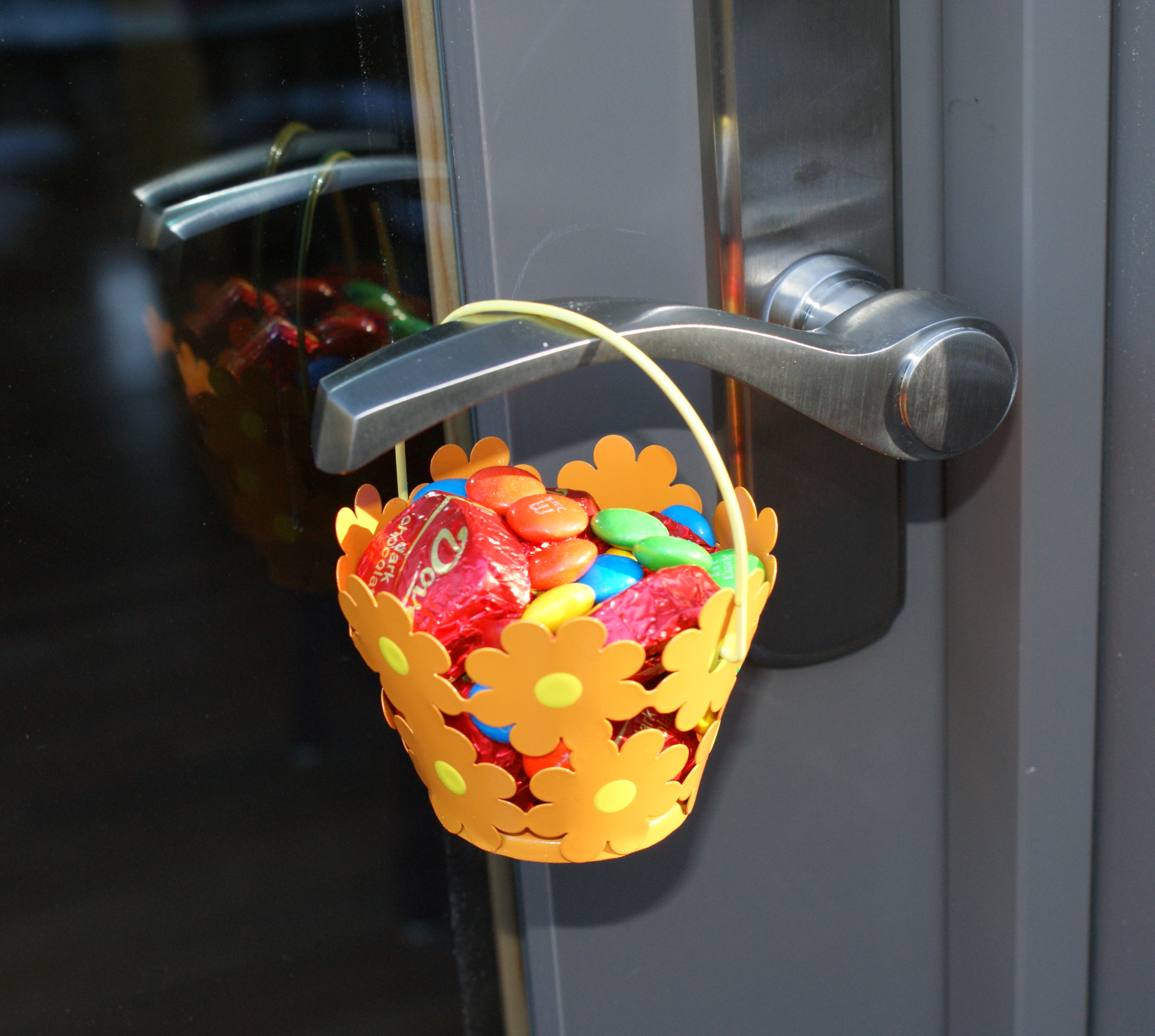
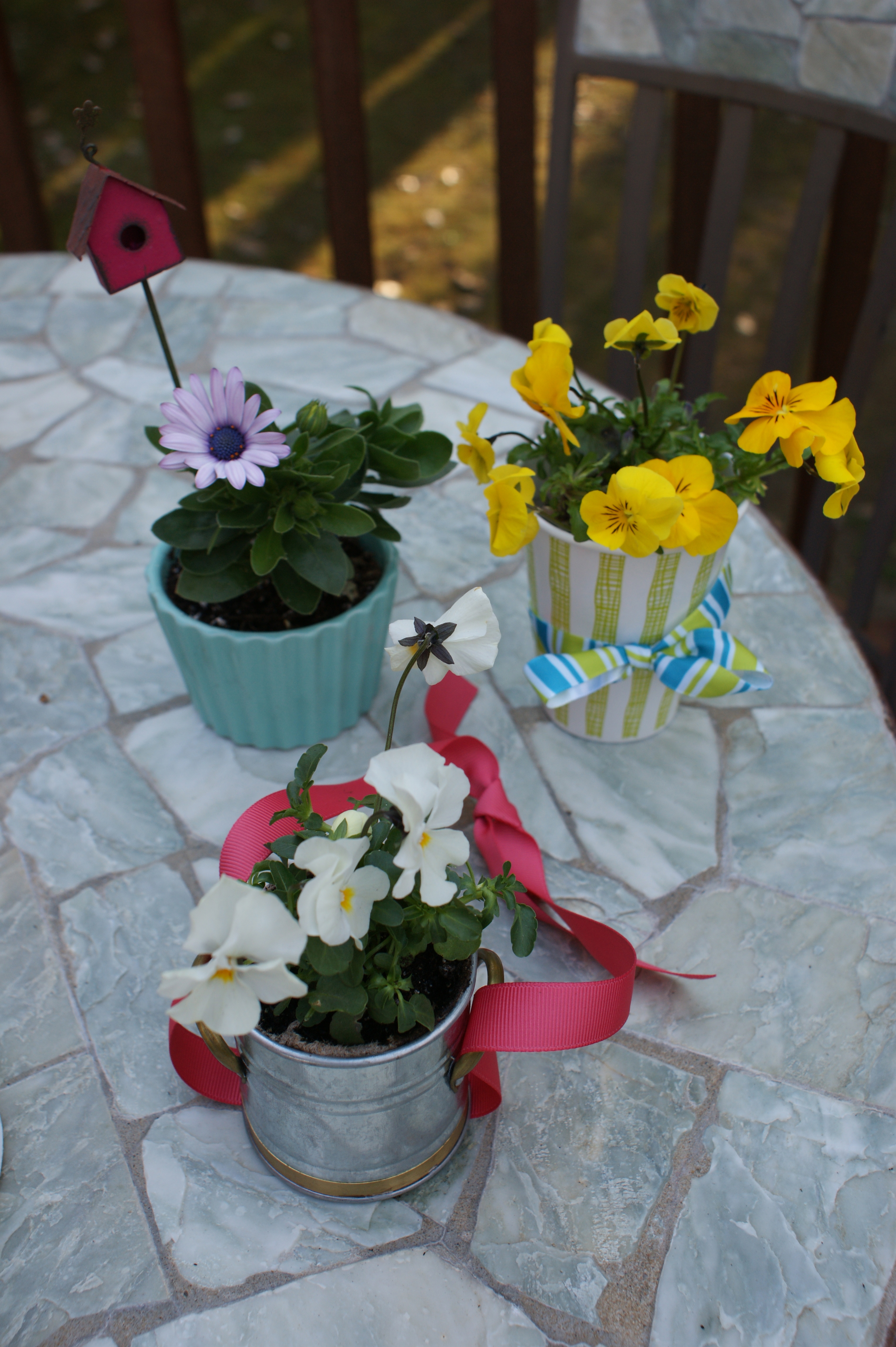
Hit the reset button. I love May. It’s certifiably spring now and this year in a fit of nostalgia I made some May baskets. Times have changed so I won’t go around leaving them on doorsteps and ringing doorbells (wouldn’t that be a sight, me running down the country roads to escape discovery) but the sentiment is the same. And now I am singing all of the beautiful hymns to Mary in my head, too.
I’m not afraid of that boy. (Like Kevin Cullen of the Boston Globe, I don’t want to give his name any more visibility by typing it here.) I followed the news about him like most everyone else but when I heard that officials transferred him to a federal facility that I drive past every day (unknowingly, until now), it rankled me more than I expected. He’s just a kid. A wounded, misguided, dangerous, vulnerable criminal of a kid. And the cell in which he sits is walking distance from a school where kids like the one everyone thought he was study, work and play every day. One of my children is his age and she is only just beginning to understand what it means to be out in the world, away from family. He could have been at that school, with her. It is possible to imagine things like that now.
In my dreams I picture that boy walking through the woods from the school to his prison and wonder what could have happened along the way that turned him from an assimilated immigrant to a jihadi terrorist. Much as I despise him for what he did, I hope that we are not healing him in that medical prison just so that we can make a martyr of him by putting him to death. If there is no satisfying answer to why he destroyed lives (and there isn’t) then we cannot counterpoint his treachery with treachery of our own. Perhaps it is this near occasion of sin that nags at me.
And ironically, almost at the very moment he arrived, spring decided to come to this part of New England. In the last few days the leaves and the blooms have burst forth, scrambling to cover the gloomy gray and brown of late winter.
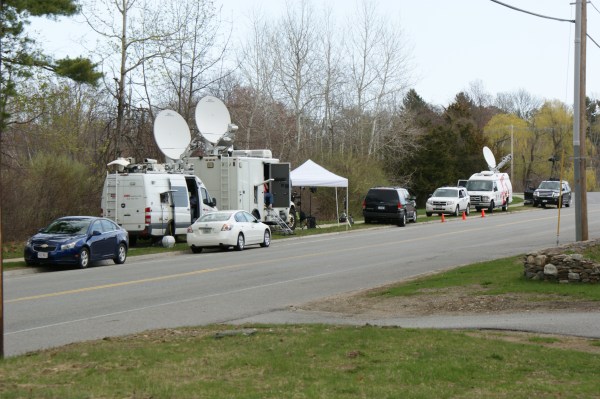
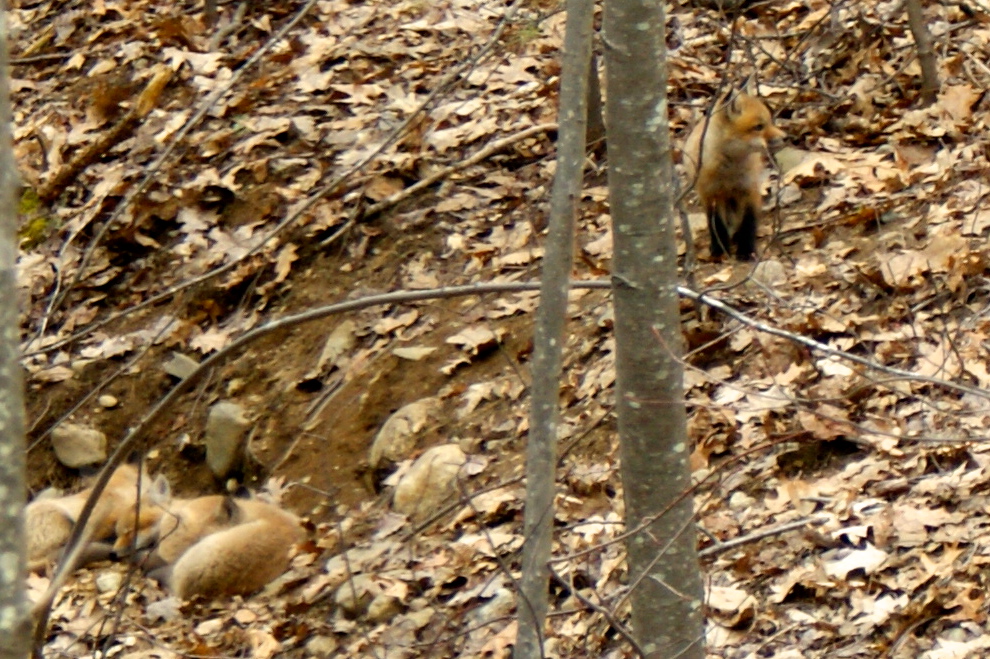
On the morning of April 15, we spotted four fox kits romping outside their den behind out house. We have not seen them since. Last night we heard a fisher cat scream mercilessly outside the same window though which we viewed the foxes. We told ourselves over early coffee that the family must have moved on to larger, safer quarters. As I drove past the prison this morning, there was the CNN truck, lying in wait. Tonight we will listen, hopeful, for the sound of young foxes, yapping in the dusk.
Note: The blue tee shirts in the header are from Life is Good, and all of the profits from the sale of the Boston shirts go to One Fund Boston.
A happy post script on May 1: The screaming continued and there were multiple voices in the conversation – an internet search turned up evidence that it was the foxes making the racket (it’s common, I guess, for them to mistaken for fishers when they are vocal in this way).
I muted the tone so that that the people in the image – Governor Patrick in particular – dominate instead of the media banner.
Even for those of us who no longer live and work in the city, it has been a long, harrowing, surreal week. There is a lot to say about events of the last week, but I am too tired to say any of it right now. Silence might be what we need most of all.

 Tornadoes are challenging to study, due both to their relative unpredictability…












 LettersHead