The Loneliest Holiday

When I hear about loneliness on Thanksgiving, it breaks my heart, even more than Christmas. It’s kind of a Hallmark Hall of Fame sentiment, I know, but I always think of everyone as someone’s child on Thanksgiving, and that their Mom and Dad never intended for them to be alone. I know it happens, and often, but it’s still a shame. There are no presents, so the economy shouldn’t be a big factor; it’s just food, there is no excuse for being alone. Children grow up, families scatter, it’s cold and people don’t want to travel. There is something to be said for staying under the radar some years. But people can get stuck and forget how to resurface. I am most troubled by those who think the world has given up on them, and they are somehow destined to loneliness even though aloneness was all they sought.

As I was falling asleep the other night I heard a voice on TV say something like, “short of real tragedy or a felony, these holidays that we bemoan make up some of the most interesting moments, the best stories, of our lives”. There are people out there, people we know, and they, and their stories, are waiting to be found and treasured again.

Happy Thanksgiving.

Going, going. . .

Things I finally began to notice that are gone or on their way out (a sure sign of a mid life crisis in full bloom):

  • Phone booths
  • Drive-up bank tellers with people behind the window
  • Tiny packages of Life Savers (that the drive-up tellers used to give out)
  • Boom boxes
  • Photo booths that develop camera film
  • Full service gas stations
  • Postage stamps
  • Hand-written letters (I know, that’s why I’m here)
  • The Reader’s Guide to Periodical Literature (paper version)
  • Aprons that only cover from the waist down
  • Instamatic cameras
  • Flash bulbs
  • Knee socks
  • Rice pudding (wishful thinking)
  • TV dinners with compartments for each kind of food
  • Miracle Whip (more wishful thinking)
  • Cassette players
  • Swizzle sticks that look like swords
  • Sanka
  • Seven-digit phone numbers
  • Jiffy Pop
  • White shoes (they’ll be back)
  • Ash trays
  • Rotary phones
  • Clip-on earrings

If You Can’t Stop, Wave

There’s nothing better than when people make a little extra effort to do the right thing.  This is the sign in front of the new Police HQ in Littleton, Massachusetts, and it stands on the site of a former farm stand, Stan’s Big Acres.  Owned by the late John “Stan” Paskiewicz, the stand – a small red shack with a screen porch and a hand painted white sign with red writing – had a greeting painted on it  “If You Can’t Stop, Wave.”  Whenever we gave people directions to our house when we moved from the city, Stan’s sign was the landmark that reassured them they were not indeed lost and were, in fact, close to their destination (the other landmark was Bob’s Bait & Tackle – alas, it is gone also).  Guests often arrived with cider or apples from Stan’s (no one ever arrived with bait from Bob’s – go figure) and even when I driving past alone I found myself raising a hand to Stan.  When Stan’s closed the shack stood empty for a number of years, falling into disrepair, the sign still outside.  We kept waving anyway.  When Littleton decided to use the site for the Police station (and a beautiful one at that) some civic-minded person or group preserved Stan’s greeting on the new sign.

So, Stan’s is a Police station and Bob’s is a yarn shop.  There are still signs of the agricultural life along the way home – farm stands, horse farms, fields of sheep and produce – but nothing quite like Stan’s, save for the red house directly across the street (below) that echoes his stand in it’s waning days; the future on one side the road, the past on the other.  If you can’t stop, wave.   Okay, then.

Past watches Present talk on cell phone

It just occurred to me that I have a penchant of taking photos of people talking on cell phones in places where it seems a little incongruous (see Can You Hear Me Now).  The Cemetery is on Main Street in Concord, MA – and the two empty parking spaces just might be the most unusual things in the picture.

Frank Lloyd Wright, as I always hoped he would be

I have always loved the graphic design, ideas and lines of Wright’s architecture but when I see his acutal work I am often disappointed by the poor workmanship, the dark corners or the clunky oakiness the detail work and furnishings.  But I just found a posting of a Cincinnatti house that has the interiors and light as I always hoped they would be – it’s an old posting on another blog but the Boswell House photographs are stunning.  The Hooked on Houses blog is actually a lot of fun.  And the novel Loving Frank (cloying title, great novel based on real-life events) is a worthwhile read.

Early American window and door, just because

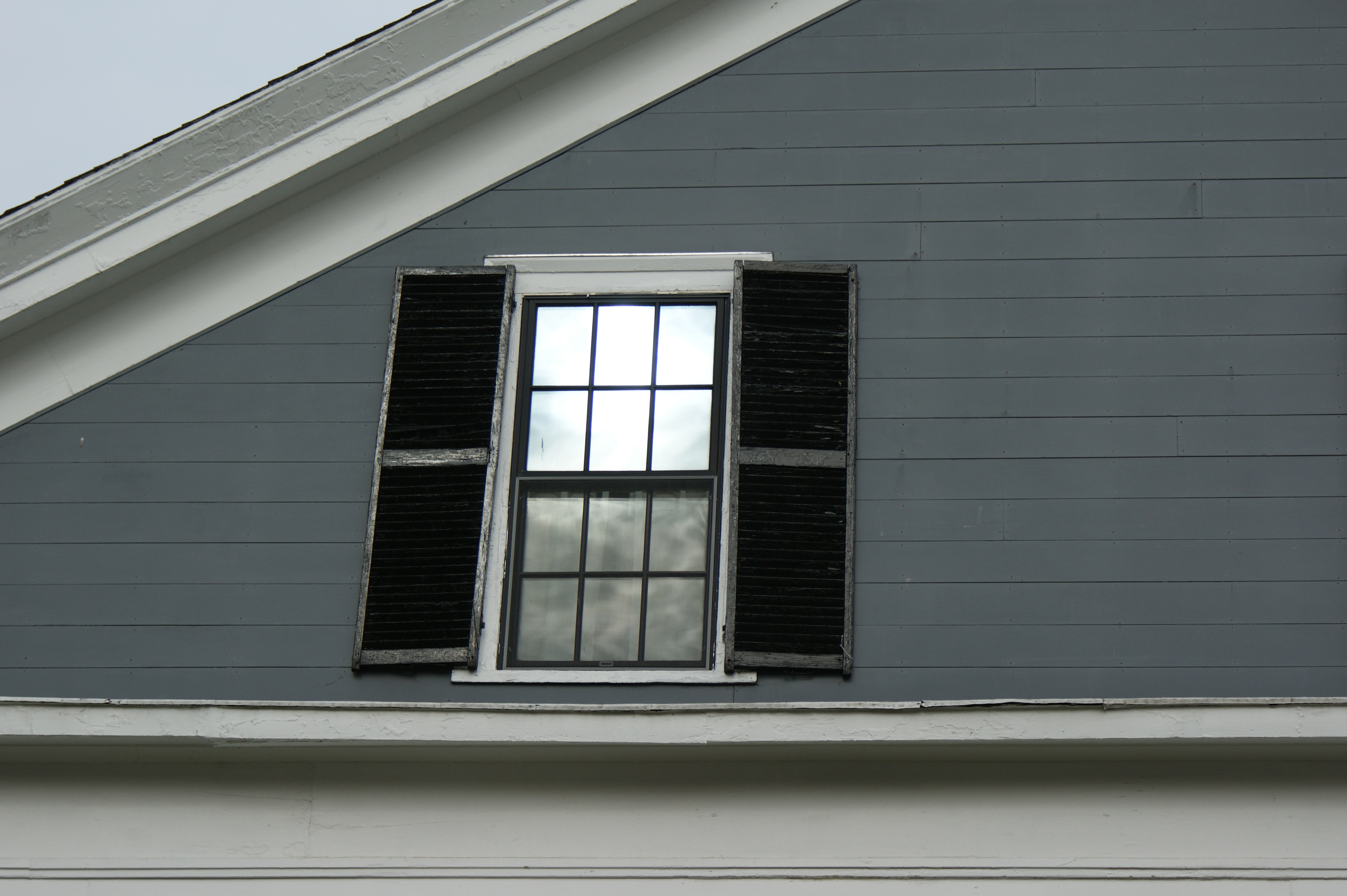
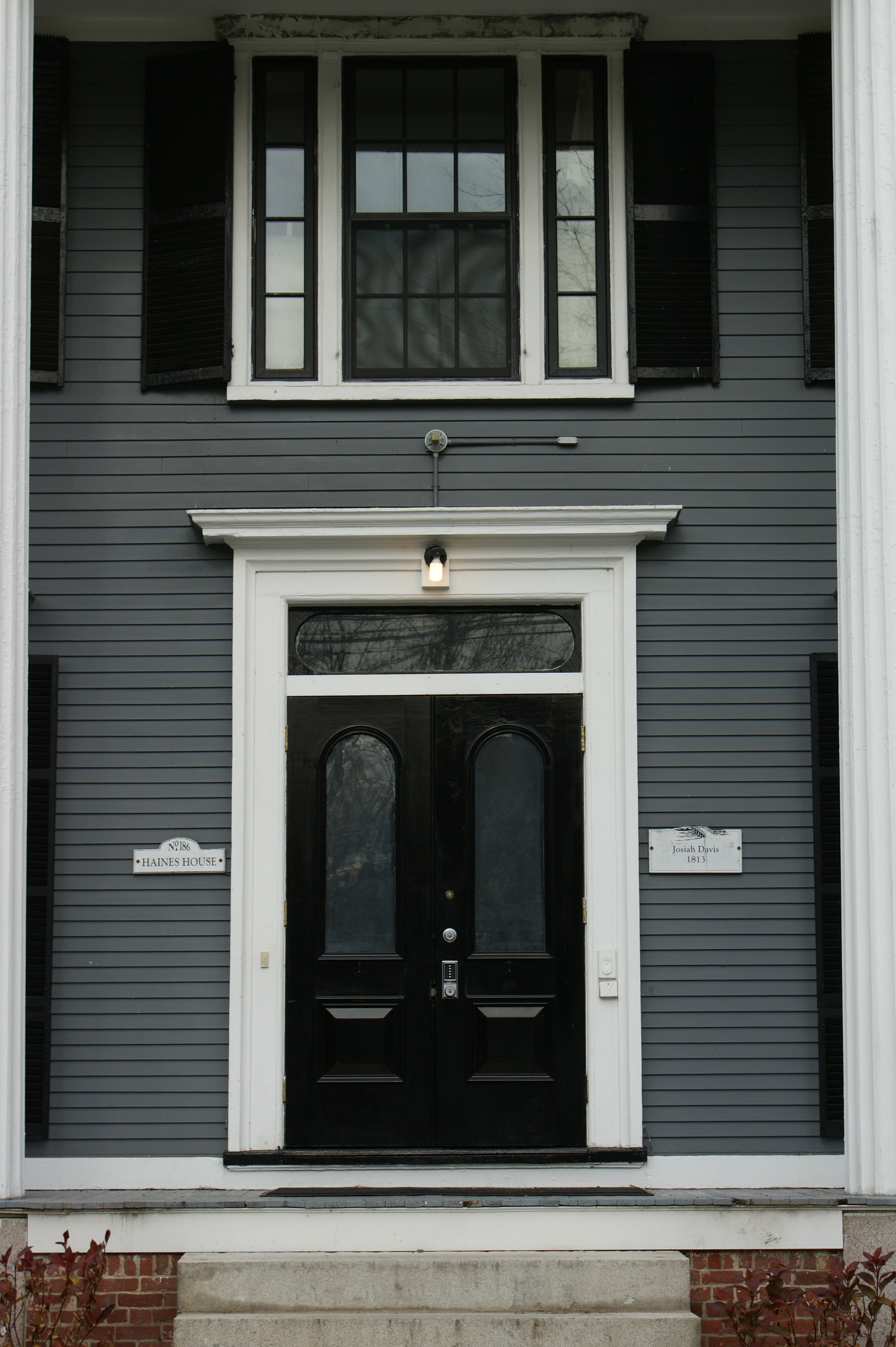
This window is at the top corner of the Haines House in Concord, Massachusetts.  Built in 1813, it has shutters are made to work and most likely has layers of paint thicker than the walls of most modern houses.  Below is the front door to the same house (currently an academic administration building at Concord Academy), where the wiring for the light had to be routed on the outside.  The way all the exterior lines and shapes in these old structures can fit together into a coherent whole fascinates me – in modern times that approach doesn’t seem to work nearly as well, and yet here, it does.  Are we more forgiving of older architecture just because it’s old or did they get something right that we don’t?  I admit that I am more enamored of such places from the outside looking in – once inside, they tend to be dark and cramped and have a kind of slanted fun house quality because everything has settled unevenly over the centuries (and that funky wiring goes from quaint to dangerous).

When the cat’s away, something breaks

I go out of my way to make it seem like my husband’s business trips are fun for the kids and me.  We miss him less if we can break with the weekday school-dinner-homework routine.  We get takeout, make blanket forts, build Playmobil and train setups in the living room, become worse slobs than usual, watch black and white movies and have sleepovers in our bed (I steal his jeans and his pillow and I don’t have to worry about my snoring). 

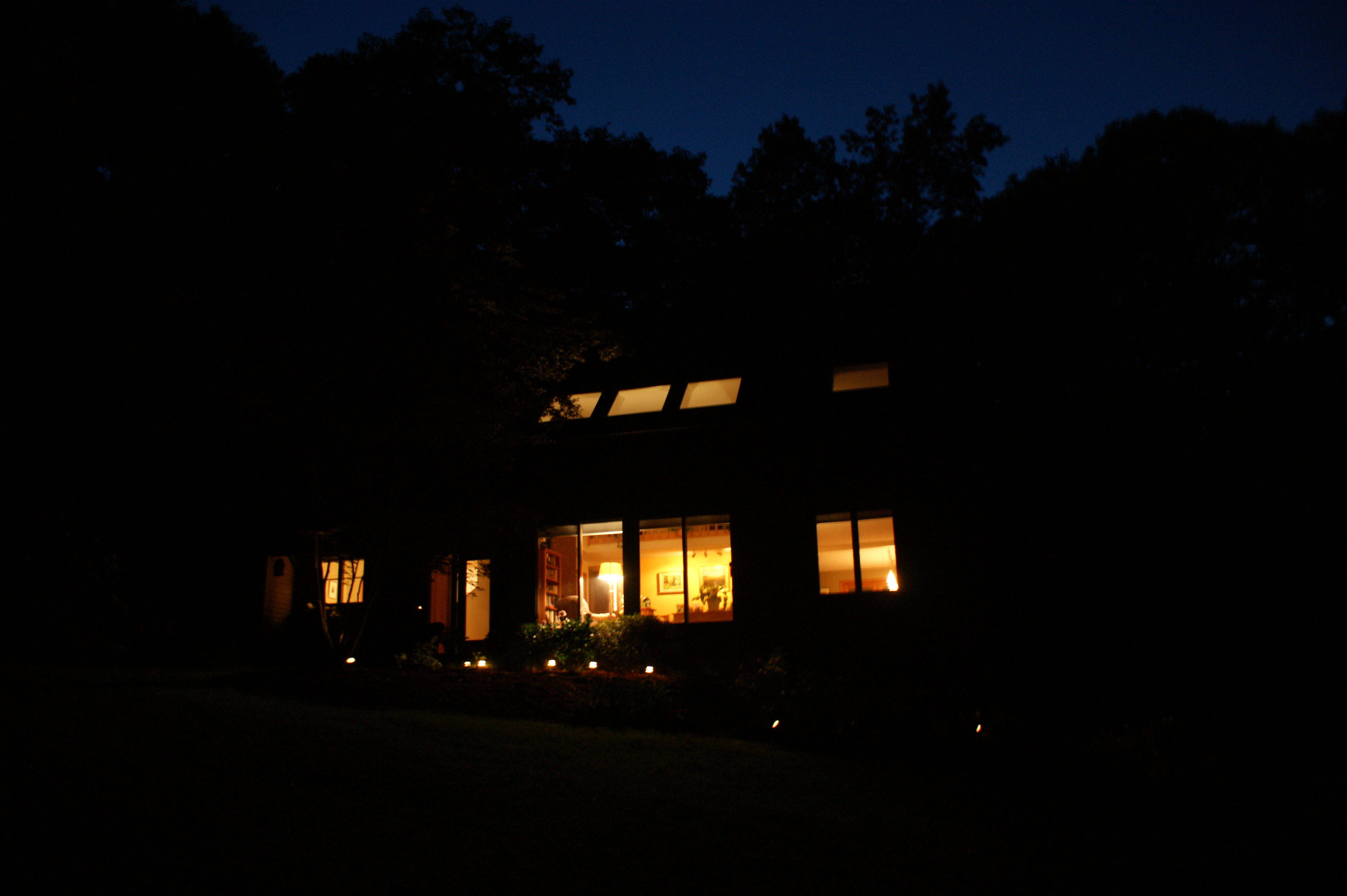
But the house takes liberties of its own, kind of like the script of an Albert Brooks movie where everything goes wrong in the most eye-rolling ways.  The house lets loose all of those pranks it has been saving just for me – it allows the field mice in and sends them dancing up to the wall behind our bed, pops the lightbulbs in the most unreachable sockets, lures the woodpeckers to all four outside corners of the house, swarms the carpenters ants and termites, crashes a computer or two, breaks one major appliance, and finds never-before-seen ways to rupture the plumbing.  We are now at the point that, when the neighbors learn he is away, they call to ask if anything has broken yet.

And even though part of me thinks my husband has the power to set me up by conspiring with beasts and infrastructure, there’s nothing like a little drama to make time fly.  As long as I can marshall the courage and resources to make it right – so far my record is pretty good – I think it’s key for both of us to remember why we work better together than apart.  I feel liberated for all of about 15 mintes when he leaves, and then I notice the scaffolding of our lives tremble ever so slightly and though I get to snore, I don’t sleep quite so well.  Even so, I know that the house could come down around us, but the structure that counts is in fine shape.

Bringing Democracy

I heard on the radio this morning about the Afghan peoples’ disappointment that the United States failed to deliver on its promise to bring democracy to Afghanistan and I wonder whether any outside entity has ever successfully brought democracy to any nation.  I may be out of my depth here; I am not a history scholar, but any lasting efforts to fundamentally change the political structure of a nation appear to have carried through by the people themselves.  Americans have always kept the flame alive, overtly and covertly, but Solidarity had deep Polish roots, the Germans dismantled the Berlin Wall , Gorbachev oversaw the breakup of the USSR.  Can democracy be exported?  It can be funded, encouraged, and nurtured, but I think the idea of exporting a successful turnkey government (even if it appears to be handcrafted a la Karzai) is preposterous and I thought that this failed conceit was the big lesson of Viet Nam.  I do think that the undermining the Taliban and rooting out Al Qaeda are noble causes that can save lives and personal freedoms, but I cannot comprehend how we can reverse centuries of skepticism about Western motives in Middle Eastern nations; President Obama may have a better shot at it than most, but I still think the parameters of the mission and the methods should be redrawn, and fast.

The Obligatory Autumn Poem

Falling Colors

It’s November

We have used up

Our allotment of color for this year;

The pigment wells have run dry

Colors are draining from the landscape.

Inexorable fading

Among the maples after a drunken Halloween binge

The reds wither in unpicked apples or

Go into hiding –

Submerged as cranberries or

Crouching in the holly

Yellows and greens

Have more stamina but even they

Are sinking quickly, visibly, into the soil.

On a warm day

The blue sky

Is tepid and wan

And my energy filters

Down through my numb, wiggling toes

Chasing the colors

Flexing in hopes of priming the pump

Even as I succumb to the unfulfilled promise

Of a long winter’s nap.

November 2009

What I found on Julia Child’s Kitchen Bookshelves

Summer 2009 -Julia's refence books

The thing I most wanted to see when we visited the Smithsonian last summer (besides Lincoln’s top hat) was Julia Child’s kitchen so that I could get a look at what she had on her bookshelf – and I love that, in addition to all of her own cookbooks and some notable others, she had one on Greek Mythology, Barlett’s Familiar Quotations, a dictionary, and How to Clean Everything.  Proof that she did pretty much everything in her kitchen.  There was a whole shelf of phonebooks and Yellow Pages, too – remember those?

Summer 2009 - Julia's books - hers

Website Powered by WordPress.com.

Up ↑